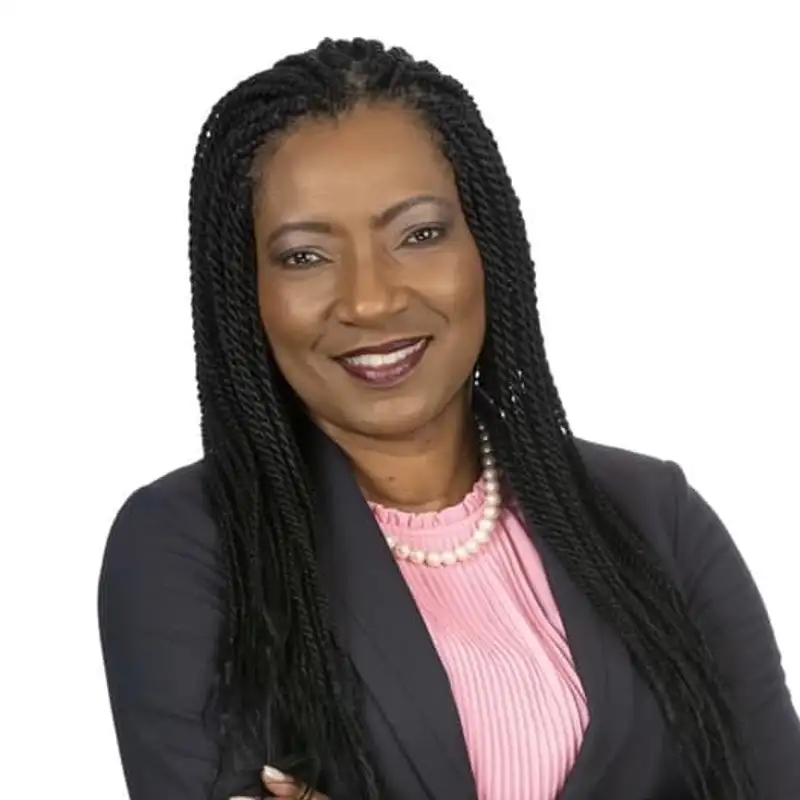
Kema Ogden Champions Health, Equity, and Empowerment Through Advocacy and Entrepreneurship
Wesley Knight 0:00
This is a KU NV studios original program. The content of this program does not reflect the views or opinions of 91.5 jazz and more the University of Nevada, Las Vegas, or the Board of Regents of the Nevada System of Higher Education.
Tanya Flanagan 0:19
Good morning, and thank you for joining me for the scoop with Tanya Flanagan, I'm so happy you decided to wake up and start your day with me here on the scoop, where we talk about life, joy, funny moments, trending topics and so much more. We promise to keep you in the know and find out what you know. So let's get started. You
Tanya Flanagan 0:47
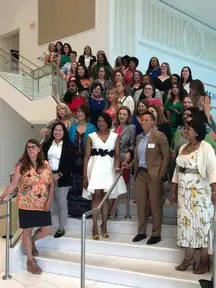
Good morning Las Vegas. Good morning Nevada. And welcome to another edition of the scoop with me. Tonya Flanagan, right here on 91.5k U, N, V, jazz and more. As always, I am thankful that you've wake gotten up this Sunday morning to spend some time with me. I know it's early. You have your coffee, maybe you have your tea, maybe you have a Danish or a croissant. I hope you will also find that we have good conversation for you today, and that it will allow you to take away something that is useful, something that you can be active with and make a difference in the community. Because we're talking about community advocacy and giving back today with a very special person that I had the pleasure of meeting about two months ago now, in the nation's capital, we were there for what we call the Vegas fly in that the Vegas Chamber of Commerce does, where we both had the opportunity to be in rooms to learn about different things going on across the Nevada landscape, and primarily concentrating, kind of in Clark County, but really just a broad look at our city, commerce, activity, business, government, social aspects and whatnot. So without further ado, I am pleased to welcome Kima Ogden, to my show. Morning. Kima,
Kema Ogden 2:04
good morning. Thank you for having me, and it was really great to meet you out there.
Tanya Flanagan 2:08
I know when we got ready to do the show, I don't think either one of us realized we were being connected. We were connected by another person, or reconnected, I should say. And I don't think either one of us realized and I didn't until I began to do some research. Oh, I know Kima. We met in DC, so it's nice to have you on the show and to learn more about you. I like to make sure the audience knows who you are, so I could kind of give your background a little bit of it, but I love to hear more from you, because you have quite a story of who you are, what you do? So what do you do here in the Las Vegas community, well,
Kema Ogden 2:42
thank you. I was out in DC representing the urban Chamber of Commerce. I'm an executive board member there, recently elected. And you know, thank you. Thank you. And so community advocacy has been a big part of, you know, my passion for a very long time, I've had my own Ogden Family Foundation since, nonprofit organization since 2007 2008 I've been running health and wellness programs ever since Then, helping families in the community with health, wellness, education and resources. We also do an adopt a family event, and we adopt families every year for the holidays and help with financial support, you know, and household necessities and things like that over the years. And so, you know, I've been in the community. I've been here in Nevada. Raised here over 40 plus years. I don't want to tell my age, but you know, been here for but grew up here, so this is home, and so it's just been very important for me to make sure we take care of our community, support economic growth out here. As a local business owner myself, and have been since, since 2007 2008 owning several, several companies, I just felt like it was important to really give back in structure. Help, help be a seat at the table to to allow people to have access to different opportunities that they may not have access to.
Tanya Flanagan 4:21
Well, I want to tip my hat and say kudos to you. That's a huge list of accomplishments and spaces that you are navigating. We have the urban chamber in Commons. I too used to be a board member some years ago, and of course, being a board member in your case means you're also a business owner. So there is a different lens through which you see things. We may go back to that in a bit, but I like to talk more about the family foundation and just kind of the adopt the family program. So is that a through the holidays? Is that an ongoing program all year long? How does that
Kema Ogden 4:58
work? So. So we do. Typically, it's through the holidays we start working with organizations, like different organizations throughout the community that help underserved population of people. This year, my goal was to really focus on families that have been affected by cancer or breast cancer in the family, in the household, but also financial struggle, which you know most people are these days, given the state of the economy. But I recently had a battle with breast cancer. I just actually rang my bell August 18 of this year. So a few months ago, and I really it just opened me up to a lot of different things and struggles that this disease causes, but also the issues that we have with healthcare all the way from the front end to the back end. You know, I owned a medical clinic, a pharmacy and in the cannabis industry as well. So, you know, for me to have an experience with this disease, it was almost it was just a weird situation to come full circle in. You know, here I am fighting and advocating for everyone else in the healthcare space, also to have access to holistic care and things like that, and then I become a patient on the back end. And so this year to give back is a little something different for me. It's a little more personal and a little more, you know, pinpointed to a demographic of people that I really know, that you know going through this is like, Man, how can anyone work? How can you, you know, it's so invasive, it's such an invasive process. So yeah, really want to focus on those families, but not just those families who are helping other families as well, but, but this year, you know, we're definitely taking a dive in and then trying to help people financially.
Tanya Flanagan 7:02
Congratulations to you again on being a survivor of breast cancer, which is, as you all know, we've had a number of shows and conversations about breast cancer. The entire month of October, breast cancer awareness month was devoted to conversations and awareness about breast cancer. I wonder. I'm curious, in your experience of going from being sort of a not caregiver, but sort of a support, right, a resource provider, a wellness resource, to becoming a patient, and having been a patient myself and watched so many other families and women. What would you say is, like, one of the biggest loopholes you notice, because now you're seeing both sides, right? You're the patient at the same time you're providing resources that help people who are going through cancer. What's one of the hardest things that you thought you felt you had to navigate when you found yourself in that space?
Kema Ogden 7:57
So, yeah, you know? So the non I had a nonprofit clinic and operated that up until this past year as well. And you know, we did help an underserved population with a lot of different resources. We didn't really focus on the cancer disease, but we did focus on some high risk diseases. And you know, there's all a lot of barriers that you see people dealing with, but a lot of it came from the back end of the business, like, you know, the insurance companies and the pharmaceutical companies and, you know, those big corporations and so, fighting that as an institution to advocate for people and their access and so to to shift to being a patient, the biggest eye opening thing for me was it doesn't matter how much money you have, it doesn't matter who you are. If they don't have providers here, if they don't have specialists, if there's barriers to to reimbursements or insurance claims and stuff like that. It really affects everybody. And so, you know it, I became a person fighting to just get an appointment, just to get a good doctor, just to find good care, things like that. To
Tanya Flanagan 9:18
put in context, are you able to say or talk more specifically about what type of breast because there's so many different types of breast cancer. So for those who are listening, you might be a breast cancer survivor yourself, or know someone who had a DCIS diagnosis of ductal carcinoma inside too. And so different types care is different. Every case is a different case. So do you mind? Can you are you willing to share what type you had and how the doctors needed to respond? Was it a certain type that the care wasn't here, or the care was limited? Doctors could respond to your diagnosis? Yeah,
Kema Ogden 9:55
you know, initially they thought I had non invasive DCIS. Which that was contained. But come to find out, after I got the biopsy and everything, it actually became invasive. It got out of the duck, so it I was diagnosed. And I personally think a lot of that had to do with the fact that, because I had a grade three diagnosis, which is very aggressive. And so, you know, it took me months and months to get appointments and things like that. So to me, that could have happened because of the length of time it took for me to get care. And so that's why it's very important for me to speak about this, to talk about this early detection, you know, also help people navigate through this process, like the community helped me when I tapped into it, and so helping that community of peoples is now become something that I will forever want to be a part of. So yeah, that it was very eye opening. So yes, I had stage two, grade three, invasive DCIS, so I had to go through the whole process of chemo, radiation infusions and whatnot. And so for over a year, I've been in treatment. And you know, here I am today. Like I said, just over 60 days later, I rang my final bell, and I've been cleared of cancer. So it was definitely a super eye opening experience. That one, you know, you don't wish on anybody and their families, but you do realize that this is pretty much in everybody's household some kind of way. It's just crazy how this affects everybody. It might not be you, but it might be your cousin. Might be someone, you know, they're your sister in law, something. And so it's, yeah, it's, it's, it's very it's very intense.
Tanya Flanagan 11:49
It is, I think, at the last numerical data I received was one in every three women are diagnosed with breast cancer. And so it is like the reach is just like you reach out, basically, and you touch someone, and that person could be diagnosed with breast cancer. And while you know people are living longer, is what we're learning. As research improves and treatments improve, the number of incidents are increasing and African American are still dying. More African American women are dying more than other women are from breast cancer. So again, kudos to you on your journey, on surviving, on being here today the foundation, and what you're going to do, or what you're doing with the adoptive family. And the focus this year being on women who had breast cancer, people who've had cancer, families is huge. How do How are you going about making the choice or the selection, like, how many families are you going to be able to help, and if someone wanted to help you, how would they become a part of this movement that you are orchestrating? So
Kema Ogden 12:56
we, we typically reach out to organizations like Las Vegas breast cancer warriors, which I actually spoke at one of their events, my first time speaking at Breast Cancer event recently this, you know, obviously breast cancer month just passed, so, you know, we've been talking a lot about it, but, but organizations like that just reaching out to different organizations through The community, once again, that really support underserved population in health wellness, or, like I said in other organizations, that as well, they'll nominate families the we do have an eligibility process, so a lot of those organizations already know their status and that they're in need, and can verify that. So we there's a process for that. But as the as these organizations are nominating families my board members, we then go and review all the families and select the ones that we that we can support. Usually, every year, it'll roughly be about 100 people, because some families might have 11 people in them, so might have three, so it'll be anywhere from 15 families or so that we that we support. So it just depends on the year and then how much money we can raise for family.
Tanya Flanagan 14:09
What does the support look like? Is it food? Is it clothing? Is it household supplies? Is it transportation? Mean? What does the support look like? What are you guys
Kema Ogden 14:18
doing? Well, in the past, we've done a lot of different I've done toy drives throughout the community. I've done, you know, like, we've furnished people's homes that maybe have burnt down. You know, we've done a gamut of things, but this particular year, we're just asking for money. We're trying to give just straight cash to people, just hand them a check, because we know, once again, I mean, there's just so many things people can't afford.
Tanya Flanagan 14:40
Yeah, it's a crazy journey. It's like you can be in it, and it can be everything from I used to work with nonprofits that supported breast cancer survivors between Coleman and American Cancer Society, but you will find people who can't pay utility bills, people who can't buy groceries, people who don't have a ride to their medical. Appointment. So thank you for doing this. It's a huge support and benefit and a need, I think, in every community, but I'm pleased that you're doing it here in the Las Vegas community, that you are here, and you're recognizing the call to action. Because things, sometimes things happen in our lives. They happen to us. And you can either be just the victim of what you're going through, or you can be empowered by the incident that occurs in your life. And then, you know, it's like,
Kema Ogden 15:32
absolutely and I told and I truly believe that I was chosen to deal with this and battle this so that I can be a testament to what a person can go through and the resilience that it, that a person can have and hope and all the things that that come with it. And you know, definitely taking that road for sure,
Tanya Flanagan 15:56
it feels like your business is intersect with your call. You know your additional like, community service call to action in that the Wellness Center, the cannabis business, the cancer like, is there an intertwining for you where you see how these overlap, or are you connecting them in a way to make them a full circle? Service, support to the community now that you've been through the other side of it, and you've already had the wellness business, you have the cannabis business. We've had conversations on the show before about medicinal cannabis and its benefits, right?
Kema Ogden 16:34
Yeah, I mean, you know everything, even though they were all individual entities and worked separate of each other. They all, like you said, they did support each other in that sense, it really did allow so we had programs, holistically positive type programs that would that would help veterans, seniors and different people with access to cannabis within the clinic that I had at the time and things like that. So yes, we always tried to make it full circle. That was always my mantra. Full Circle of health, healthy body, healthy mind. So we, we really did focus on that, and then here I am coming full circle, right? So I became a cannabis I was a cannabis owner. I've been in the cannabis industry since 2014 15 is when I started this, being the first African American woman to own a cannabis dispensary here in Southern Nevada. So, you know, very proud of that, but the work is still there's a lot of work that needs to be done. So I've made sure to you know, I've sat on boards. I was commissioned by the former governor sis elect, to select to sit on the cannabis compliance board or social equity and inclusion Advisory Committee and things like that, because the advocacy piece of that is very important. And then, like I said, allowing people access. So yes, bringing it all full circle, allowing people to have access, and advocating for for everyone's rights to be able to not only have access to this, but to be involved in the industries and and to have a seat at the table and things like that. So and then, once again, here I am at the other end as a patient, fighting alongside them, and not just for them. So it
Tanya Flanagan 18:16
gives you a deeper understanding of what the journey looks like. I know I'm more I'm curious, and I'm sure my listeners are curious too, about your life story and how you came to be in the space, because it's not every day that you meet the first African American woman who was a cannabis operator here in our city. And just kind of the entrepreneurial spirit, because everyone's wired differently, and not everyone is wired to be entrepreneurial, right? And there's a certain tenacity that one has to have to chase that dream and to bring it to fruition. So just a little bit, if you can share what your backstory, or you know how you got to where you are, became this person.
Kema Ogden 18:58
So one of my first businesses that I opened back in 2007 eight as well was a gym. I had a UFC gym at the time, was called La boxing, before they transitioned, got bought out by the UFC, and then it became UFC gym. But I started nonprofit, my nonprofit as well at the same time, when I was bringing kids inside the gym for free, doing free, you know, workouts with the professional fighters, but then also doing workshops for healthy, body, healthy mind, you know, just things like that to kind of bring it full circle once again for the kids. And as I was in that industry, so health and wellness had always been something passion of mine, something I cared about deeply. And so having that, seeing the change in people, you know, changing someone's life. I mean, they come in, they lose 100 pounds, you know, they're just everything changes for them, and that's really fulfilling. So you see those things. So I started, you know, I had family members that had cancer, illnesses, chronic pain, things like that. And so I. Started researching other ways to help these people and holistically, you know, holistic medicine, because that's where the industry I was in already. So as I started to do a lot of research, I saw that cannabis was kind of something that was coming online in other states. It wasn't here at the time. And, you know, I think maybe at that particular time, there might have been only five states online or something like that. So I just as the research went on, I knew that this was something that could help people, help people that were very close to me, and help you know, people that I cared about in the community. So I went down that, that road, and fought through that before there was anything called social equity and and fought the battle and the Giants and and, and here I am, and I'm still in it, thriving and striving. And I like to say that our dispensary, which is top notch the health center, you know, we're like number were probably top 10 dispensaries in the city. Congratulations,
Tanya Flanagan 21:04
yeah, thank you. Fascinating story. I would love to even just one day explore even more of like you know, your life story and what you've done, who you are, it's amazing is I know the hurdles as a woman, right to overcome those hurdles, to achieve your different goals, and then to to not lose the the drive when you're going through a life threatening illness. Because I've had people as a three time breast cancer survivor myself, I've had people say to me, Oh, my God, I don't know how you do all the things you continue to do, I would have curled up in a knot, in a ball, in a corner somewhere, and just in a fetal position, and said, Enough is enough. I'm done. And when you look back on it, my dad said to me, one day, you'll look back and you'll go, oh, did that happen to me? Now I've never reached to the point and oh, did that happen to me? But it has taken on less of the light, the grandstanding light that it held at one point in my life, right? And to be a person who overcomes and continues to do so much more, I just it's a tremendous to when I met you two months ago, I had no idea that all of this was, you know, your backstory. We met. I knew you were on the urban chambers board of directors. Oh, cool. But to have this opportunity to learn so much about you was really wonderful. So
Kema Ogden 22:33
no, thank you. I appreciate that. I and you know, going through something like that, as you know, it does kind of heighten, you know, you fought a lot. You know, we were advocates. You know, we were out there fighting for people. We have nonprofits to help people. We medical clinics to help people. It's nonprofit like all you know, you never
Tanya Flanagan 22:54
think it's gonna be there to help you, though, no, you always think it's gonna help someone else, and you don't think that you're gonna be the person that needs to help if there is someone who wanted to contact Foundation, how would they out to make sure where people know what the social media access is, they know what the website access is, and I don't want you to rush that out, so if you can share with the listening audience how they would get in touch with the Ogden Family Foundation, or just follow you and learn more about your story and know more About you. Know how to engage with you, how to volunteer, how to support.
Kema Ogden 23:24
Well, if, if people would like to support, they can go to the Ogden family foundation.org, they they can also, if they would like to follow me on social media, it's at Kima Ogden on all platforms. And how do you spell Kima, K, E, M, a, Ogden is O, G, D, E, N,
Tanya Flanagan 23:48
Kima, you said you you grew up here, but you're from somewhere. You're not from here originally. You
Kema Ogden 23:53
moved here. No, I've been here since, you know, elementary school. Though, been here my, you know, the whole, the whole gamut, for the most part, stayed here, went to college, and I knew, I knew very early on that Las Vegas was the economy, was something that I really wanted to be a part of here and the growth of it. So I knew also very early on I wanted to be an entrepreneur and and get into that space. So both of those things. Las Vegas was an amazing it's been amazing for that. And yeah,
Tanya Flanagan 24:27
have you been through the cancer journey, and now with the cancer get back? Do you have a look back at your life? Because you you speak so clearly and so confidently about what you knew you wanted, and a lot of people, young girls, don't know that, right, especially young black girls, they don't know what they want to do or they know, and then the path can shift with the way society can impact the thought process and the pressures. Is there anything you would say to your young self that based on what you know now, that you would do differently or say to yourself?
Kema Ogden 25:00
Hmm. I mean, I think one of the things I've learned is to tap into your mentors. Know a mentor, when you see one, and cherish them, you know. And I say cherish them, because some people don't recognize when someone's around you or near you or you have access to that really can help lift you and guide you and give you good information, and wants to support you. And that's a rare situation to come across, but know it when you see it, and know to surround yourself around people that are going to help build you from from the beginning, I think that's something that you learn going through entrepreneurship and things like that. You don't quite know that at the beginning, but sometimes you're like, Man, I wish I would have remembered to tap into this person and so but yeah, that's I think that's important.
Tanya Flanagan 25:55
I think that's extremely valuable. I remember reading lean in. I want to say it was Jill Sandberg, who wrote the book, and she used to be a top executive with Facebook, and she said, a lot of times, your mentor will they'll just appear. And oftentimes people see someone and they're super impressed with that person's life, that person's resume, and you want this person to be your mentor. And she in the book, it reads that that's not always who should be your mentor, because you see someone and their life seems grand and they seem so accomplished, it doesn't mean they have the tools to mentor you, but a lot of times, the relationships that you find yourself in will help you define who your mentor should be. And when you said that, it made me think of that piece of advice from that book that just says your interactions with people through your daily life will sometimes define who your mentor should be.
Kema Ogden 26:48
Yes, exactly, and then knowing how to identify that, you know that's another skill like it really is. I mean, people miss opportunities all the time, and some of those missed opportunities are just the people that are around you.
Tanya Flanagan 27:00
I agree with you. I think that and just missed opportunities in general in life, I always believe that good fortune, if you're intended to have it, will find its way back to you in a different form. But if you don't identify the shortcoming in the for in the first section, or the first experience, or two or three experiences, then when that second chance comes around, you still haven't identified how to capitalize on that moment, and so you have to be able to see where your shortcomings are to achieve your growth. Your story is just really like it's impressive and it's fascinating, just to see how you've navigated life and overcome, of course, like most cancer survivors to look at you no one would ever know. You know we're not the sum of what we've been through, and we don't look like what we've endured. So you are, of course, a testament to that, and you talked about early detection in the space of cancer and not revealing your age. And so I won't make you do that or ask you to do that, but I will stress the importance of early detection and how a lot of women are being diagnosed even younger. So, you know, don't take for granted that mammograms start at age 40.
Kema Ogden 28:13
Yeah, just don't make sure. You know, people skip mammograms. They don't think that, you know, they've been clear for years. They don't think anything of it. But no, it's important to make sure you stay on top of those annual exams that you you know, get the right doctors. If you're not comfortable with the doctor you have, or you're not clear with the message that they're giving you, no then switch. You know you're you need to be your own advocate. Basically, absolutely so well,
Tanya Flanagan 28:39
I want to thank you for spending some time here with me on scoop on 91.5k UMB jazz and more. It's been a tremendous conversation. And morning, I've enjoyed very much getting to know you, and I hope the listening audience has also enjoyed it. Folks, if you want to be a part of the Adopt a Family initiative that's going on through the Ogden Family Foundation, you may give us the website one more time while we have a few more seconds.
Kema Ogden 29:01
Great if you'd like to donate, go to Ogden family foundation.org,
Tanya Flanagan 29:06
you heard it right here on 91.5 Kumbh jazz and more. Thank you for tuning in to another episode of the show. We'll be back, of course, next week with more for you. Until then, have a great week. Stay safe, stay healthy and stay stay connected. Thank you. I want to thank you for tuning into the scoop with me Tonya Flanagan, and I want to invite you to get social with me. I'm on Facebook and Twitter. My name is my handle, T, a n, y, A F, l, a n, a G, A N. You can also find me on Instagram at Tonya almonds Flanagan, and if you have a thought, an opinion or a suggestion, don't hesitate to shoot me an email to tonya.flanagan@unlv.edu. Thanks again for joining in. Stay safe and have a great week. You.
Transcribed by https://otter.ai