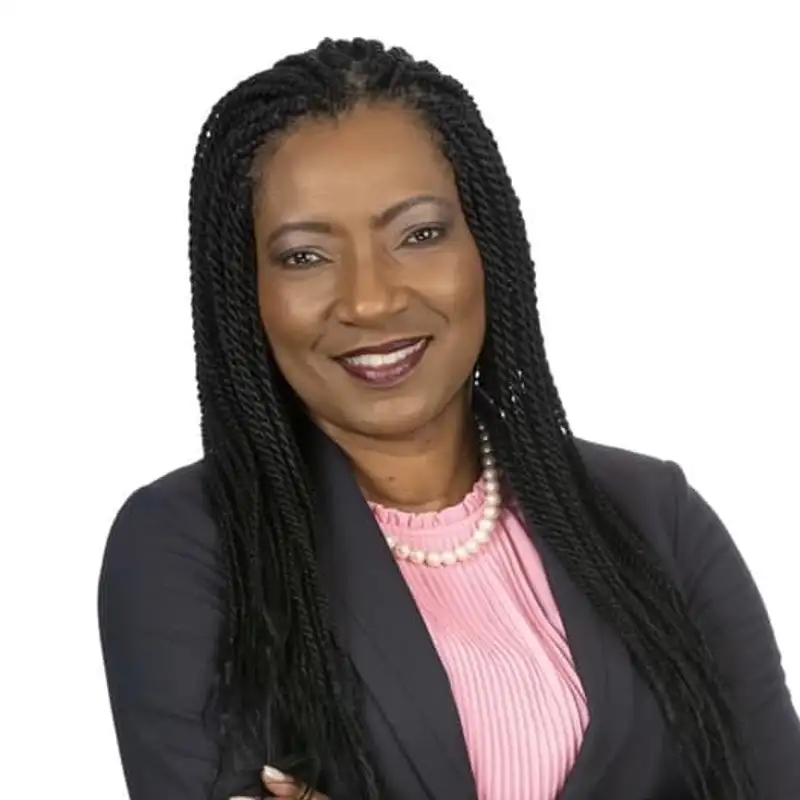
Mobilizing Collective Power: Tanya Flanagan and Dr. Elizabeth Glover Advance Unity, Economic Empowerment, and Civic Engagement
Wesley Knight 0:00
This is a KU NV studios original program. The content of this program does not reflect the views or opinions of 91.5 jazz and more the University of Nevada, Las Vegas, or the Board of Regents of the Nevada System of Higher Education.
Tanya Flanagan 0:19
Good morning, and thank you for joining me for the scoop with Tanya Flanagan, I'm so happy you decided to wake up and start your day with me here on the scoop, where we talk about life, joy, funny moments, trending topics and so much more. We promise to keep you in the know and find out what you know. So let's get started. You
Tanya Flanagan 0:47
Good morning Las Vegas, good morning Nevada, and actually, good morning world. I was looking at the stats and realized we have a few international listeners of the podcast, so we're growing, and that is exciting. I don't probably do as much as I should. To tell you that I'm here, I'm starting to do a little bit more of that, and word is spreading. Ran into someone recently who said, Hey, I was listening to your show the other day. Was a really good show. And so I was like, thank you. So I want to thank you, to say thank you to each one of the listeners who've gotten up this morning recovering from your Thanksgiving Day hangover, whether it be from too much dessert, too much Turkey, too much dressing, stuffing, macaroni and cheese, potato salad, green bean casserole, we all have our various favorites, and we love what we love, whether It is mom's recipe, grandma's recipe, Auntie's recipe. Maybe you're, you know, a newly married couple, and your wife made dinner for the first time, or made a special dish for the first time, and your daughter cooked her first dish. But whatever the case is, food is a language of love, and the holidays are time when we express it to the fullest, but the day after we get in our pockets. So this morning we're gonna, like shift the conversation to the day after Thanksgiving and also to tomorrow. I am delighted to welcome to my show a young woman who's been on the show before, but is a powerhouse full of information. Dr Elizabeth Glover, thank you. Second Vice President of the black leadership Collective is here with me today as we prepare to close out this particular portion of the month of Thanksgiving before we go into the rest of the holiday season. Liz, thank you for being here. Thank you for having me. Thank you. I am curious. I don't know how many have heard of the black leadership collective and what it is doing in the community. So please, what is the black leadership collective and what's the mission?
Dr. Elizabeth Glover 2:51
So we noticed, we as in several leaders of the community, that there were a lot of concerns being echoed from the everyday people that we serve, and they would say, That's great that this org is doing that, but they're doing something similar. Or how come we don't see more partnership? Or the number one word I probably heard in the Las Vegas area, silos. And so what we heard was a cry for solidarity, instead of silos, a cry for cohesion. And so the black leadership collective was put on by Dr Bishop Derek a Remsen, and it is an initiative where leaders from all the different organizations, the different civic groups, can come together to work on shared initiatives that benefit our black people. So we have National Action Network, NAACP, 100 Black Men, 100 Black women, the National Council of Negro Women, you name it. And then there's a plethora of other just powerhouse individuals within that body as well.
Tanya Flanagan 3:50
I love it. And what really struck me, as you said, Derek H Remsen, who's not from here, who's kind of a newcomer, and what you see is that moment when a person comes in from the outside and they see the landscape differently, so they see the tapestry differently, and they're able to see where there's a hole, right, and maybe work to plug it. Not that it's a new idea, but I think sometimes ideas can be born before their time, and then when they are revisited, they become actionable.
Dr. Elizabeth Glover 4:23
And, you know, Derek wimson, Derek Remsen, is from the west coast. So am I, you know, I'm from Chicago. He's from Detroit. And so we were nurtured, and we grew up in that kind of solidarity. Churches were, and are still the voice of the people and giving us information. And so a lot of that home, grown to your point, we're meant to be seed planters. So as we branch into different places, of course, we bring that with us. So like you said, not a new idea at all, but definitely some great and beautiful action happening.
Tanya Flanagan 4:52
And that's what I love, that it has become actionable. Because there are only you know you Las Vegas is a place where you'll see. African American people, and you feel like you see them compared comparably to, like a phoenix arizona or something like that, right, where the population you don't see or feel the concentration. But here, because we're a tourist driven city, you see people from everywhere all the time. Oh, yeah. And it makes it feel like there are more people here, more black people here than some other cities that are West Coast cities, right? You said east coast because you claim this West Coast, you see more people than some cities that you find here on this West Coast, right? So finding a way to bring people together is huge. So you guys have an initiative. What are some of the what are you working on now? So we're going to get into that in today's show, yeah, and what have you worked on in the past? Maybe you should give me the past before we dive into today, because I want to focus and stay there once we get there.
Dr. Elizabeth Glover 5:56
So what I love is how fluid yet still focused we are. And so what I mean by that is our very first initiative as a collective has been focused on the upcoming election season, being able to get to know candidates, host different forums and discussions where candidates can you know, speak their message and let us know what they're building their campaign on, what we can expect, being very intentional and making sure that we aren't limiting those kind of gatherings to only the historic west side, right? Because we have black people everywhere, and we want all the votes, and so being mindful of, yes, the historic west side is the hub, but we have to be intentional everywhere. So we've been working on that, working on initiatives where we can go into schools. Tatiana Beatty and myself, we co lead community in action. So we're working on going into schools and speaking with those 1718, year olds and getting them not only aware about voting, but excited about voting, excited about that privilege. And so through our different organizations, we have been tackling what is our strategic plan and our execution for the upcoming voting season. And we keep accountability on the table. We are constantly fact checking each other to make sure we're on one page, reaching out to our assembly members or senate members, making sure that we have one band, one sound, making sure that we can, you know, get their solidarity, and then we keep each other accountable to okay, it's like what we call, in sociology, organic solidarity, like the organs of the body, right? All different functions, but we need every last one for the body, and that's exactly what the black leadership collective brings.
Tanya Flanagan 7:25
I love that you have a nickname the community sociologist. When you mentioned that word, I was like, well, that ties into your additional personal vibe and how you get down and do your give back and concentrate. It's very smart to find the talents that each group has. Remember when I used to do the Urban League work, and then you had the NAACP, and you had your Greek letter organizations, there was a focus. And when you have a focus, you can tackle this aspect while the other group is tackling another. But what's nice about the collective is you're going to know what each one of the groups is doing, as opposed to them just operating in the word you used earlier in the show, their own silo, right? So I think this is a wonderful thing for our community as a whole. What young people and as you go out to meet with them and get them excited about the privilege of voting, and I love that you called it the privilege of voting because any given day it's at risk. Oh, yeah, you know, some legislation came down during this last special session to secure the options that we provide people to vote by mail, early voting drop boxes, so I want to get into a little bit at some point. What does excite the kids? But before we do, I started the show talking about Thanksgiving and the day after. And one of your current initiatives is looking at where we are this weekend. Sunday morning, we've had Black Friday, right? You guys did something special with Black Friday, but Cyber Monday is tomorrow, that's right. So what happened? Or because normally people come up the day after Thanksgiving, and not everyone does it, but some people get up and they go shopping for the sales, for the deals, to do their early Christmas shopping. I personally do not find myself in that, that crazy zone I do. I avoid the madness 100% I don't think I have ever in my lifetime. And I'm a shopper. Most people know I like things. I'm a woman. I don't think I have ever found myself in the midst of the crazy on the day after Thanksgiving. I'm really too tired from cooking, so I'm just like, want to rest, have a cup of coffee and maybe make some breakfast or breakfast and rest, that's what I've got. But what are you guys doing this year around this weekend?
Dr. Elizabeth Glover 9:51
So Black Friday, like you said, has already passed, and of course, again, tapping into the social part we have consumerism. And conspicuous consumption, in other words, where there is this false narrative put on people through societal norms in America, of you have to buy. You have to buy, and you have to do it right now. There's this urgency put on time. There's this deal, and you have to have this, you know, so you can look like that, and so that you can be in the know on this, and so that you can roll with the you know, and so all that pressure is put on, and as a part of America culture, a lot of people do fall into that. And so what we were pushing for Black Friday is the same thing that we're pushing for tomorrow, for Cyber Monday, which is a national blackout. Now we the black leadership collective. We didn't come up with a national blackout. We are echoing their message, and we are echoing their efforts. And so what that is, is an opportunity to make an economic impact, right? One that pulls away our dollar from mainstream America as a way of protest we're not happy with a lot of the things that we see going on. We're going to speak the common language of the green dollar. You know, there's a saying that says you can't always get people to understand your passion or care about your why. So find what's important to them. Well, the dollar is important to everybody. Doesn't matter what color you are when the money's green, right? So we took our money out the market for Black Friday, and instead we put it into black owned businesses, locally owned businesses, small businesses, and circulated and mobilize the dollar that way. And I say mobilize, because, again, it was a wide call to action. So it wasn't just those within the black community shouted from black businesses. We're just making the dollar go round and round. The strategy has to be a bigger call to action that makes other people even want to support and say, I too, am going to pour into this dynamic, into this group, and so we're pushing the same thing. Because now you know of the past. I don't know how many years Cyber Monday is being pushed just as much as Black Friday, right? I think it's, I think it may be bigger now, and they're even starting sooner now because of the convenience of doing it online, exactly. So now people can avoid the rush be cozy in their blankets with their hot chocolate, and click, click, click and shop, shop, shop. I have a good friend of mine. Her daughter said, for the holidays, you can just pay for my whole entire shopping cart. You know, not buy me this or that. Just pay for my online cart or my favorite app. You know, that's what the teenagers are saying. That is an approach you want to impress me by my shopping cart. And so we're saying, let's not do that, and let's instead, again, mobilize and elevate our own communities, because it turns out, we can even not make this a moment in time, but make it sustainable, because we actually don't need them.
Tanya Flanagan 12:33
That's like a Mic drop. That's why I just let it rest for a moment. I was like, well, that's, that's like a Mic drop. Yeah. Wow. Consumerism managed control. Consumerism. Is this the first time that it? I've heard you I've heard about blackouts before, or Black Fridays. Other groups may call it a Pink Friday or, yeah, white and red and white. You know, whatever organizations do these focus consumer campaigns to infuse the dollar into the black community, into black business. But is this the first time that the black leadership collective has gotten on board to be a part of this national push? Is this the first National Black Friday, Black Out Friday and black outsider Monday, or is this year number two or three? And I'm just like, here, yes,
Dr. Elizabeth Glover 13:30
good question. This is our first one of our very own Dr, Linda, she, and this is what I love about our space, is that she and anyone can come into it and say, Hey, but what about this? How are we being accountable to this national call to action? And there is nothing brought to our table that we throw away. You know, we grew up learning we don't throw food away. So when people bring food to our table in a form of ideas, we find a way to make it digestible. We find a way to dissect it so we can approach it. So from the moment, this was way before Halloween, from the moment she brought it to our table and said, What about this? We each begin to digest and talk about and create a pathway. And I'm talking about, I mean, this is maybe our first year doing this, but this is maybe our sixth or seventh show. So that's how adamant and intentional we've been about getting the word out.
Tanya Flanagan 14:18
Okay, I appreciate that is someone tracking so and now you because it's great to do something right. It's also important to know what is the impact of what you did. You know, are you looking at? You'll hear reports all the time. African American people are $4 billion consumers. They feed this much money into the economy, whether it's conferences, absorption of sport gear, urban gear, whatever designer wear, whatever cars, it doesn't matter, right? We are huge contributors to the economy, right? So how are you guys taking a look at it once tomorrow? Arrows over who's taking a look at what the numbers are gonna look like. What were the numbers do we have? What the numbers are like now?
Dr. Elizabeth Glover 15:07
Yeah, so that's a very good question. We really make a good effort to pride ourselves on being data driven so that we can answer that type of question, and so we're able to mobilize. Because while this is our first blackout as a collective to boycott American consumerism. At the same time, we're doing a buy cut. So we're able to mobilize with National Action Network, presiding with Dr Robert Bush, what they're already doing, which is a buy cot, which is in essence mobilizing, highlighting and making known to the community, some small and local owned black businesses and basically flooding them with customers and National Action Network, or Nan, they started this at least a year ago, where they'll do seasons of a buy cot. And then from there, we have opportunity to gather that data, to ask those different business owners what that revenue looked like comparatively to what it would normally look like, you know, had that initiative not be in play. That then allows National Action Network to give data to the body, saying, here's some of the impact that we created. We also talked about the possibility of, like, digital pledge cards, where people can, you know, essentially, pledge to be in agreement and commitment. What I love is our first vice president, Dr West, Pastor Kelsey West. He literally one of our meetings. He's, he's so gangster, like he's pastor West, but like he really stands on business. And he said, he said, in our last meeting, he said, listen, with his East Coast accent, it's 11am we've been here since nine before we go a step further, sound just like him. Oh yeah, this was him. Before we go a step further, I need to know, are y'all really down? Are y'all gonna participate in this? I mean, we're pushing it, and we're telling everybody else, but what about y'all? What you gonna do with your money? Are you gonna be spending it in stores, restaurants, this and that? And he literally met everybody at the table. Tell him yes or
Tanya Flanagan 17:00
no, it's a consciousness right, like right Monday, Monday. So Cyber Monday for some will be easier than blackout Friday. That just happened, because if, if you were out and about on Friday, I don't care if you stopped and got coffee somewhere, right, or a muffin or a cookie, or whatever you decide to do. You have if you're hungry right now, you have to make a conscious effort while you're out to target, right? If you're African American and you participate, and even if you're not African American, and you decide you want to participate by patronizing a black owned business that you maybe otherwise would not seek out, because you hear about it and you're like, hey, this is a great day, right? To do this, right? You have to consciously seek it out, whereas Cyber Monday, I just have to not buy it online that day. But some people would argue, then, if I just don't buy it on Monday, what's the difference if I buy it on Wednesday?
Dr. Elizabeth Glover 17:57
That's a good question. And so the national call to action is that this blackout goes from November 25 all the way to December 2. Oh, so that includes cyber Monday, but there's some rollover there. And it's not just about spending on retail. It's about restaurants. It's even about protesting by way of not participating, as you normally would in projects or events. If folks were to look up the national call to action on the mass blackout, you'll notice that it even talks about, you know, reducing productivity because everybody cannot afford to protest by way of, like, not showing up at work. Like, that's not realistic, and the black leadership collective doesn't want to put anybody's, you know, job at jeopardy.
Tanya Flanagan 18:38
But there's been anything to not to buy, or not? Yeah, exactly. We don't want
Dr. Elizabeth Glover 18:43
to be the cause of that, but it's about overall withdrawal from our dollar to our time, because time is also money. I mean,
Tanya Flanagan 18:51
I do believe that exercises of this nature can raise consciousness and awareness about a mindfulness. Maybe that's the word about what is around you and who exists, and people may see it well. Is that, is that you know racism, but is it, and I say it akin to in every city you have a Chinatown, but I think what it goes to is some of the loss of culture for African American communities as a whole, because it's the history is so splintered. So you didn't come to carry all of your history with us right to various places, and then it was attacked at different times. So it's not like neighborhoods are kept intact. Vegas is unique even by having a historic west side, which carves out a space that was this space, right? And I'm not saying that every city doesn't have, but what it usually is, is just an area that was red lined where, this is where you could buy a home. This is where you could. Live, and by default, this is where you could purchase and the only place you could go. It became this historically African American space, but it wasn't a space that was born out of pride, right, right? It may have morphed into that by virtue of what was added to it to enhance it, but it's not like a Chinatown, yeah, an Asian district,
Dr. Elizabeth Glover 20:28
yeah, right. It's not. And to your point, those districts, they're so self sustainable, the people can never, ever leave that area and have everything they need, from banking to food, to entertainment, you name it, right? And they created it by design. We inherited a circumstance and learned to make it into something beautiful, right? And our pride is not in how we got it, but how we made it this far, in spite of, you know what I mean. And so that's why our urge is to for us as a people, as black people, to remember the power we possess. It's not necessarily a power that even some of us probably wanted, but response, but it comes with a great responsibility that we can't negate nonetheless. So as we're participating in this, it's an opportunity for education to explain to our youth exactly what you just said Tonya about listen, you know that neighborhood we always drive through, or that neighborhood we live in, you know that is more than us just buying a house here. There was a time we could only live here and connecting that to so this is why we participate in this. Because still to this day, we see projections in how our nation's unfolding, or how our government's unfolding, that still perpetuates the same type of inequalities that allowed for us to only be allowed to live here back then they want to, you know, still perpetuate and project these things. So this is a way to protest. I think it's so healthy too, because everyone's not going to get up with a bullhorn like Minister stretch, I love my brother, right? Everyone's not gonna get up in front of newscasters pointing fingers like I don't have no problem doing it like you, right? Everyone's not gonna say, No justice, no peace, like Dr Bush, but it's about teaching the youth that you can also find other ways to protest and literally, initiatives such as the blackout and taking back your time and your money. That right there is enough to say I know where I stood, because a lot of times what happens is, we love to say, if we live back in the day, what we would have, could have, should have done right like we just have all the answers, but this is a time to prove it. Well, you're living in this day right now. What could you, should you and would you do? Because you
Tanya Flanagan 22:36
have an opportunity now, right now, and you don't know what the opportunity would have been like then. But even too, as you were speaking, I was thinking, do we have to call it a protest? I mean, in some ways it is, but also maybe it's just a moment where you take pride. I think a lot of times, there's so many things, and we talk about this all the time. It's talked about during Black History Month. It's talked about with the 365 you know, campaign, where Black's 365 because you're who you are every day and every day, all of us are making a contribution to this country, for good or for bad. You are making a contribution, I'm going to point out, for good or for bad, but you are still making a contribution. But it's that moment where you take the pride and understanding who you are, where you come from, and this is an opportunity to invest in that lesson, invest in that legacy, absolutely right, moving your story, our story forward with intentionalness and purpose, right? So that, because people get resistant to the idea of protest, but nobody's resistant to the idea of just personal self pride. I love that, and everyone respects pride and culture and heritage, right? Your grandparents were your parents before them, their parents before them, just where you've come from. I don't care if it's the story that's told in the quilt, right, that's handed down, understanding the richness of what those things symbolize exactly, and why it's important to respect your community, your elders as young people, while there's a responsibility to go far to do more, and how we talk about things, deal with etiquette, spend dollars, understand economy. I hope this conversation as it looks at holding on to the dollar and spending it purposefully, also talks about investing in yourself to grow your dollar so that you have more, because if you don't spend it, then you have it, right, but what do you do with it if you don't spend it?
Dr. Elizabeth Glover 24:49
I'm so glad you brought that up first of all, our last five minutes. Okay, I love narrative. Framing is important to any sociologist, so I love that you even. Gave me something to take back to the body to give that understanding of is more than it's not just a protest. It's also about nurturing pride. I love that. I love that. And that's a lot more digestible for a lot of folks. But to your question about, what about not spending it at all? That's where those conversations of sustainability kicks in, and Pastor Kelsey West was was echoing just that, that the next steps has to be on teaching folks now, well, what do I do with this money? How do I make this money grow? How do I invest it? Even on a small scale, Cash App allows people to invest. You know what I mean? There are so many other things you can do with that money. And so that's where it is on us as different organizations to create, not just great events, because Vegas is the best at throwing all the events. Listen, we don't mind some good events, but also programmatic initiatives that continue the work to teach.
Tanya Flanagan 25:52
Yeah, I had a thought about because online purchasing when you started, you talked about the urge, right? They create this urgency. You got to have this really. It becomes impulse buys. And before your mind even processes how you do, you have the money to pay for where is the money coming from? When you see something and you're like, Well, okay, it's a little high, but if I get I can do this, and if I move, you know, I could ride Peter to pay Paul, but eventually everybody gets paid, and everything's groovy, right? But you have to make some sacrifices. Anytime you do that, you may be setting yourself up for a setback, right? It's the conversation where, if you learn to manage the impulse, right, and you identify what you really want, and this is what I hope you all take and add to the what do you do with the money? Okay, if I don't have the impulse and identify what I really want or what I really mean. So I learned to save and I learned to let it sit. It's nothing wrong with rewarding yourself. You're gonna come and you may come into it more follow. Fall of cash. I never say try to save it all. Take whatever's on top. If you got $5,359.30 we'll spend the $359 ball out with it and leave the five and figure out what you really need to do. Because you feel like you have all this money, it's really not that much. And you look up and you're like, I thought I have five. Yeah, you thought you did, but it's not a lot. It's gone. And it's gone because you didn't think about how to use the money. And folks, I just think that also, I hope that this also generates action on tomorrow, and I hope it generated good action on Friday, but I hope it generates conversation and action in the future going forward, on how people look at money, how people use money, how people respond to debt, how people manage credit. Because all of this is part of the comp, the long game in this conversation, we're in our last minute. Dr Elizabeth Glover, community sociologist, second vice president of the black leadership collective has been with me this morning, talking about the blackout on Friday and tomorrow. Any last words, just you want to share with us our thoughts, or how can people find you and find the group? I mean, we haven't done that. We got 50.
Dr. Elizabeth Glover 28:19
Oh, goodness, yes, yes. If you look up hashtag, you can follow the hashtag black leadership collective. You can follow me personally on most any platform. At enlighten me, Liz, e n, l, I G, H, T, E N, M, E, L, I Z.
Tanya Flanagan 28:39
Thank you so much. It's been a pleasure. Thank you. Thank you folks for waking up this morning and spending some time with me on this Sunday. I hope you had a blessed Thanksgiving weekend, and I hope you have a wonderful week, and as we move into the holiday season, remember it's not what you do for folks, but it's how you make them feel. So be kind, be thoughtful, be caring, be giving, let's love on one another and have a great day and a great week. Thank you. I want to thank you
Tanya Flanagan 29:12
for tuning into the scoop with me. Tonya Flanagan, and I want to invite you to get social with me. I'm on Facebook and Twitter. My name is my handle, T, a n, y, A F, l, a n, a G, A N. You can also find me on Instagram at Tonya almond eyes Flanagan, and if you have a thought, an opinion or a suggestion, don't hesitate to shoot me an email to tonya.flanagan@unlv.edu Thanks again for joining in. Stay safe and have a great week. You.
Transcribed by https://otter.ai