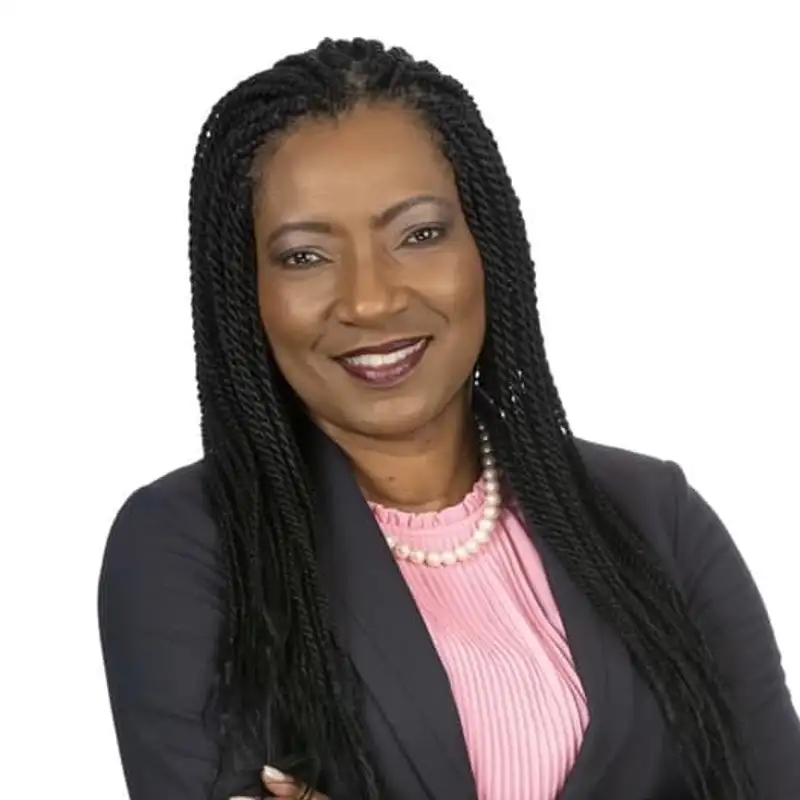
Venicia Considine Discusses Legal Roots at Legal Aid Center of Southern Nevada, Water Rights, Climate Challenges, Tenant Fee Reform, and Legislative Collaboration in Nevada
Announcer 0:00
This is a KU NV studios original program.
Wesley Knight 0:04
The content of this program does not reflect the views or opinions of 91.5 jazz and more the University of Nevada, Las Vegas, or the Board of Regents of the Nevada System of Higher Education.
Tanya Flanagan 0:19
Good morning and thank you for joining me for the scoop with Tanya Flanagan, I'm so happy you decided to wake up and start your day with me here on the scoop, where we talk about life, joy, funny moments, trending topics and so much more. We promise to keep you in the know and find out what you know. So let's get started.
Tanya Flanagan 0:42
To Good morning Las Vegas. Good morning Nevada. Good morning world beginning to have some international listeners, and so I like to say hello to everyone. Once again, it's my pleasure to be with you here on a Sunday morning on 91.5 KU NV jazz and more on the beautiful campus of the University of Nevada, Las Vegas. I always take delight in bringing interesting people on the show and hoping to provide you with conversation that is informative, sometimes funny, engaging and thoughtful. Today, I have the pleasure of welcoming one of my Nevada State Legislature colleagues to the studio who I had the great pleasure of serving on committees within our 83rd legislative session, beginning of 2025 we are in 2026 that's so wild to believe. It was a year ago, she chaired a committee that I've served on, and I have the greatest respect for her leadership and what she brings to the table and does for our community. So without further ado, I'd like to welcome Nevada State Assembly Member, Venetia Considine, district 18, to the show. Good morning. Thank you. Good morning. It's great to be here. Thank you for taking some time to sit down and talk with me and to share some insight about who you are and what you do with the listeners in the community. I think these conversations are so important because oftentimes when people meet you, they meet you when you may be on the campaign trail or you're at an event, and it's not an opportunity to have an intimate conversation and get to know you.
Venicia Considine 2:14
This is very true. It seems like you're the past couple of weeks, I think I went two straight weeks with different events and running into people, and you have sort of that bite sized conversations with folks, and then you move on to the next folk. And yeah, it's pretty hard to get to know people on your campaign trail, especially at events.
Tanya Flanagan 2:33
It is, well, we don't have tons of time, but we do have 30 minutes, and I hope that we have some fun and peel back some of the layers of the onion. To know more about who you are, so assembly member, but everyone, usually in the legislature, maybe not everyone, but most people have additional day jobs, and so yours is as part of the legal aid center of Southern Nevada, where you are the Director of Development and Community Relations. Better question is, Who are you
Venicia Considine 3:04
well, so I have to say that I am a three time graduate of UNLV. I have a bachelor's degree, a master's degree, and then I went back to Boyd to the law school because I wanted a good, paying, consistent job that followed my values. In my last semester, I went part time night and worked during the day. My last semester, I was really worried, because I want, really wanted to work at Legal Aid, and when you're in law school, there's a lot of pressure to do internships. And I couldn't, because I had a full time job, and I had, I went to law school. My daughter was five, and, you know, trying to balance all of that, and someone told me that the legal aid center of Southern Nevada had an externship open. So I just ditched everything, applied for it, got the externship, quit my full time job, ended up being able to graduate law school a semester early, and that was in 2008 and I've been with the legal aid center of Southern Nevada since that externship. So I ex turned and then I clerked until I passed the bar, and then I started my legal career in 2009 right when the crash hit, wow. So I was a consumer protection attorney for eight years, I did a lot of work on housings, foreclosures, payday lending, just really, a lot of just consumer, contractual, predatory type stuff that I worked on. And I did that for eight years, and then I moved up to the director of development, and I've been doing that for, oh my gosh, I think my ninth year.
Tanya Flanagan 4:40
Oh, wow. Do you feel like the work that you do at Legal Aid, the Legal Aid Center, I feel like I'm hearing who you are, right in the space that I've shared with you, in the legislative space. Does that shape what you do, what you want to accomplish when you go up to bring bills before the state? LED? Ledger on behalf of citizens.
Venicia Considine 5:01
I think it does a lot. Partially, it's almost 5050, what my job is. And then my district, District 18, is on the east side of Las Vegas, so there's a lot that I just do from from that district, and from that point of view, living in an area that's been around a long time, that's, you know, Boulder highways, the center of my district, so there's a lot to to see that you want to do just from also being in that district. But I had the opportunity early in my legal career to go up to the legislature, and I don't know if it was necessarily lobbying, but really fight for some bills and testify on some bills. And it became clear to me pretty quickly the impact that you can have. Like I think I was blown away the first time I went up there, and I just walked into the offices of senators and assembly people, and I just got to talk to them. And I didn't know it was that easy, because it always seems like this far away thing. So it was always sort of in the back of my mind that I could do things and at Legal Aid Center at that time, if you saw a problem and you really tried to fix it, and you know, you could do so much through the judiciary if the problem was the law, because we're a private nonprofit, 501, c3, I could actually draft a law and see if somebody would run it. So that did have a really big impact on on what I could get to do, what legal aid does. And then, as I, you know, thought about maybe running, I kind of had that background, but I also had a much wider view of not just what happens at Legal Aid or what we see at Legal Aid, it's just what you see in the community too.
Tanya Flanagan 6:40
I think before we go too far, I want to make sure people know exactly where on the east side, district 18 lives. So can you share the boundaries to paint a picture for the listeners?
Venicia Considine 6:50
So it's sort of a weird shaped district. It kind of looks a little bit like Texas. So it starts at Sand Hill and Tropicana, and then it goes east all the way to the wetlands. So it hits the wetlands, and it hits on the other side of the I guess the wetland River, if you want to give it a name, is Max's district. So that's what separates our district. And then it goes as far south as the as Galleria and Boulder highway, and then as far north as Vegas valley and Hollywood. But it's not straight. It sort of turns at Boulder highway in Sams town. It turns east, and kind of catty corners up there.
Tanya Flanagan 7:28
Okay, I see it. I hope. Well, those who know the valley well will see it too. That's a really interesting mix. So you do get to see a lot? Yeah, you have both redevelopment, you have economic strain, you have nature. You have very unique, yeah, very unique communities. It's an is the Air Force Base? Kind of like touching up to it with the Hollywood part? No, I've got valley, not that just, like, it stops, like, what before? Yes, Vegas valley
Venicia Considine 8:01
and Hollywood. So just yeah, if you sort of turn, if you do that, and you turn right, there's a few developments, and then you're in the desert, okay, but I do. I have the bird Preserve. I have assembly district 18. Within the boundaries is the bird preserve, the Clark County Wetlands Park, but then also boulder highway in and
Tanya Flanagan 8:20
of itself. It's just an iconic stretch right of road that is really always a conversation piece in the community. Because I remember as a young girl coming in with my family. You came in down boulder highway. You came into town on boulder highway. Remember when the Show Boat casino was aging myself, but I remember when the Show Boat casino was there. And I used to always get super excited because it was so crazy to me that there was like this boat looking casino, space boat hotel in the middle of the desert. And I thought it was pretty cool. So that's an interesting area, so getting back to the work that you do, having the experience and then going up visiting, drafting a law has really helped you, kind of inspired you to go into the space. You were more prepared than the average person would be arriving at the legislature because you had already had this experience where it allowed you to understand how accessible right, the legislative space is, how accessible the beginning steps to make change are
Venicia Considine 9:23
made me very optimistic. Like, you know, I had this belief that if it's a good bill, you know, you just, you can get somebody to carry it, you can draft it, you can work with people. It makes so much sense, because it makes sense to you as a bill, and then you go up there and you fight for it. And that it is, I think, I thought I was well prepared, but that is one side of it that's sort of like watching a movie, but then when you go to Hollywood, you find out how movies are made. And it's not necessarily that, that optimistic, hopeful level, right? But I try, yeah, but it's still, I still. It's that optimism and those possibilities. That I still hold on to, because we do get some, do get the good things through. We do not
Tanya Flanagan 10:05
always a game of chess, right? But sometimes it's a game of chess, sometimes it's a game of war.
Tanya Flanagan 10:11
This is true too. I think that's really neat. How you started? What would you say? You chaired government affairs this past session. You vice chaired revenue, and you sat on natural resources, yes, which is an interesting combination. So government affairs, policy, government administration, revenue, the driver or us, managing purse strings, and then natural resources, water, land. What was the most interesting committee for you? And why?
Venicia Considine 10:43
Oh, that's a really hard question. So I was on government affairs my first session, and we just finished my second session. I mean, sorry, third session. So I hadn't been on government affairs since 80, since the 84 years ago, right? Yeah. So chairing government affairs without being on the interim committee or anything, was kind of like a deluge. But it was incredibly interesting, because I had to go back and look at everything and remember, you know what it does, and then also have never having been a chair before, it's kind of, you know, just jump in and do it. So I found that incredibly interesting. And as the session went on, I enjoyed it more and more. So if I am lucky and I get to go back, I would really still love to chair government affairs, because now I can kind of do it from the beginning, but that is so different from natural resources. I love National Natural Resources because I really got involved in water law, and I apologize. I'm just going to apologize ahead of time. I'm originally from New York, so sometimes I say, what a and people make fun of me, so I'm really hard to say water law.
Tanya Flanagan 11:48
I love a good New York accent, so do not hide that. Let it out.
Venicia Considine 11:53
But I find it, like, incredibly interesting how the history is all involved. You know, it's like, first in time, first in right? It's, you know, I was here first. So I get to get the water, and I get to keep it, you know, I get to keep my allocation forever. And then you have all this growth and all these things changing. And then, you know, you've got groundwater and all of this different types of water and all these arguments about it. And then down here in Southern Nevada, we all talk about the Colorado River and Lake Mead, and it's, it's incredibly interesting to me, and I love that part of natural resources, because I don't kind of have to fall into that. It's not anything that I would have sought out and, you know, thought it was as interesting as it was. And I'm super passionate about revenue, because I think that's what makes the state run, and I think it is really indicative of who we are when we decide what we pay for and what we use our revenue for, and how how we look at gathering it. So I the all three of them are actually super interesting to me. I love revenue the most, though.
Tanya Flanagan 12:56
I was gonna ask you, which one's your favorite? They surprise you too. I mean, having been in the space with you, it surprises you. What you you don't know what to expect. You know, you're assigned a committee. You go into it, and you immerse yourself, and then you're surprised by what you think you're going to like, I guess is what I'm saying. You're surprised by what you actually end up going, Oh my gosh. I didn't expect this to be so interesting or so engaging, or to just wrap me up so much, and it happens that way, water is a big conversation, so I'm going to go back to that, because there's meetings. There are meetings going on as we speak. There have been meetings going on all week to talk about the allocation of water from the Colorado River. The Colorado River water commission has had these meetings, and these conversations have been ongoing for a really long time. I think there's even something coming up in the community on the north end of town to talk about where this conversation to reallocate it is, what are your What are your thoughts on as we watch Lake Mead drop and we watched the snow pack not happen because it is a very warm February. I've walked outdoors every night this week and thought, I've gotten up super early to go, do, you know, some physical therapy to deal with some injuries. And thought, why isn't it cold? It's, you know, winter. So what would you say? What would you say to that?
Venicia Considine 14:21
Oh, that's, that's, that's a lot. One of the things, the first things that I learned is that it doesn't for us and for Lake Mead, and for our allocation of the Colorado River, we need it to snow in Wyoming, and we need it to snow in Colorado on the right side. And it could snow a lot in, you know, in Reno and Tahoe. But that doesn't necessarily help us at all. It might help other areas of Nevada, but for the Colorado River, that doesn't help us. And it's interesting, because the the allocations that were originally created were created before there was very many people in Nevada, so we have the smallest allocation of all of the seven basin states. Yes. And then on top of that, you have. Of the upper basin states who don't necessarily, historically have the reservoirs that we have, because, you know, it's it rains more often in there, there wasn't as many uses. It's still a smaller population. And then when, you know, there's the the conversations about Lake Powell, and one of the big conversations is, as Lake Powell goes down, do we stop keeping water at Lake Powell so that Lake Mead could have more water, and or do we sort of bottle it up at Lake Powell? And then California has the highest allocation of the Southern basin states. They have like, 4 million acre feet of water, and we have 270,000 and we're really, really great. I think, I think we're the standard of, you know, how we manage our water and how we sort of have recapture it from, you know, from tap to Lake and back. And we're really good about keeping it, but we still have the smallest allocation in our town, you know, we're still growing. And we took a trip one of the conferences that I went to, we went to Arizona. And Arizona gets a pretty good allocation, and they have the Central Arizona Project, which is kind of like Los Angeles, where they just have these, you know, really wide, hundreds of miles long, canals for the water to go through, and they're not covered. And I would have never thought about necessarily that before. And now I'm like, I'm thinking of all of the water that is, you know, being dissipated and evaporated, and that's not being, you know, caught, and that's actually an issue between the upper and lower basin. Is how much water is evaporated, and where is it going to be? Who's going to be responsible for not getting that water. So all of those things are really interesting, but they actually just over allocated the water to begin with. They sort of measured the top years and then guessed it and allocated it for like, 12 million, I think it's 12 million acre feet, and that wasn't even enough. So even if they split the upper and lower basins by seven and a half each, where there was not enough water to cover it at any point anyway. So it's, it's, I think it's the biggest Rubik's cube of our time. Is how you get folks to be willing to give up rights for the bigger picture when they don't have to? Because the law is, you know, California gets keep theirs. They willingly have to give it up? Yeah, I know that if we, as as the seven basin states, don't figure out how to allocate it amongst ourselves, the Supreme Court will. And nobody really wants that. But from everything that I'm looking at, nobody's really willing to be the first one
Tanya Flanagan 17:36
to compromise. Yeah, I don't know if you have anything on this. And talking to Assemblymember Venetia Considine, representing District 18 in the studio this morning, and very pleased to have you here where the conversation lies, as it pertains to sovereign nation, to indigenous people and their access to the very same water that at one point was really their water. But where does that fit into this water conversation?
Venicia Considine 18:07
They actually now have more of a voice than they might have had before, and they get their water rights so they they can do what they want with their water rights, as can sort of every state, but it's, it's important that they have them. It's good that they have them. And when I'm saying the seven states, I should incorporate them also. There's also water rights that are supposed to go to Mexico. So that's even, you know, beyond the seven basin states, and we're supposed to be allowing water to flow into Mexico. But the tribes that have those water rights, they they're, I think they're all treating them a little bit differently. Some are willing to sell their water rights or the use of their water rights, but again, they're not going to give them up. And I think if we look at the idea of first and time, first and right, they should have those water rights before anybody else.
Tanya Flanagan 19:00
Right. Right. Thank you for talking about that. This is such an important issue, and as we all live here in the desert and we worry about and I sent a meeting the other week where someone asked about water and the shortage, and what do we do is we watch the lake levels trickle down and how they can engage more in contacting someone to at least voice concerns or opinions and share and that space, just like any other conversation that we have at the state legislature level, that trickles down to how it affects folks in local communities, it's just easy to access your legislator to talk about it, whether you're talking about housing, education, or any number of issues, and I think that's one of the things that makes Nevada's legislative process what it is, you know, the citizen centric legislature.
Venicia Considine 19:52
Yes, it's great, because I think the first bill I ever brought was someone in my district calling me saying, hey, there's a problem. Here, can we fix it? And yes, we did. We fixed it. It. You know, it was the ability to do that. What's interesting is, your district is not really that far from mine, but each district does have, sort of its own idiosyncratic idiosyncrasies. Yes, so in my the east side, I could say overall, because it's beyond my district. We have the issues with like the urban heat islands. We have streets without trees. We have, you know, lots and lots of pavement. And we, you know, the east side seems to be more supportive of conserving water, maybe because they deal with that, we deal with it more often, and then talking with different people in different areas and their views of, you know, conserving water, or who should have the water, who can use more water, that's an issue, I think, that that came up in the legislature, and it's still, it's still going on. The Southern Nevada Water Authority is in my district, like the reclamation so I've toured it like multiple times. I think we do a really good job on everything. But it's interesting that even in the middle of the desert, where we've built this incredible springs, you know, Las Vegas, there's still people here who have different versions of what we should be allowed to do with water, I got a lot of complaints because they they this, the legislature, in a bill, sort of made pools more than, I'm going to forget how big, but a certain size of a pool, you couldn't build new pools that were certainly, yeah, and some people were really upset about it. And sometimes I have to be reminded that through through my lens, and through my experiences, I'm like, great, we need to conserve water from my point of view. This is, you know, important to me. And then I have to be reminded that other people, you know, their point of view is but I've had this pool, I want to build this pool, or this pool isn't big enough for me, because I have very specific requirements that I want for this pool, and it's my property, and I should be able, you know, to do what I want with my property, so I have to, as a legislator, you have to sort of think about, okay, way to
Tanya Flanagan 22:05
balance of the collective compromise and the collective responsibility in terms of what's good for the greater whole. It's not just what's good for one it's such a common conversation that we have when you are in the legislative space, because you're not looking at it just through the lens of how it affects your respective district that you represent and the people who live there, or even just you. It's the state as a whole, or it's the region as a whole, and you have to think about the consequence to everyone. And you're elected to represent a specific area. In your case, is district 18, and my case was district seven. But I'm not just there to think about, how does this affect North Las Vegas, and this sliver of Las Vegas that live within that lie within district seven. But if we make this decision wherever it comes from, how does it affect everyone in the state? Because some things do have a true statewide effect, where some can have a more of an area effect. Like some things are very much about the rules. Some things may be about the more populous counties of Clark or Washoe, but that's quite, quite a heavy lift. I always want to make sure, though, before I ask you more questions, that if there's a way for people to stay contact, in contact with you, or get to know you more, follow you, watch your story and see your work, if you want to share any information on how to engage with you Sure?
Venicia Considine 23:25
Well, I have the legislative email. If anybody wants to reach out, you can just go online. My name is not easy to spell, but my legislative email address is venetia.com sign at state, I'm sorry@asm.state.nv.us so. I am also on Facebook, Instagram, blue sky. I do have a Twitter, I'm sorry, an x, but as as I just said, I don't really check it that often or look on that. But also, and Venetia, it's v, e, n, i, c, I, a. There are a few of us, but not too many, and not that hard to find. And I do have a website. It's Venetia for nevada.com and it's Venetia f o r, nevada.com I usually have what I call visits with Venetia, so once or twice a month, either at the Whitney library or at the Whitney Recreation Center, sort of just open office hours within the district. So I just, you know, bring some donuts and kind of sit there. Those are on hiatus for the moment, but they'll start again in May at the Whitney recreation center. So those will be posted on my website.
Tanya Flanagan 24:34
I love that idea. It's a great way for people to come out and meet you and get their questions answered, and just to even offer an idea that might turn into a bill, it's summertime. Well, not summertime. Summertime from a legislative standpoint, because we're in the break, we're in the interim committee space, and you are serving on I'm
Venicia Considine 24:57
serving as Vice Chair of the Government Affairs Kim, interim. Committee, and I'm also sitting on the natural resources interim committee.
Tanya Flanagan 25:03
Okay, can you help people understand kind of what interim committees are all about?
Venicia Considine 25:07
Yes, I'd love to. So you have the regular legislative session. So that's 120 days every other year, and that is when we come together and we can vote on bills. It's the only time we can vote on bills, is when the legislature is in session the interim committees, because we only meet, you know, every 18 months, or whatever that distance is, to be better and more effective legislators, we've created these interim committees so we can meet once a month as a committee and have agencies come in, have, you know, discuss ideas. We talked about federal grants at the last government affairs committee meeting, and we had people from the state, local, non private nonprofits, everyone come in and sort of talk about that issue. Now, whether or not the idea is, hey, we need a bill to do this, we've actually learned more about it. We've asked questions that gives us the opportunity to think about that as a bill before we get to the legislature, and that every committee is doing some version of that, so that we are better prepared. Because 120 days goes by so fast, the interim committees give us some time to sort of take a breather and really look into, you know, a subject or an area, to see if, you know, if it needs a bill, if it needs to be fixed, or, you know, just to update people on what's happening in the community and then the state.
Tanya Flanagan 26:27
I also want people to understand that the work that you do isn't just happening in the 120 days. So in addition to this work, you just talked about the interim committees as a legislator, you're also thinking about bills, and we're getting down to the end. So this answer is going to be super short, but you're also thinking about bills that you might want to carry, and in crafting those ideas,
Venicia Considine 26:49
yes, and I have revenue ideas, but also I had a bill last session to help tenants with rent and junk fees, and I want to continue in that vein, to sort of tighten up some of the laws around rentals and apartments.
Tanya Flanagan 27:05
I want to say thank you for that work, because so many people benefit from the work that you did. I saw so many social media posts just your praises for this bill that made more transparent the fees associated with leasing an apartment, leasing any home, because people agree to one price. And then there's all these other things that are in there. And when it finally comes down to the end, there are so many fees in there. They are paying 234, $500 more than what they agreed to pay. So for that, I want to say thank you for your work on that bill, your thank you for chairing committees and just thank you for the sacrifice that comes with making yourself available to be a representative for 1000s of people who live in an area of Southern Nevada who otherwise would not have someone talking about what's important and how it
Venicia Considine 28:01
affects them. Thank you. It's always a team effort. You know that, as in the legislature, no bill one person can't carry one bill. It's always a group. And it's an incredible honor to be able to do this and have the opportunity to try to make lives better for Nevadans.
Tanya Flanagan 28:16
Well, thank you. It takes a great mind though to think of what we need, and you're one of those great minds. So thank you for your service, folks. As we come down to the end of the show, I've had the pleasure of having Assembly Member Venetia Considine of district 18 on with me. Thank you for tuning in to this edition of the scoop of Tanya Flanagan here on 91.5 KU MV, jazz and more. We will be back once again next week with more information, another interesting person, and I hope that you will tune in until then. Have a great week. Stay safe and enjoy Black History Month. I want to thank you for tuning into the scoop with me. Tonya Flanagan, and I want to invite you to get social with me. I'm on Facebook and Twitter. My name is my handle, T, a n, y, A F, l, a n, a G, A N. You can also find me on Instagram at Tonya almond eyes Flanagan, and if you have a thought, an opinion or a suggestion, don't hesitate to shoot me an email to tonya.flanagan@unlv.edu Thanks again for joining in. Stay safe and have a great week. You. Yeah.
Transcribed by https://otter.ai