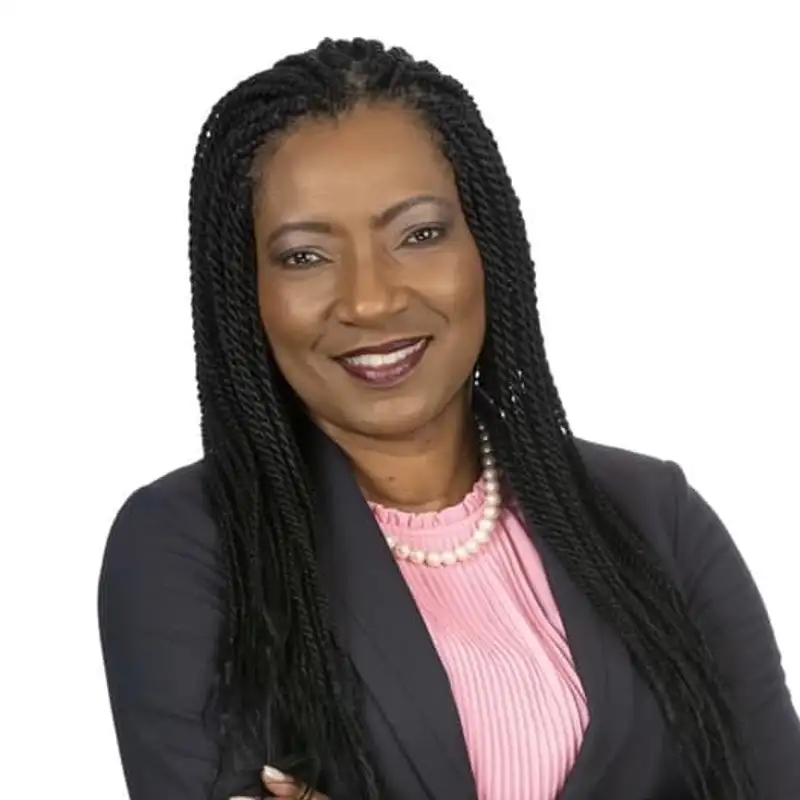
Assemblywoman Natha Anderson Joins "The Scoop" to Discuss Education, Native American Tuition Waivers, Food Insecurity, and Her Vision for Northern Nevada's Future
Wesley Knight 0:00
This is a KU NV studios original program. The content of this program does not reflect the views or opinions of 91.5 jazz and more the University of Nevada, Las Vegas, or the Board of Regents of the Nevada System of Higher Education.
Tanya Flanagan 0:19
Good morning and thank you for joining me for the scoop with Tanya Flanagan, I'm so happy you decided to wake up and start your day with me here on the scoop, where we talk about life, joy, funny moments, trending topics and so much more. We promise to keep you in the know and find out what you know. So let's get started. You
Tanya Flanagan 0:47
Good morning Las Vegas. Good morning Nevada, and welcome to another edition of the scoop with me. Tonya Flanagan, I always try to bring you intellectual and delightful conversations that allow you to explore topics that you maybe had not thought about or you might have even been a little bit curious about when it did come up in a conversation. Come up in a conversation where you might have been in a room full of interesting people. Well today, this morning, is no different than any other morning right here on 91.5 KU NV, jazz and Moore, I am pleased to welcome to the studio a dear friend of mine and colleague that I had the pleasure of serving with in this recent 83rd legislative session. Assemblyman member, Natha Anderson of northern Nevada.
Natha Anderson 1:28
Hello. Thank you so much for having me. Thank you
Tanya Flanagan 1:31
so much for joining me. Natha represents you represent district 30 in the northern portion of the state. Please just share with the listeners, so that they can get a sense of where the district is.
Natha Anderson 1:43
Sure it's mostly the city of sparks. And Sparks is right next to Reno, kind of like Vegas and Henderson. We're that close. Sparks is predominant. Was our history was actually a railroad town, and my grandfather was a railroader, so I always make sure to bring in the railroad thing for the people from Northern Nevada, if you know where legends the shopping area is, that is in my district, and that's kind of the area that I represent,
Tanya Flanagan 2:11
super cool. One of the things I love about talking to you is how much you mentioned that your your grandfather was a railroader, how much history your family has in Nevada. I'm extremely pleased that you're here today, because we're in Women's History Month, and you are truly one of the trailblazers in this state, in the way that you serve the people of Nevada, and you continue to give back your family has a super rich history in this state. Can you share a little bit about that? Sure.
Natha Anderson 2:41
Well, thank you. I always love whenever my family gets brought into it, because I think all of us, our leadership skills are directly related to our parents and our grandparents. So on my dad's side, he was a first generation American. His parents, both of his parents came from Ireland, and they they installed in him the importance of the community and working together, he also became, he was a teacher. He was the first person in the family to graduate from college. He decided to become a teacher, and he also served in the Nevada State Legislature. He served for about 20 years, and served as the chair of judiciary, although he was never an attorney, and so that was one side of my family. My mom's side is also something that I'm incredibly proud of. She just doesn't talk about it as much. She is actually the daughter and granddaughter of teachers. And so I am on my mom's side, a fourth generation educator, because that's what I do in my real life. And she was president of the teachers union, and so she was also a leader in our community as somebody that stood up for the working class and for our students and for public school. So I'm very proud of both my parents.
Tanya Flanagan 4:03
It's quite the legacy. You mentioned in the introduction of your family history that your mom is a T was a teacher and that you are an educator as well. What do you teach and how? I mean clearly, you found yourself in it, I assume because of the family influence,
Natha Anderson 4:22
believe it or so, first I'll tell you what I teach. I teach high school English, high school civics, which are seniors, which it is so much fun and yet really tough to teach civics at this time frame, because we really are in a time when checks and balances, there's something that the students can see, and it's pretty exciting to see them literally make connections from what's being discussed in class and what's happening in government. And then I also teach a class this year that's called Writing in film, little bit more difficult to do, but now going back to why I went into education, but. Believe it or not, I was not going to become an educator because I had been brought up around those classrooms. Let me tell you, I know how to put up a bulletin board in less than five minutes. I'm really good at it, because I think every weekend I was at one of the others classroom doing something around bulletin boards and other things, as a daughter of educators. And you can ask anybody that has parents as teachers, we know what that's like. But then as a college I think, I think I was a sophomore, I had a I received a scholarship, which was, I was really excited about it helped me pay for a whole bunch of for one of my classes, actually two of my classes, but one of the classes I had to take was education leadership, and in that class, you had to actually go in and volunteer in a classroom. And I ended up going in to volunteer for a fifth grade class. And I can still see the student. I can't remember his name, but I can still see the person, and he was a fifth grader reading at a first grade level. And English is my world. I love reading. It's like my favorite thing to do. It's how I escape. And I can remember going in twice a week, pulling in him into the library. First we would play tether ball for 10 minutes, and then we would go to the library for 15 and I would slowly try to get just a little bit more time, you know, of the reading, less time with the tether ball. And I still remember, I think it was our fifth visit. He was like, You know what? We don't need to play tetherball. Let's just go read. I thought, yes, I've got a book. And then by the end of the semester, he tested, and he was not only tested at that, reading at reading at level, but he was actually higher. And it just it. It made me feel so much better, both about myself, but then, more importantly, when I looked at him, he was, he was walking taller. He was he was actually talking and engaging with his classmates, and it was I was hooked. I was just hooked. And so then the next semester, I took a few more education classes, and I knew it was for me, and I understood why both my parents were educators, and why my grandmother had been and my great grandmother, it made sense to me
Tanya Flanagan 7:17
that's really a cool story, because it there's a special person, and let me say thank you for choosing to be an educator, for doing the work and helping young minds develop and discover through all the educational tools that you use to keep them engaged and the patience that it requires to identify the unique quality that each student may have that allows them to have the breakthrough to actually want to engage with the learning process and to be successful. So thank you for choosing the profession.
Natha Anderson 7:56
I so appreciate that because
Tanya Flanagan 7:59
my Dave used to ask me, Well, why don't you go in education? But there was a part of me that was like, I'm not, I'm not the person who's wired for that. And you have to know that that's a calling, right? I believe that's the type of work. That's a calling, and you need to know that, yeah.
Natha Anderson 8:17
And I think I get asked a lot by many individuals who are thinking about becoming a teacher, who are just starting off in our profession, and they, many times, I've had the but I love the subject, and the first thing I tell them is, that's great, but you're not teaching a subject, you're teaching a person. So if you don't like people, don't go into education. It's, I mean, you can have all the pedagogy and the world knowledge you can you can play the Jeopardy game and when every single and clean the board. But if you don't care about the person that is in your classroom, you've lost half the past, if not 70% you're never going to they might get a, they might pass your class, but they're not actually going to learn something from you, because they recognize the fact that it's checking a box. That's a big difference.
Tanya Flanagan 9:09
That is huge. We talked about how being an educator is a calling, and you are also a servant, a public servant times too, because being an educator is also a form of of tremendous public service, but you are also a representative for the state. So it's not just the students in the classroom, the families that are exponentially touched, because they are the parents of those students, but it's every family in every neighborhood in district 30, and really every family in every neighborhood throughout and across the state of Nevada. Because when you're working in the legislative role, you're not just advocating for the people in your district, you're thinking about how it affects the immediate community you represent, but also everyone in the state. So how does that calling come to be for you?
Natha Anderson 9:58
I think it's probably the most important. Portion of being a legislator, and I'm so I so appreciate the fact that I'm from Northern Nevada, yet you've invited me to speak to a predominantly Southern Nevada audience, because the people that are elected, I get a chance to represent my neighbors and my I do have family members that live in this district. I've got people that I've known since we were in high school together, actually, believe it or not, even kindergarten together. But yet, when I press the button, when I make a vote, that vote impacts the person that lives in Elko. It impacts the person that lives in Henderson. It impacts the person that lives in Las Vegas and East Las Vegas, and it impacts every single person. So we have to think about that. But I think probably the most important element of making those decisions has to do with not only how will it impact my neighbor, but how will it impact the person that is not living in my house 25 years from now, you know. And obviously, our legislative process is always changing as it should. But many times a law will get passed that will still be in place. 2535 4500 years from now. So how is that going to impact us? And so I think that knowledge and ability to talk with each other, to ask the questions, to not just react to a certain situation now, but also to kind of do a little bit of a let me look into the future type of idea that's probably the most important thing that we've got to think about.
Tanya Flanagan 11:31
You have served this will be assembly members are up for re election every two years. So you the legislative session is odd numbered years. So we had one in 2025 we'll have another beginning of 2027 now that you've served multiple terms, this is going to be you're up for re election now, because we assembly, members of the assembly run every two years, just like members of Congress at the federal level. So this will be which term for you. Remind me,
Natha Anderson 12:06
this will be number four. So this will be, this will be number four, your
Tanya Flanagan 12:09
fourth term in the legislature. Can you talk about the type of committees, or why you because in hearing you talk so passionately about education, one would think your bills might lean heavily on equity and equality in education, but oftentimes you'll find someone do one thing in their day job and totally different direction when they're in the legislative space, they won't work. So can you I'd love to talk about some of the bills that you have championed.
Natha Anderson 12:38
Sure, sure one the bill that I am incredibly proud of is an education related bill, and it was from my freshman year, and it has to do with the tuition waiver for any member of it or descendant of a member of any of our Native American sovereign nation tribes that are in the State of Nevada two sessions ago that was extended to any of it based upon the way the borders are set up. Are not always our state. Borders are not necessarily, I guess, equally divided upon when it comes to the different sovereign nations and the way that they their tribal lands were divided. And so if you decide to go to any institution of higher education that is governed by Nevada System of Higher Ed, that is a tuition waiver. First you got to do the financial aid and then, you know, then we're able to do or financial aid application, see if you're qualified, part of that fuse. And then we use the tuition waiver for the rest of it, I'm incredibly proud of that, and that is because of my world as a teacher, I was taking a look at the numbers of our Native American students who were graduating from high school, and the numbers were not very strong. And so talked with some colleagues in other states and found out that when the waiver is being offered, it does make a huge impact on how many people are actually now graduating from high school that have self identified in that way. And it has made an impact. We've had 472 people. I think it is who have used it. I think we've got our first doctor that's going to graduate this year. It's, it's it's that sort of thing that really makes a big difference for me. But then the other bills that I brought forward are based upon items that have to do with food insecurities, or so, like I've done the cottage food bill, which has to do with the way that your kitchen there's a there's a very specific rule that has to do with how much money you put into your kitchen items if you make a certain amount of money. I kind of made a change to that. So it was a little bit more contingent, or, excuse me, not contingent, more consistent with other states that got through water. I'm the chair of natural resources, and so water. Water information is, water is just the most important commodity. So been able to work on water issues. I think the other thing is, some of our taxes, our revenue, the way that we set up our current tax structure when it comes to our the way that we resell or reset our taxes for our home properties, is broken, and so I've tried to make that change. It was not successful last time, but hopefully it will be in the future. And then just trying to think of some of the other bills, I think another bill that I brought up this last time, that unfortunately was vetoed, had to do with early child care we have so many of our communities are an HOA or homeowner association, and it was an attempt to allow for those home based child care services which would have less than five kids in them. They would not be able to be outlawed by the HOA associations. Worked through a large amount of issues around it, finally got some language that I thought everybody was okay with. Got it through, and then it was vetoed. So those are just a few of the bills. And then I think the last bills, really, that I've always been about has been about the rights of the workers because, like I said, about my grandfather being an immigrant, he was a member of his union, and at one point, because of his what I would consider a beautiful brogue, but other people would not, he was possibly going to be let go, and his Union stood up for him, and so our family has always been pro union because of that. So those are just a few of the bills.
Tanya Flanagan 16:47
That is a great variety of bills, though, and it shows abroad interesting issues. No, it is a lot, but it's it, but it's a great way to illustrate how much assembly members do, how much elected officials do in the state legislature, and how broad the concerns are that you're you know that we work to address. It's like some people will ask, as you'll often see on the campaign trail, people will ask you, you know, what type of bill are you working on? And sometimes it's not a bill that they the legislator might be working on, but it may be something that a neighbor has brought to that representative's attention, or something that by association you recognize it's broken and it needs to be fixed, it can be addressed. Or the more time you spend in the space, and the more you understand what's happening in the home market, homeowners, homeownership market, or buyers market, property taxes or huge you know things to Do with child safety, human trafficking, day care, all these different issues that touch everyone's life every day, maybe not each and everything, but something touches your life on a daily basis that is addressed in the state legislature. Because I will tell you, it is the most citizen centric space where government takes shape, and it is about you. So the list that you provided of things that you have worked on are working on, may and may attempt to work further on in the future. You know, if reelected, it's just a great be re elected, and we're in that season. So hopefully people get to know you, and this helps them to get to know you. And that's why I love to have these conversations. It's Women's History Month. You are a super interesting person. I had the pleasure of spending time with you in the 83rd legislative session in 2025 and I thoroughly enjoyed the cheerfulness, the allegiance to culture in the state, to Native American culture, to environmental issues, water is quite the conundrum. So it's something we could talk about all day long, because people want to know just flat out. Napa, do we have enough water? What's going to happen to the water?
Natha Anderson 19:19
No, no, we do not. Let's just be realistic. We do not have enough water. Although I'm in Northern Nevada, we are snow pack is we finally had some snow a few weeks ago, but unfortunately, all came at once, and hopefully we'll have a few, a little bit more coming in, but we don't have the water coming in like we like we need to. And the current decision about the Colorado River. You know, I mean, all of these things are all things we've got to be looking into. And in my day job of being an English teacher and civics teacher, we don't usually talk about the Colorado River and where the water is coming from, and how it's being this way, or like, oh my gosh, clouds. Seating. I rarely talk about cloud seating in my classroom, and yet, I've had a few hearings about it. And so, you know, it's, it's that sort of thing and and I so appreciate what you brought up about it being just so close to the people, because this truly is a citizens legislature, and it is in serving in the people's house just makes me so proud, because you sit down, you look around, you'll have a doctor, you'll have teachers, you'll have an attorney, you'll have a county employee, you'll have a somebody that is a waitress or, you know, in the culinary world, you'll have a small business owner, and we have the exact same voice with each other, and how we speak with each other and how we treat each other makes the largest difference with how citizens and individuals who wish to come in to speak with us see that body and it's just we need to treat each other with dignity, with respect and with the ability to listen, not just think about what you're going to say next. And I really do think that if we could get that elevated more, we would be in a different place. We really do.
Tanya Flanagan 21:14
I think the diversity that makes up the legislature, both in the assembly and in the Senate, and you talked about the various careers and so the different life experiences that come together collectively to review the bills that come before us. But it does make a huge difference, because when you are not the subject matter expert on an issue that comes before you, but the person that you're serving with has had extensive experience in that space, whether it's I served on the education committee and we saw a lot of English language learner bills, and I don't come from a Latin I mean, I don't come from a Latin background. So understanding what was happening in Latino communities and in our schools relative to English language learner needs was something that I really had to and I don't have children in the school system, so there were a lot of different reasons why I needed to dial in differently to see it through the lens of the of the group presenting, you know, the concern about making sure kids had adequate tools and access to resources to learn to speak English and to navigate life here, and when you have that shared space with a colleague who is a subject matter expert on things that you were not, it's a huge help, and it really is a safe space to say, I need more. Help me understand more. Come in. Let's talk about it. And I think that's one of the things I like, too. There's always the Open dialog. It's always flowing,
Natha Anderson 22:52
Oh, you brought up such a good point because of that open dialog. And I think the other thing it's not just diversity in careers, it's also diversity in experiences, whether that is the different social, economic, the different religious beliefs, spiritual beliefs, the different ethnic, the culture, you know, I mean, it's such a beautiful thing that we can have a chance to sit down next to each other and not just celebrate different religious holidays, but also the fact that we come from so many different backgrounds. I Why don't we celebrate that more as a whole community? Love the fact you're bringing up Women's History Month. Great thing to do. So many things for us to celebrate about that
Tanya Flanagan 23:41
can't stroll into March and not celebrate, as a woman Women's History Month. Every chance that I will get to do it, I will celebrate Women's History Month this month, and speaking to you, I want to make sure people can find you one of the greatest women that I have gotten the pleasure of getting to know. So please share social medias if you would like or any way that people can get to know you even more after our conversation today,
Natha Anderson 24:05
more more than happy to first way. If you ever need to email me or talk with me, I do try my best to reply to my emails. So it's NASA N A, T H A at vote. Nasa.com really, really original. I know my website is vote NASA and then my Twitter feed, or not, my Twitter I don't really have Twitter. I'm sure I did at one point, but I don't look at that anymore. But my Insta is, I bet you, you can guess what it is. It's NASA, yeah. What a surprise. Yeah. And that's my Insta is at NASA. I believe, I think it's actually at vote NASA, and then Facebook. I have both a election and then also my personal so just NASA Anderson. There's not a lot of people with first name of NASA. It's Russia.
Tanya Flanagan 24:57
Thank you. And it. Smart for branding, and it makes it easier to remember and to find you, so easy to find me you are your brand. It has been fun. We're in the last we're in the home stretch of the show, little under five minutes left. But I want to talk about, if you see this next session or fourth session, what are you hoping to do? A couple things that you'd like to do next time?
Natha Anderson 25:23
Sure, I think that my top three right now this property tax issue, it would take a constitutional amendment, so it'd be something that you have to get through to legislative sessions, and then we'd go to the vote of the people. Because I just I think there's something wrong when a house is sold for $4 million and on the exact same day in a same county, a house is sold for $400,000 the house that is sold for $400,000 has more of a property tax bill than the $4 million bill. So I just that's a problem for me. So I think that's number one that is a huge priority for me. A second issue that I will continue to work on is, again, the early child care. I know as a high school teacher, my students graduation actually happens when they're in pre K. That's really where the most important area is for them to not just do the reading, but also the essential skills of learning, to work with other people, of listening. And then the third thing, I'm actually working with a few different groups. One of them is the young dem up here at UNR and I think we're going to be working on something that has to do with, possibly some items around the fees. Right now we're still discussing that. They're zeroing in on exactly what Bill they'd like to use, but that's I'll be working with one of our clubs, I guess is what you're going to call it, to kind of help the next generation take over, because that's the most important thing at times, is that somebody else will be taking a spot. Let's make sure that they're ready to go when it's their turn. And so I'll be working with them on on that bill, working on a voting bill. Oh, yeah, there's a few things. Okay, yeah, there you go.
Tanya Flanagan 27:18
Well, I wanted to make sure people got a chance to hear where you're going, what direction you're hoping to take. And folks, I invite you to get to know Assembly Member nata Anderson of district 30 in Northern Nevada, even better, as we are in the midst of really of campaign season. So you're going to see people on the trail. And I just want to make sure you're have an opportunity to meet them, to learn about them, and to get more of a feel than just hey, we're knocking at your door, and people are asking you to vote for them, or whatever they may be asking you for or inviting you to engage around but this is an opportunity just to kind of see how human, unique, fun and wonderful the people are who serve in the Nevada State Legislature. So Nathan Anderson, I want to thank you for being a wonderful person and spending some time with me.
Natha Anderson 28:10
Thank you, Tanya. It's always good to see you. Tanya Flanagan, and you're such a blessed person. You just bring in such positive energy in the room. Well, thank you really will be missed. I'll miss you next session.
Tanya Flanagan 28:22
I will miss you as well, but I will be around folks. I will see you next time, right here on the show. Thank you for tuning in. You can catch us on any podcast where you like to listen to your podcast. Thank you for tuning in to 91.5 KU NV jazz and more. And welcome to women's history month. You want to thank you for tuning in to the scoop with me. Tonya Flanagan, and I want to invite you to get social with me. I'm on Facebook and Twitter. My name is my handle, T, a n, y, A F, l, a n, a G, A N. You can also find me on Instagram at Tonya almonds Flanagan, and if you have a thought, an opinion or a suggestion, don't hesitate to shoot me an email to tonya.flanagan@unlv.edu Thanks again for joining in. Stay safe and have a great week. You.
Transcribed by https://otter.ai