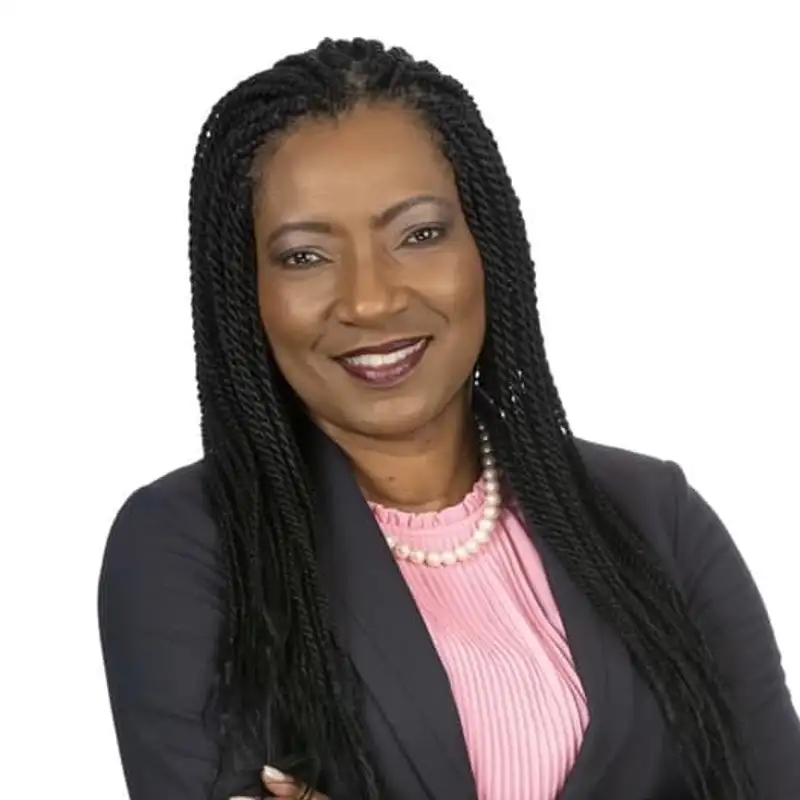
Tanya Flanagan Sits Down with Assembly Member Tracy Brown-May, Who Champions Disability Rights, Energy Relief, and Community-Driven Legislation in District 42
Wesley Knight 0:00
This is a KU NV studios original program. The content of this program does not reflect the views or opinions of 91.5 jazz and more the University of Nevada, Las Vegas, or the Board of Regents of the Nevada System of Higher Education.
Tanya Flanagan 0:19
Good morning and thank you for joining me for the scoop with Tanya Flanagan, I'm so happy you decided to wake up and start your day with me here on the scoop, where we talk about life, joy, funny moments, trending topics and so much more. We promise to keep you in the know and find out what you know. So let's get started. You tongue,
Tanya Flanagan 0:47
good morning Las Vegas. Good morning Nevada. Thank you for tuning in to another edition of the scoop with me. Tonya Flanagan, I'm so delighted that you decided to wake up this Sunday morning. You may be on your way to church. You may be getting ready to go out for a walk with the dog, or just enduring a cup of coffee or some tea. But I do appreciate you tuning in to 91.5 KU NB jazz and more, and listening to the show varieties that we provide for you, and I hope you find them entertaining and interesting. As always, I try to bring you a show that is full of good information with a great guest, and today is no different than any other day. I am pleased to welcome to the studio, my friend, my colleague, and the Nevada State Legislature, assembly member, Tracy brown May of district 42
Tracy Brown-May 1:34
Well, good morning. Thank you so much for having me here today. I'm excited to join you on this Sunday morning. Thank you
Tanya Flanagan 1:40
for being here. I've wanted to get you in the studio for a conversation for a while, watching you from afar. You are a force to reckon with. Your understanding of policy and procedure is exemplary. You're a leader, and I just love the way you move and the finesse that you have. So you're always calm and and I say that because it gets crazy in Carson City, it does, yes, it does. And you're still calm. Thank you. The waters are choppy and you're calm. You're getting your steps in, you're taking the stairs, you're doing your thing. You're great compliment. You're leading your committee. I'm like, she's so cool.
Tracy Brown-May 2:21
Thank you. That's Thanks for that sharing that observation. You're welcome. I'm a duck paddling underneath the water. I think that we all are at some point, yes, under in the legislature in particular and but to have an outward appearance of being calm and cool, I think is essential to just getting things done in Carson City, and I appreciate that. How'd you
Tanya Flanagan 2:44
find your way into this space? Tell us a little bit about who you are, because by day, people often see folks as legislators, and they don't realize there's a there's a day job, and that is sort of a work of passion, and it requires a lot of sacrifice, for which there's little, you know, virtually no compensation. But that's not why we do it. So who are you by day, and then when you put on your super woman Cape as assembly member, Tracy Brown, may you know, how does that go together?
Tracy Brown-May 3:13
Thanks. That's I appreciate the question. I think that I came to the legislature in an atypical fashion. I have worked in disability services for 25 years here in Las Vegas, and I love serving the nonprofit sector and population of people with intellectual and developmental disabilities. That's my why, my everyday why. And I grew up in a family that introduced me to service and serving a population of people with disabilities. My best friend when I was 12, was adopted out of the New York foster care system, and she was born deaf, but not diagnosed until the age of seven. So when I was 12, I learned how to speak American Sign Language because I wanted to be her best friend, and that's just sort of how my childhood went, and then grew into typical adults, right? We go out and we get our jobs and we try to figure out a path in life. Many years later, I found my way to opportunity village here in Las Vegas, and started in an hourly position, and realized that's where I belonged. So I never left. You know, 25 years later, that's still why I show up every day. It's also how I learned government affairs, how I learned how to advocate for people to be able to tell their own story, right? What is their lived experience? And there's value in that. And how do I become an ally, to help people share their stories that I could never share, and that's why I went into the legislature.
Tanya Flanagan 4:45
That is wonderful and wonderfully interesting, because it takes, I was listening as you were talking about it. I was thinking it takes a certain kind of person to have the type of ear right? Because people can work in an environment every day, but not. Necessarily tune in to the intimate or intricate details of what's happening around them, to realize something else should happen, because we can get consumed with our own lives, and that consumption limits our ability to see what's around us, but to be the type of person that recognizes there's a hole, there's a void, and I have the power and the ability to do something, however small or large it may be from one session to another, I can do something that will change the lives of individuals for the better.
Tracy Brown-May 5:34
Yep, for sure, incremental change is how we are most successful in the disability community in particular. And every step forward is progress, and sometimes you make three steps forward, four steps back, and that's okay, as long as you're bringing more people into your story, right? And I think that growing curb cuts, right, like that was a thought to be an ADA accommodation when we first put a curb cut in, and people were up in arms about the amount of money that it was going to cost to do that as infrastructure change. And today, moms with strollers use curb cuts and kids with scooters and me with my bicycle, right? And so we realize when we make incremental progress for one small subgroup of our population, it really benefits the entire community. We just have to get beyond ourselves to see how it how it can be effective.
Tanya Flanagan 6:33
Absolutely, I was thinking as you were talking about the disability the disabled community, because sometimes it's like, not people are invisible, but people, back to my point earlier, get consumed with their own day to day, and they don't really recognize what's around them. I think one of the biggest things my dad always left with me is you're never better than another person, no matter who that person is. And I know it was that, because my dad passed it on to us. And one day, my brother, who's older than seven years older than me, even said to me, you're never better than another person. Everybody has value, no matter what they do, what they're capable of doing, what their occupation is, where they come from, what their challenges are, and what they've overcome. And that just resonated with me, and it stayed forever. And so I work, you know, in the county building, and so we have an opportunity village contract, and they come in and they provide the janitorial services in the building, and I, and they speak to me all the time, and I make it a point, because I always spoke to them. So when they see me, it's like, hey, like you're seeing a friend. And it's a wonderful thing, because you see someone have an opportunity for a little bit of independence, for
Tracy Brown-May 7:41
sure, that's their job, that's their job, and they are proud to go to work right like we are all proud to have an opportunity to be productive. We all have value. That's what my mom taught me. My mom ran the Department of Employment Training and rehabilitation in Massachusetts, and she didn't have a college degree. She started as a part time claims, claims taker in 1967 which is the year that I was born, and my dad broke his back. He fell off of a roof. He was building houses with a small construction company, and she didn't know how she was going to keep her family afloat, so she went to work part time, and my grandparents took care of us kids, and she never left. Once she got into that, she grew and realized that she could give back. So the whole time I was growing up, the phone would ring inevitably at dinner time when everyone was sitting down, and it would be someone from our community who had just lost their job. And how did they collect unemployment? And what did they need to know, or where did they need to go? And my mom always took that call. It didn't matter if she had just sat down to dinner, right? Because our people, our community, were more important than any one singular part of us. The first time I met an unhoused person, right, was in Springfield, Massachusetts, and I was in high school, and he would walk my mom to her car every night because she worked in downtown Springfield, Massachusetts, and he didn't feel like she was safe alone. His name was Willie, and Willie wore patchwork pants, and my mom would bring him lunch, and they would hang out on the fire hydrant, right? And it was the coolest thing ever, because I got to see my mom interact in a way that I wanted to be that person later in life when I grew up, she was just such a great example.
Tanya Flanagan 9:29
That's wonderful when our parents live a life that you then want to mirror and, you know, carry on because you've been inspired by your parents to want to do and I think they're our first role models, right? And so who you grow up to be and what you choose to do is often embedded in the lessons passed on to you, you know, by your parents. I think that's where my, of course, my qualities in terms of, I believe I'm a person with a lot of integrity and a good sense of community. And my mother always volunteered, but my dad was always. He's honest and straightforward about it, like so even if you don't like the answer, he still is going to give you the answer. I'm not sorry you don't like it, but I'm not going to sugarcoat it, and then later have to explain why what I said isn't what occurred, and I always appreciate it, and it's something you grow into as an adult too, right? Because it takes maturity to have hard conversations and face the moment when you have to tell someone something that you know they don't want to hear, right, but you're obligated to give the answer that is fair, right and right. And so I think those qualities that we discover about ourselves are often embedded in us and passed on. I agree, through not just DNA, but the examples that are set by our parents or adults in our
Tracy Brown-May 10:44
lives, yeah, yeah, that's a great point. And I love the DNA part of it, right? Like I was adopted in 1967 and so the parents that raised me provided the example. But biologically, I come from somewhere else completely, and now that I know them like today. I know all of my biological relatives. I met them when I was 40. That was the year, and it's been wonderful. I can see what is biological like. What are the things I struggle with that come from one parent or another that the rest of my family didn't struggle with? So interesting?
Tanya Flanagan 11:21
Yeah, that's got to be fascinating. You're up for another opportunity to go back to Carson City in 2027 I am so district 42 for people who, because I did mention, when we first started talking, that you are the assembly member representing District 42 here in Southern Nevada, but for those who don't know where that is, we should talk about the boundaries. Great.
Tracy Brown-May 11:42
I love our boundaries. I'm in I have 12 square miles of District, 19 perimeter miles. It's half of Chinatown. So it starts at Decatur, and then goes west. And so all of Koreatown, I go down to the IKEA 215 and so really, my boundary is the 215 on the west side. Rainbow east, and then I go all the way over to Decatur. It's this interesting juxtaposition throughout our city, right in the middle of the city, right? So rainbow runs straight up through the middle of my district. I don't have a hospital. I don't have a casino. So it's interesting. I do have a couple of senior living facilities that I try to spend some time in I do have a library, and so it's interesting to know what I have in an older part of town. My house was built in 1977 and so I do really love the historical homes that we have. We're close together, right? I have great neighbors. They all know me. I know them. We walk our dogs together. So it's that old town community that I
Tanya Flanagan 12:43
live in when you're looking at because that made me think about something when you're in an older area, versus all of the development that's happening in the valley as you're identifying, in addition to obviously your passion, which is working on bills and things that make things more equitable for the disabled community having an older area versus the development in newer areas. How do you fit those priorities in? Or what are the priorities in your district?
Tracy Brown-May 13:09
Well, I'm a majority minority district. So when we did the last census, there are 74,400 residents that were identified in Assembly District, 42 only 42% of those residents identify as Caucasian. 10 or 11% are black or African American. I have 45 or 24% rather Latino, and the other 24% are Asian American Native, Hawaiian Pacific Islander, right? And so because I have Chinatown and Koreatown. People live there closely. I have all working families primarily, right? We're in older homes and smaller properties, and so the needs of my community are more about accessibility and infrastructure. How do we get to work safely? How do we have public transportation? How do our bike lanes work? How do we get kids to and from school safely, right, and making sure that we are shopping in our local area so that we don't lose the infrastructure and have to travel out. So if you don't have access to transportation and you're on public transportation, you want to be able to get to your local grocery store, but if your grocery store closes because the new one opened a mile farther west, then you have to go a mile farther so it's really about supporting the infrastructure that we have in this older section of town, so that we don't lose the features that help to make people healthy and whole. I love
Tanya Flanagan 14:33
that perspective of recognizing that here's the district and here's who lives in the district, and so what does my district have versus what does it not have? So what's around my home and what's making home truly exponentially that not just the four walls in theory that are the rest you know, the address where I live, but the blossom that is the community around me, Park access, transportation access can. Convenience, access. I love that your look is the quality of life of the basic everyday things, because it spells out a lot what folks in the legislature are working on on a daily basis. And it's important to make this point, because one of the things I loved realizing was the simplest problem in your community could be worthy of being legislation brought before the Nevada State Legislature to make a change in your community that could be so simple for sure.
Tracy Brown-May 15:37
Yes, I try to do that. I think I do that, and it's about listening, listening and being available to your community, right during the last legislative session, so first, people talked a lot about the cost of energy. I'm proud to have brought Assembly Bill 452, which required our energy providers to pay back over payments. Right? The latest reports are $65 million being returned to Nevadans who had been overcharged for energy, right? We shouldn't have to bring a bill, but we did, and now people are getting money back. That was my bill. I am so honored to have had the opportunity to do that. And you don't do that alone, right? Legislators don't do anything alone, and we have to build consensus, the school bus stop arm enabling legislation, right is our opportunity to be able to help kids and faculty get to and from school safely, and we have to step carefully into any type of automated traffic enforcement, and yet people are dying every day. Another motorcyclist was killed on our roads, reportedly, just last week, and I have motorcycle riders who are working on ways that they can be safer in doing the thing that they love to do. Do we bring that law next session? Maybe right. I want to ride my bike to work. I intentionally bought my home on a bicycle lane that would allow me to commute to work on my bicycle, and I can't do it because it's not safe right now. People are driving too fast on a 35 mile an hour Street, and they're not cautious or aware of what a bicycle looks like, and so people die every day. We have to get better at infrastructure and what does
Tanya Flanagan 17:18
that look like? Absolutely, one of my big things with infrastructure, it's improving transportation, improving public transportation to create more connectivity between neighborhoods and central business corridors. And so light rail is like this baby in the back of my mind all the time. How do we do what other cities have achieved it? What will it cost? Do we go up? Do we go down? But how do we do it? And when you began to talk about some of the legislation you've moved through the process, I was just about to say, let's talk about what you feel are great triumphs versus challenges. And how do you manage we're always ready to rah, rah, rah when we win, right? But what happens if there's something that you're your baby and it just doesn't grow up, doesn't live, doesn't make it
Tracy Brown-May 18:11
Well, I would say the first thing is, you can't marry your bills, right? So that's the first thing is, like, wow, what you're doing, you're passionate about, and you're emotionally charged about, you also have to temper that, and knowing that sometimes it takes a long time to get something across the finish line, an example of that for me would be sub minimum wage for people with disabilities. There was a time I completely advocated for continuing sub minimum wage, and that was misinterpreted by people who thought I wanted to pay people less than minimum wage for a job, right? How do you take advantage of a person with a disability? Which is not the case. The reality is, we needed to create a transition plan and an off ramp so that people who were utilizing services that were receiving sub minimum wages had an opportunity to transition to something else. And so when you're creating the off ramp for an old policy. You have to create an on ramp to a new policy. And so that policy was passed in the 2023 legislative session. We effectively created a transition plan for people with disabilities away from sub minimum wages. So now every person in the state who is receiving some sort of disability service is guaranteed at least minimum wage. Now that took us 20 years, and it was great progress and incremental back and forth, but we finally got where we needed to be right 20 years I worked on that
Tanya Flanagan 19:30
single and it's still a conversation. Yes, it is. It's still a conversation. I just looked at something the other day asking me about sub minimum wage, and I was like, Absolutely, it should be fair and it should be equitable. But these are conversations
Tracy Brown-May 19:43
that continue well, and do people know we created the transition plan and that we eliminated it, because that's the other thing. We can pass really great laws. But then, if we don't politicize, if we don't publicize that, rather and share that with the public, people don't know, right? There's no sub minimum wage allowed in Nevada. There's no. New sub minimum wage certificates.
Tanya Flanagan 20:01
No if you were saying to someone, here's how you engage around it. Because that point, we have to publicize what, what you know, what's happening, what's changing, how it affects you. Every day, people are living benefiting from the work someone like you. Assembly member Tracy brown May is doing for district 42 but really for the entire state, because I want people to know where your area is, but understand that just because you represent a district, you represent the entire state. So when you're thinking of legislation, it's being thought of in the totality of the entire population of the state, and who's affected by it. And that's not to say that everyone is affected by everything, but there are segments of the population that are affected by different affected differently by bills that are that run. So what do you say to people to encourage them or teach them how to engage in the process?
Tracy Brown-May 20:53
Well, first you have to invite them to the table. And I think that starts with really grassroots initiatives. I did it in the disability community, right? How do we create an infrastructure and a structure around just inviting people to the table to know that the legislature exists and that we're working on policy? People are living their lives every day, and they're so busy and they're just trying to make sure that their families are fed and they have a safe place to live, and that they can pay their bills at the end of the day. And so when I knock on their door as their assembly member, many times they don't even know what an assembly member is, and they voted for me. And so there's there's that consideration. So giving space for people to come to the table is really important. But then nationally, how do I take our ideas? How do we take national ideas and bring them back to Nevada so that we can do things better here is also another key component, and I spend a fair bit of time working with national organizations to help us identify solutions that have come from other states that we can bring here. So we're not reinventing the wheel like we're in Nevada territory and we are scrappy, but we don't have to invent everything. We don't.
Tanya Flanagan 22:04
What would you say was the hardest thing for you to adjust to it? And I asked that because you just talked about going to national conferences and so and the whole thing with national conferences is to glean something and to try and bring it back. But it takes time when you're in a new space, especially like this. It's not like an organization that you're a part of, maybe opportunity village, and you go in and you're with others that do similar things. And so, oh, I like this. I like that. But this is a little different, and you have to figure out what to extract, because your state may be not so much like the other state, but you like the idea, yes, you know, like, that's,
Tracy Brown-May 22:47
yeah, okay, so figure out what you're passionate about is the first thing, right? So somebody asked me the other day, what's my why? My why is people with disabilities every day? And so in everything I do? I bring in a component of the disability community, whether it's new infrastructure, build, architecture, program development, everyday grocery shopping, there's how do people have access and equity in this environment? And how am I a better ally? By breaking down my personal bias. And so when I go into spacious spaces nationally. In particular, I bring that, and I find that as a result of that focus, I get to pull something unique that we can utilize here. I think that's the strength of our part time legislature, is that we all bring our own unique expertise into passing bills and making laws and working on our community, and it takes all of us to do that together. But then I also have to respect and believe that your lived experience is authentic to you, and that's what you're bringing to the table. And then I want that from you, for me
Tanya Flanagan 23:58
absolutely, because when we're having those conversations, that authentic, lived experience that each one of us has helps to teach you what you don't know, right? And I think that's also one of the like you're saying. It is one of the greatest strengths of serving in the citizen centric legislature that we have, having the time to have conversations, and even though it feels like warp speed 120 days, the first one ticks off, and you're like, we're on right? But you have the time to drill down, because it's such a laser focus on your role. It's not like when you're here and dry cleaning happens and cleaning the house happens and walking the dog like everything happens here. Carson City, to me, it's very focused, finite space. This is what I'm doing. I'm reading bills. I'm meeting with people about more bills. This is what I'm doing. And so if I don't get something, you get to have a conversation with that subject matter, expert, colleague, counterpart, whomever the role is being led by lobbyist, whatever interest group, Union. To see where you don't see what they see. Yes, and it makes a huge difference.
Tracy Brown-May 25:05
It does. You have to be willing to do that as a legislator, and I think that's the first thing. You have to have an open door, and you have to have an open mind. You have to have an open heart in order to be able to hear all of those things, my daughter and I will go to church on Sunday morning. You know, this morning we'll be in church, in the front row, and we will watch people come into church. And she has the same superpower that I think I have been gifted with, and that it's observational. I can see if you're a little bit out of your comfort zone, are you a little bit stressed? Did you not have time to iron your clothes this morning, right like and no judgment, no shade on anybody for just living life. But I see things in people because I care about people. That's what I want to see. And it's that it's slowing down in Carson City to see people and their priorities. And how can you help them be effective in getting their priorities passed?
Tanya Flanagan 26:04
Absolutely, folks, we are talking with Assembly Member Tracy brown May of district 42 is representative for the state of Southern Nevada. Here is the state of Nevada, here in Southern Nevada. And I want to make sure, if you are curious about how to learn more about her, how you can find out. So before we tick out of time, share your socials or great web access.
Tracy Brown-May 26:27
Thank you. Everything about me is Tracy brown may.com There's no E, right? It's super easy. Brown like the color may like the month, and it every phone number that I have posted is my cell number. So when you come across a phone number, it's actually me. You can text me at 702-612-0083, I will respond. I also spend a fair bit of time answering emails, so every message that comes directly to me, you will get a response from me. I take me a minute, but you certainly will hear back from me.
Tanya Flanagan 26:59
I always like to do something fun. We have a couple of minutes left, so we're going to do a quick rapid fire, just to kind of spontaneously find out things you like don't like, because you're very good about color. So favorite color? Oh, blue. Surprisingly, I thought you might say green.
Tracy Brown-May 27:14
No. Baby Blue. Baby
Tanya Flanagan 27:17
Blue. Cowboy boots,
Tracy Brown-May 27:19
I do yes. Okay,
Tanya Flanagan 27:20
favorite book, book or what are
Tracy Brown-May 27:23
you reading right now? Well, my favorite book is a being mortal, and I can't pronounce his name, the author's name, because I just can't. I keep trying. It doesn't work. But being mortal, and it was by the time my mom was diagnosed with Alzheimer's, and how do we not lose mortality out of the healthcare system. So for me, that I go back to that often, and then, of course, the Bible, right? Like, how many times have you read the Bible? Like, I always start my day with that. What am I reading right now I don't some gingerbread book that my daughter brought to me for Christmas.
Tanya Flanagan 27:55
Nice. Okay, favorite music. Got a little few more seconds. Favorite music?
Tracy Brown-May 28:00
Well, right now I only listen to Christian worship music, right? So that's where I am, because I'm trying to stay positive and centered every day. So my radio station in my car
Tanya Flanagan 28:08
only goes to that I understand that second it cosine. I start every day the same exact way, and the entire day goes that way. The other day, however, got really rough, and I went back to my childhood, so I put on some 70s music that tells you how
Tracy Brown-May 28:22
old I am. Well, that would be me. J Giles
Tanya Flanagan 28:24
band, let's go, girl. And I was surprised by how much it made me happy, yes, because it was just a time when my parents solved all of my problems and I just wanted to go back. Tracy, it has been a pleasure to have you here. Thank you for spending some time
Tracy Brown-May 28:36
with me. Thank you so much for bringing me here today. I appreciate you, folks. Thanks for
Tanya Flanagan 28:41
tuning in to another edition of the show right here on 91.5 KU MV, jazz and more. We will be back next week with another show. I hope that you tune in. Stay safe, stay healthy, stay happy and be kind. I want to thank you for tuning into the scoop with me. Tonya Flanagan and I want to invite you to get social with me. I'm on Facebook and Twitter. My name is my handle, T, a n, y, A F, l, a n, a G, A N. You can also find me on Instagram at Tonya, almond eyes, Flanagan, and if you have a thought, an opinion or a suggestion, don't hesitate to shoot me an email to tonya.flanagan@unlv.edu. Thanks again for joining in. Stay safe and have a great week you.
Transcribed by https://otter.ai