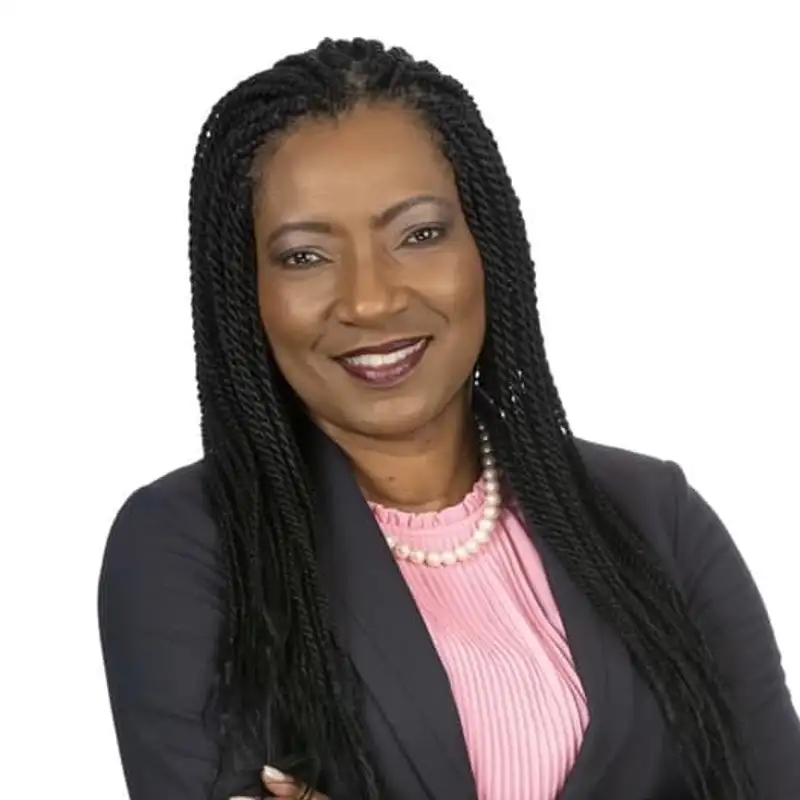
Dr. Elizabeth Glover Champions Social Justice, Cultural Empowerment, and the Launch of Las Vegas's Black Selfie Museum
Announcer 0:00
This is a KU NV studios original program.
Wesley Knight 0:04
The content of this program does not reflect the views or opinions of 91.5 jazz and more the University of Nevada, Las Vegas, or the Board of Regents of the Nevada System of Higher Education.
Tanya Flanagan 0:19
Good morning and thank you for joining me for the scoop with Tanya Flanagan, I'm so happy you decided to wake up and start your day with me here on the scoop, where we talk about life, joy, funny moments, trending topics and so much more. We promise to keep you in the know and find out what you know. So let's get started. You Good morning Las Vegas, and welcome to another edition of the scoop with me. Tonya Flanagan, right here on 91.5k U, n, b, jazz and more, delighted that on another Sunday morning, you've decided to wake up and engage yourself in this conversation. I hope as all other conversations that I bring you, you find this one interesting, enlightening, or at least just a little bit entertaining. I have a wonderful person in the studio with me, and I think all my guests are wonderful, but this one is exceptionally special. Every time I have the opportunity to spend some time with her, I am so impressed and inspired. So without further ado, please allow me to welcome to the studio. Dr Elizabeth Glover,
Dr. Elizabeth Glover 1:27
thank you. Thank you. Tonya. Say all nine letters all the time, even though I told her, people only say the whole name when I'm in trouble.
Tanya Flanagan 1:37
Well, her famous, famous title, and our name is Dr Liz, and you say, Why is she famous? I don't know that she's international yet. I hope that one day you do become, you definitely are becoming a staple in the community for the work that you do. And I'd like to, I could try, but I can't, because you have, like, four degrees, just like, rattle off a little bit of your life story, who you are and what makes you okay, what comprises,
Dr. Elizabeth Glover 2:06
oh, my goodness, you know, what inspired her was, was a first Elizabeth, just a little girl. Elizabeth, somebody who I can't say, I have to be careful with my worries, because I used to say adults always tried to silence me. And in fact, that's not the truth. They appreciated the power of my voice. They wanted to manipulate
Tanya Flanagan 2:24
it.
Dr. Elizabeth Glover 2:24
So I learned when I was very young the ways that they wanted to amplify my voice, to move their message, to move their agenda, to get their classroom in order, because they didn't have the classroom discipline to galvanize students, because they didn't know how I noticed those things, and I also had a very early passion for justice. I was that student. It was probably never my business, but I was gonna make it my business, because that's not fair, right? That's inequitable. And so that just led to me kind of galvanized people, galvanizing people. Sometimes it even turned into vigilante justice. It was, you know, you don't want the smoke because I'll bring it. It was always that. And so over time, I just, you know, became more polished, learned how to use that power, learned that nothing was wrong with me the way adults were trying to project in order to control me and just learn to see it as the gift that God made it to be. And so my social justice. Passion never die. What's interesting is, I was selectively enrolled into a college preparatory high school when I was 12. So I go to high school in seventh grade college prep. So you think you're gonna get the whole enchilada right, like it's the creme de la creme. And what's interesting to me is I didn't realize until I moved to the suburbs of Chicago, because my mom had to get me out that I was missing something. It was then at an everyday average school that just the whole suburb was zoned to, that I was introduced to sociology, and that's where something new was awakened within me that started my passion, my teacher I had, back then, principals at school to this day, and so here I am. I never let that passion die. That's what I pursued in undergrad alongside education, and that's what I pursued in grad school alongside education, and then the doctorate just took it a step further with leadership.
Tanya Flanagan 4:12
So sociologist. So do I refer to you as sociologist?
Dr. Elizabeth Glover 4:17
Yeah, absolutely.
Tanya Flanagan 4:18
So Dr Liz, the sociologist,
Dr. Elizabeth Glover 4:21
yes,
Tanya Flanagan 4:21
isn't there like a cool branding that you attach to it? I thought there was. It's in my mind.
Dr. Elizabeth Glover 4:29
You know, there are some community friends that have called me the community sociologist. There are some that have called me social justice champion. I'm delicate about that one. At first, I embraced it like all right, Talk That Talk. However, I'm delicate about that one, because to me, a champion means to have already conquered and mastered and defeated, and I recognize that this social justice work is ongoing. It takes a warrior. It takes a fighter. I'm all of that, but I'm easy on a champion word because I don't ever want to get too complacent or too competent. I'm one of those people that really denounces competence. I don't believe in that, because, again, to me, it suggests that you have reached, like, the milestone you're
Tanya Flanagan 5:08
done calling Yeah, exactly you know everything, and there's always something new to learn.
Dr. Elizabeth Glover 5:12
It's continuous learning.
Tanya Flanagan 5:14
Thank you for that vivid introduction, folks. I hope you enjoyed it as much as I did. Dr Liz, the sociologist, I've had many encounters with you, and I love the way you take a look the lens through which you view societal issues, and how you galvanize to use your word and motivate people to participate in processes that are intended to affect change and to awaken them to how societal bias and systemic marginalization is keeping them, hindering them from making progress. So you've worked with a lot of different groups, the NAACP, educational spaces. What are you working on now?
Dr. Elizabeth Glover 6:01
Oh, goodness, what am I not working on? You know, it's funny, because some people have this condescending saying of, stay in your lane, and some people embrace that saying, as if it's a good thing, and they will echo, I stay in my lane. And I'm big on being no Lane list, because I'm no limitless. So for me, I don't do lanes. I rather build bridges and intersections and allow, again, my time, talent and treasures to be effective. However, that may look like right to be productive for the sake of the progression of community and that togetherness. So I'm working on a few things. I'm still chairing the criminal justice committee with the NAACP. I am still advising youth throughout the valley and bringing sociology down to a way that they can digest it and see their placement. I'm validating their why, right? Youth have that, that ever growing curiosity of but why or but you need to understand me rather than targeting the behavior. So I'm a huge advocate for that. I'm still championing and advocating in the realm of healthcare, especially in mothers, for mothers and their experiences, especially for minorities, I'm working on some housing initiatives, some shared housing, some transitional housing, to combat those barriers for everybody, but specifically for women, because we have even more of a disparity there. I've been impacted lately by some of my kids being in the foster system, so now they have kind of grown me there. Okay, how can I amplify their voices and share their concerns? And so as I'm in all these different circles, I'm sure I probably left some off. I am big on understanding the fact that the whole Doctor thing was an agenda. The whole Doctor thing has given me access to invitations to be invited to tables only, so I can then pull up a seat for other people, and so when I'm in these spaces, is to be able to pull up those seats for them to take on their stories, to take them in rooms that I'm in, and to say, this conversation cannot continue unless you pull up this chair right and invite and invite in whoever it is that I'm amplifying in that realm. So I'm doing a lot of things. I'm also, I'm nervous to say, this is the first time it's been on air, but I'm launching las Vegas's first and only black selfie museum this spring.
Tanya Flanagan 8:22
That is cool, black self. So what I want to talk about, so many things that you brought up, I want to make sure people before we go down the black selfie museum pathway. As you were talking, I thought, what if someone doesn't really know how to classify or categorize or define sociology? Sociologist, what is that for someone who just doesn't really know what it is that's so because you hear sociology, you hear psychology,
Dr. Elizabeth Glover 8:49
right?
Tanya Flanagan 8:50
You hear terms, and you have a but what is that for the person who says
Dr. Elizabeth Glover 8:56
that's a very good question, because it's still a word that some people don't even hear until college, which is which is an intentional disservice, because everybody is impacted by sociology. Sociology, in essence, is the very study of human interactions through a social lens. It's about putting on a social lens and being able to see that this centric mindset based on your cultural understanding, your values, beliefs and norms, actually, is not the measuring tool by which society should be rated. It is being able to understand that equality is a load of crap, because equality would suggest everybody getting the same access, but if you didn't start at the same place, that access does nothing for you, right? So it's being able to have those critical discussions, is being able to look at how social dynamics change and are very relevant to geography, where you are in the world is relevant to time, like what point of history we're living in. It's this ever flowing notion of just understanding, like links of a chain, how do I fit in? The larger society. How am I impacted by the larger society? It's being able to denounce saying such as, due to crime, due to time, and understanding that, well, we have to look at the why. Why are certain people, quote, unquote, more prone to do this kind of crime? What kind of social or systemic barriers are purposely there to leave folks essentially no choice, right? What kind of educational injustice did they face? And not being heard that now has people, quote, unquote, crashing out so it's it's elevating and amplifying the but why? But why? But why? Almost like that inner toddler that's always asking, but why? It's embracing that and continuing to just study it and then applying that knowledge, understanding and being flexible to the fact that it may change over
Tanya Flanagan 10:42
time. I appreciate that, and I wanted to put that in our conversation, because I wanted the average person who here's the term, like you said, and some people don't hear it until they arrive in college. And you do. You take sociology, you take psychology courses, you take these, what we call elective courses when you're in college, in your freshman sophomore year, before you get into your specific, defined area in your junior, senior year, trying to track toward the finish line. It helps you to discover who you are, to open you up to new streams of thought to apply to what you thought was your norm, that you realize shouldn't be the only measure exactly as you all know, as listeners, I'm a Nevada state legislator, and as a legislator, people come into the office all the time to talk about issues that are important, and my life experience, my lived experience, isn't yours. So dialing in to what is driving the passion behind them sometimes makes me sit very still, to step outside myself, to see it through their from their perspective, for it to not to be valid, but to be understood enough, because it's valid the minute they come through with it, be concerned,
Dr. Elizabeth Glover 11:58
right,
Tanya Flanagan 11:58
but to be understood enough to go back and say, I see you and I hear you, let me determine how I can help you, or if I disagree with your viewpoint, because I see it also as unfair to this other huge population. Or do we modify it? Right? But it's that, it's that space that you're talking about, where we step outside of ourselves and we're sensitive to those around us, everything happening around you. And I think that there hasn't always been a time in society where we had that level of consciousness,
Dr. Elizabeth Glover 12:35
right and and everything that you're saying is about adopting a sociological perspective, we have the these concepts in sociology around the topic of solidarity, and everybody can kind of use the root word solidarity, okay, talking about being solid to kind of guess what it means. But there's two different parts. There's mechanical solidarity, where everything kind of just operates performatively. Operates by routine. It just is what it is in society, the haves and the have nots. If you work hard enough, you have access. It's that whole thing about equality, right? This can all work if everyone just does their mechanical part. Organic solidarity, though, that's something different, and we all know anything organic is healthier. And so when we're talking about sociology, organic solidarity. I always tell my students that I lecture to, it's like organs of the body. They're all different, but they have this overall function, or what we call a sociologist functionalism, to make sure that all the pieces work together so the entire society can thrive. So that looks like instead of say statements like, I don't see color, or, you know, those kind of things, it looks like it's there. No, no, I recognize my white privilege. Here's how I'm going to amplify and use it. For example, it's not about denouncing it, because it's not necessarily the fault of the individual, right? You're in this society, right? It's about using what you know, paying attention, being self aware and socially where to say, okay, clearly, there's a problem, and then it's about challenging yourself. Instead of saying, let me see what solution is comfortable for me, it's about going to those vulnerable spaces and saying, How can I best support you?
Tanya Flanagan 14:14
That makes me think, as you're talking about a very human emotion that requires action, and I want to ask you how courage and you smile, as I say, because that's heavy, right? In its own right, it's heavy how courage plays into the responsibility in a space where you recognize, okay, white privilege, right? I don't know where you live, demographics where you are able to go to school, recognizing that I have the ability to affect change, but do I have the courage? So how courage plays against using your voice, using your abilities, using your access points, the courage to do so how courage plays against social, social. Theological societal challenges.
Dr. Elizabeth Glover 15:02
And the reason why I kind of grin is because I thought about this emphasis that we have as sociologists on deviance, and then I think about the negative connotation that that word has in mainstream society.
Tanya Flanagan 15:15
Absolutely right. I thought, soon as you said it, I thought it's too far for me, the cute little boy who's just being a little boy, so cute as a little boy, until it's adult behavior too, right? But the devious, the little devious little boy is so adorable.
Dr. Elizabeth Glover 15:29
The fact is, in my math, people who like math, especially statistics, will appreciate this to be devious. It has the root word in there deviate, which just means a standard of change from what's considered normal. So we have to be very clear that to be deviant isn't necessarily bad, bad, right? It's to do something different. And we talk about courage, we have to understand that anytime we're treading new terrain and territory and doing something different, mainstream is gonna say it's bad, accept that label of being deviant, knowing that well behaved people rarely make history right, accept it, knowing that you are able to, as Abraham Lincoln
Tanya Flanagan 16:08
snapped for a second in like if we were in some space, like well behaved people really,
Dr. Elizabeth Glover 16:14
they rarely make, they rarely make change. Abraham Lincoln told us that if we want to predict the future, we have to create it, you have to be willing to be deviant. All of our historical leaders that we all can think of, and they, they were deviant. Their actions were considered devious. And it's so important to learn that, because when we look at for your example, like you said, children, and sometimes we see their behaviors, and we think of deviance, and we we think of them being bad. And we have to understand that there is something called a self fulfilling prophecy that's founded on the sociological labeling theory. Means, as soon as you start projecting that label and all of your negative connotation with it, you create it. You create a system to where, if someone knows you see them as no better, they begin to form that way. But really they were able to just think about things differently or critically, and you didn't like your authority being challenged.
Tanya Flanagan 17:02
You
Dr. Elizabeth Glover 17:02
didn't like your sense of normalcy being challenged. So therefore it's deviant,
Tanya Flanagan 17:06
and it makes me think of that, and not to simplify to children, but yet they're they're at this budding point in life, and you're right one, one of two things is going to happen. They're either devious and adorable and encouraged because the deviant behavior is seen as creativity as well, and sometimes the spark is ignited. For some kids, it ignites the spark to keep going and defining yourself, because you have this this fire, this character, this light that is contagious, and people see it. It makes me think of your opening statement that as a child, you recognize the voice that you had, because I think sometimes there is a level, and I can relate to that, because there's a level. People always say, well, when did you discover this? I don't know, but I've always been different ever since I was a child. I'm just a different I've always been different, even as a child, and there's a self awareness that made me recognize I was a little different than the person next to me, not that they weren't great as well. I just know I'm different, and I recognize there's a different expectation that's hanging over me, whether it's from my mom, my dad, my church community, my education, my school community, it's just always been different and in the sociological realm, understanding things around me with a different level of sensitivity, of responsibility, in the call to action,
Dr. Elizabeth Glover 18:36
right? Absolutely,
Tanya Flanagan 18:38
I still have time, because I'm coming back to the black
Dr. Elizabeth Glover 18:40
but that's what that's exactly. What it is, is a call to action, and it's about being able to grow into a space because it's not easy of instead of, why me? Why not me? I am a firm believer, and people have heard me say it. I'm absolutely untouchable. And what I mean by that is for anything, for anything, even perceivably unfortunate, to get close to me or touch me. God has to give it access. So once that access is given, it's more of a challenge. Of I already know what she's gonna do with it. Go ham on him, and he trusts me with that mission. That's why I don't take battles personal or as my own. Doesn't mean they don't hurt, or it's not hard. It's definitely hard to be a disrupter, right? It is definitely hard, as encouraging as it is to some other people, are gonna martyr you for it, but it's about taking the challenge and recognize that it's not just your fight. It's you representing an entire body of people and whatever you're advocating for. And we have to remember taking the fight doesn't have to always mean taking the mic. It's not about being loud or having the courage to that. It's about how can I use my time, talent and treasure to amplify the message to be a voice?
Tanya Flanagan 19:51
I love it now, folks, you see why I so enjoy having Dr Liz, the sociologist, the community sociologists come on the show, and then 7am on. A Sunday morning to wake you up for today, for the week, for the month. This is a conversation that can resonate with adults, but you can take it back even to your to your children, to your siblings, to anyone, anywhere. And I challenge you to begin to look at life through a different lens, and think about how you form thoughts and opinions, and then how you engage in your community, at work, at church, at home, anywhere
Dr. Elizabeth Glover 20:32
right
Tanya Flanagan 20:32
as you look at the world, especially today, so today, we're living in a very politically charged environment. What do you say to people, because there's so much pulling on you to stay
Dr. Elizabeth Glover 20:46
you know, I think that a lot of times when we look at history, it's easy to have this mindset of, oh, good thing. I was born when I was because I couldn't have been me. Right? We always,
Tanya Flanagan 20:57
always say that.
Dr. Elizabeth Glover 20:58
I think it's important for us to realize the fact is that we're writing history in the present. So the same way we say that couldn't have been me, they couldn't have got that over on me, I would have done this. Could have, should have, would have prove it. Now, I know it's uncomfortable, but it's very simple. You're either a part of the problem or part of the solution. As long as you're living and breathing. There's no middle ground. You got to pick one.
Tanya Flanagan 21:21
That's a great call to action.
Dr. Elizabeth Glover 21:22
That's it. You have
Tanya Flanagan 21:24
a really serious and it's funny that you say that because I had that thought, but I also had the expansive thought about it, when you say, Oh, I couldn't have been living during that time. But you have to realize, let's take slave trade, right? Take our ancestral history in this country. People brought over on boats. People then separated. We spoke different languages,
Dr. Elizabeth Glover 21:45
right?
Tanya Flanagan 21:45
So you mix everybody up the way. You further manage the control of manipulation. You blended people who didn't speak the same language. So you can't say, why didn't they just do this? They couldn't even understand each other,
Dr. Elizabeth Glover 21:59
right?
Tanya Flanagan 21:59
So first they had to get over the language barrier. Then you broke up families. Just that thought alone made me go. Wait a minute. Mobilizing is about coming to have common ground and agreement around a cause to affect action
Dr. Elizabeth Glover 22:12
right
Tanya Flanagan 22:13
on the same, you know, on the same plane. But when you have language barriers, you're first trying to get over that
Dr. Elizabeth Glover 22:19
right
Tanya Flanagan 22:20
placement, cultural differences. You come from a similar region, everybody was different. So it's not as simple as what you thought you would have done or why didn't they do. They had to learn different ways to even communicate.
Dr. Elizabeth Glover 22:37
Right?
Tanya Flanagan 22:38
I would love to dig deeper into the study of really like, and I know it's there, but finding some time in my crazy schedule to go look at even deeper, yeah, into that. But before our black selfie Museum, because I refuse to run out of time to talk about because, you know, we can solve the problems of the world. But yeah, I just want to have a little fun too. What is a black selfie Museum? What does that do? How does that work? Or where did this idea come from?
Dr. Elizabeth Glover 23:05
You know? Oh, man,
Tanya Flanagan 23:07
on the plate, 10 things you already listed that you do.
Dr. Elizabeth Glover 23:10
Yeah. So when we think of a selfie museum for those who have been or maybe those who haven't, it's essentially like an experience where you get to go in and there's all these different like scenes, or, excuse me, things, or different backgrounds, and just different experiences that you get to kind of enjoy, immerse in, take some pictures, capture the moment, things like that. So when we talk about the black selfie Museum, it's about that exact thing, but in a way that highlights our experience. It's about a turn by turn encounter with things that feel reminiscent to us, to where we walk in and we just feel a tight hug from our upbringing or from our past, or we begin to share stories and remember, or as we're taking family members or youth in, we begin to tell them the relevance of what we see. But it's also about other people stepping into that space. Because you have to understand people champion diversity, equity and inclusion. And the truth is, diversity is not an option like we're all here. It's the inclusion part that takes intentionality. So when other people are stepping into that space, they get to grow that curiosity. They get to have their inner child tolerant, or, I should say, challenge, to speak up and wonder, why is what does this mean? Why does this important? Because when you do that, you end up producing what's known as cultural relativism, where now I can dig deep and relate to or try to understand the culture as much as possible, to grow questions and to build understanding and to feel a sense of connectivity. So the truth is, it's really just social justice work disguised as entertainment. How it came about, I experienced a very similar concept years ago in Colorado. There's probably only about three that exist in the nation right now, right unrelated to each other, but I went to the one in Colorado with my best friend, and we had such an immersive. Experience there. And what's funny is, when she passed almost two years ago, there's this picture on her obituary with these wings on it, and everyone thinks whoever designed her obituary, you know, photoshopped them in. The truth is, I never knew I was taking my best friend's obituary photo. Those are actual wings she was standing in between at that museum and at that museum way back then, it was planted in my heart. This needs to be everywhere, right? And so here we are several years later, and I'm bringing it to life, keeping her in mind, amplifying the social justice piece. But it's also very sentimental to me. For that reason,
Tanya Flanagan 25:37
I love that that is just moving. It's moving how you were inspired to want to bring it to life, to birth it. It's a wonderful way to pay tribute to your best friend's memory, and it is very unselfish of you to recognize the value and can have to the community, to bring it to life and allow others to enjoy it, to grow and benefit from it. I also want to make sure, as we near the end of the show, people have an opportunity to stay engaged with you and to continue to follow because folks, if you have not been awakened this morning and your curiosity sparked to want to follow this young lady who has so much treasure to share with others. How do people keep up with you.
Dr. Elizabeth Glover 26:20
You can follow me on social media platforms. At, enlighten me. Liz, soon as you even start trying to spell enlighten, I'm gonna pop up, I promise you. So. At, enlighten me, Liz, is where you can find me. Is where you'll be able to see some behind the scenes development of the museum. It's where you also just come to hear me talk my talk. Something to be happening any random day, I'm gonna make it into a whole social justice segment and peace. And if you know me, I'm amplify my voice so you can tune in at enlighten me, Liz, and just journey this experience with me.
Tanya Flanagan 26:54
Are you on every platform? I'm Twitter, Instagram, social, Facebook, and we're all the young people. Yeah,
Dr. Elizabeth Glover 27:00
the same way I'm on all don't
Tanya Flanagan 27:03
want anybody to miss their entry point. We are getting into the last minute, literally, of the show. Favorite color,
Dr. Elizabeth Glover 27:11
orange
Tanya Flanagan 27:12
sunsets or sunrises,
Dr. Elizabeth Glover 27:14
sunset for that orange
Tanya Flanagan 27:16
book or movie.
Dr. Elizabeth Glover 27:17
Book for my imagination,
Tanya Flanagan 27:21
favorite songstress
Dr. Elizabeth Glover 27:22
these days, right now. Olivia
Tanya Flanagan 27:25
Dean,
Dr. Elizabeth Glover 27:25
yeah,
Tanya Flanagan 27:26
Favorite Male Artist.
Dr. Elizabeth Glover 27:27
Favorite Male Artist. Oh, that's a hard one. I'm gonna go. I'm gonna go with family and say, Chance the Rapper,
Tanya Flanagan 27:35
okay, oceans or mountains.
Dr. Elizabeth Glover 27:38
Mountains,
Tanya Flanagan 27:40
folks. Dr Liz, the sociologist of the community, I hope you've enjoyed it. Thank you for tuning in. I will catch you next week, right here, 91.5k U, N, V, jazz and more. I want to thank you for tuning in to the scoop with me. Tonya Flanagan, and I want to invite you to get social with me. I'm on Facebook and Twitter. My name is my handle, T, a n, y, A F, l, a n, a G, A N. You can also find me on Instagram at Tonya almonds Flanagan, and if you have a thought, an opinion or a suggestion, don't hesitate to shoot me an email to tonya.flanagan@unlv.edu Thanks again for joining in. Stay safe and have a great week. You.
Transcribed by https://otter.ai