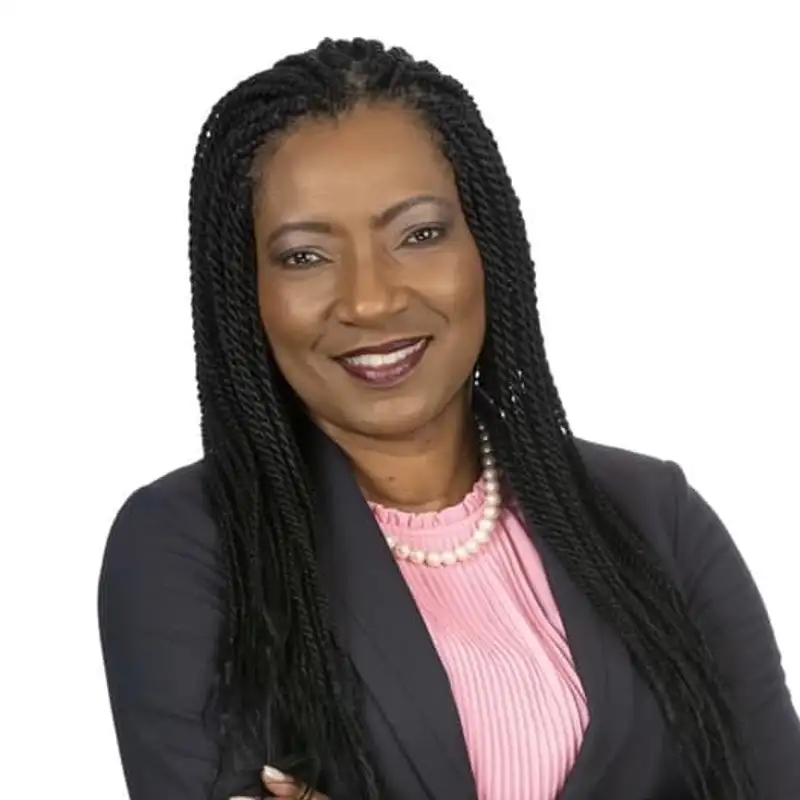
Tanya Flanagan Interviews Nevada Assembly District Two Candidate Kamilah Bywaters on Education Advocacy, Supporting Students with Disabilities, and Driving Legislative Change
Announcer 0:00
This is a KU NV Studios original program.
Wesley Knight 0:04
The content of this program does not reflect the views or opinions of 91.5 Jazz and Moore, the University of Nevada Las Vegas, or the Board of Regents of the Nevada System of Higher Education.
Tanya Flanagan 0:20
Good morning, and thank you for joining me for the scoop with Tanya Flanagan. I'm so happy you decided to wake up and start your day with me here on the scoop, where we talk about life, joy, funny moments, trending topics, and so much more. We promise to keep you in the know and find out what you know. So, let's get started, you Good morning, Las Vegas, and welcome to another edition of the show, The Scoop, with me, Tonya Flanagan, right here on 91.5 Kumv Jazz, and more. I am grateful that you decided to wake up and tune in, and if you are catching it after the actual airing on a podcast show. Thank you for picking us up on your favorite podcast platform and tuning in. It is yet another Sunday in the great desert state of Nevada, in the city of Las Vegas, and we are deep in the heated time of elections, running for office, meeting people, door knocking, canvassing, and trying to be smart voters and informed. And in the spirit of that, I like to welcome interesting people to the show to talk about why they might be the right choice for the community, or maybe not your choice, but yet an opportunity for you to get to know them better and make an informed decision. So, with that I'd like to welcome to my studio, to the studio here at the University, Camilla Bywaters.
Kamilah Bywaters 1:48
Good morning. Thank you so much for having me here today.
Tanya Flanagan 1:50
Thank you for spending some time with me. Really, just wanted to kind of have a conversation about who you are, what you do. I find it interesting when people decide to throw their hat into the political space, because the person who does that is usually a community-minded person who's done a number of different things that's led them down a path of intentional change, intentional action. So, before we dive in, a little bit about your background, who you are, share that with the listeners.
Kamilah Bywaters 2:23
I love these types of conversations because it's always important to me that the community knows who I am as a person, and I think that as we're shifting through who individuals are that are running for different elected positions, it's important that we get to know who people are and who the and the values that they carry, and oftentimes we don't get to have these types of conversations, because it's, you know, campaigns are really quick, they're happening, you know, hustle and bustle, you're here five minutes, here 10 minutes, and the community doesn't always get to know who you are unless they take the initiative to ask important questions, so I'm thankful to be here this morning, so that can just share more about who I am. Again, my name is Camila Bywaters. I'm a candidate for Assembly District Two. You have an opportunity to learn more about me on my website, and through my social media, and I grew up in Las Vegas, born and raised in Las Vegas. I've lived all over, all over the city. My dad was a special education teacher. He retired from Rancho High School, and that's where he spent most of his career, over 30 years working at Rancho High School as a special education teacher. My mom was a food service worker within the Clark County School District as well, and they both instilled in me just to be a person of service. I ended up going into the field of education after attending Rancho High School, I went to school with my dad. It was like the best time of my life, and sometimes annoying, because he was able to walk around and make sure I was doing what I supposed to do, which was great. I loved it. I know if I ever got in trouble, teachers would immediately let him know, like, your daughter's talking too much in class, and I would have my little lectures and conversation with my dad about making sure that I'm representing our family well, so I really appreciate those times. Unfortunately, my dad passed away in 2020 so I have been inspired and motivated to work in the community because of his putting into me just giving back to the community, my dad was a special education teacher, and he worked with students with disabilities, so I was able to like watch how he just worked with students with different ability levels, and he loved the work and. If you've ever taught, just being a plain teacher, not playing, but just being a teacher, general is hard work. It's very complex, and you have different learning styles, different behaviors happening. And then to even work with students with disabilities can even be more of a challenge. And I saw my dad wake up every morning having joy with doing that type of work, and what that led me into is my dad always instilled in me to make sure that I always get an education. I did leave when I graduated from Rancho High School. I went to Howard University on a soccer scholarship. I played soccer majority of my life, since I was like nine, or even before that, I played soccer, because I used to play on the all boys team when my dad used to coach us. But when I turned nine years old, I ended up playing for my first girls soccer team, and the reason that I chose nine is because I was nine years old at the time. So I was like, oh, I'm going to do something remarkable, I'm gonna choose the number nine because I'm nine years old, and this is my first girls team. And so I grew up playing soccer. I played soccer in high school. I played league soccer competitively here in Las Vegas, and then I took on my college career at Howard University, got a scholarship there to play soccer. And feel free to interrupt anytime you want.
Tanya Flanagan 6:21
You played soccer. Thank you for giving me a minute to be wowed by the detail of your life that you put. I mean, I know a lot of things about you most of the time. I will take the back. I don't think I know a lot of things about you. I think I see you busy in the space of impacting education, and when we first began to talk, it was kind of a mentoring space, right. Absolutely, you were working on education initiatives, trying to engage parents around equity in CCSd, whether it was teaching, whether it was having a certain number of male teachers and role, you know, role models in place for kids to see people who look like them in the various roles of leadership in CCSD, and then just, you know, curriculum impacts and outcomes in terms of students and test scores and progress, reading abilities, mathematical accomplishments, that sort of thing. So I've always observed you working on education issues, like you are a huge education advocate, but to find out that you also have some did its additional stuff in being a mom, but being a soccer player.
Kamilah Bywaters 7:35
Yeah, I was a soccer player. Yeah.
Tanya Flanagan 7:37
Oh, I had no idea you were.
Kamilah Bywaters 7:38
I was an athlete. Yeah, during my time I was one of the top players in the state in my age bracket. I actually wanted to be a professional soccer player, but when I realized that path was not going to be my path, I said to myself, Camila, you have to choose some other options.
Tanya Flanagan 7:58
Did you ever try to do, like, the Olympics?
Kamilah Bywaters 8:00
I did not. Now, my sister did. My sister and my brother had opportunities to go a little bit further than me in soccer. My brother was a regional player, everybody played. Yeah, my whole family played soccer, like the family. Yeah, that was our sport here in Nevada. I did not. I did, so I played for the Olympic development team, which is the team that we have here for the state.
Tanya Flanagan 8:20
So, back to yours to your soccer,
Kamilah Bywaters 8:22
so the state of Nevada, back in during that time, and I'm sure they still have the same model, but I played, I was, I made the state team, and then after the state team, there's a regional team, and then once you make the regional team, there's the national team that you can get selected to play for, so after I made the state team, and I did not make the regional team, that's when I knew, okay, professional soccer is not going to be my path. I need to figure out what I'm going to do next, and that's when I decided to go into education, but then I also took a turn and did a master's in divinity as well at Howard University School of Divinity. So that's how I came back, I changed my path to get to education.
Tanya Flanagan 9:03
Do you see yourself divinity? Is a talk a little bit about what that consists of, because when you think about it, you think of theological study, people who are pastors who are in evangelical spaces, working in churches, working in maybe schools that have a spiritual or religious base. Yeah, what was your reason for combining that? Because you study your undergraduate degree was
Kamilah Bywaters 9:30
psychology,
Tanya Flanagan 9:31
so psychology and divinity.
Kamilah Bywaters 9:33
Yeah,
Tanya Flanagan 9:33
and then you ended up with your teacher, right?
Kamilah Bywaters 9:36
Yes, you see,
Tanya Flanagan 9:37
so all over the place, divinity, but you also have an education degree, so you have, how many degrees do you have altogether?
Kamilah Bywaters 9:43
The bachelor's in psychology, a master's in education, a master's in divinity, and I'm now hoping that, not hoping, I need to complete my PhD in special education, so hopefully I should be done with that this summer.
Tanya Flanagan 9:55
So, how did divinity come into the psychology education? Education space, and how did really vice versa? How did the psychology come into the divinity education? If you get what I'm saying, like, how did you decide to wrap these three things together?
Kamilah Bywaters 10:10
I have always been.. when I went to college, that's when I just, like, I was spreading my wings, and I did a lot of traveling, and just exploring, and learning who I was as a person and what I wanted to do with my life. When I realized that I wanted to be, I followed in my dad's footsteps to become a special education teacher. When I went to Howard undergrad, I thought I was going to be able to graduate and get a degree, but what I learned was that I was not in a teacher education program, and because you're not in a teacher education program, you can't get a license to be a teacher, so that kind of put like a pen in my path, because I had spent four years at school, my major was psychology, my minor was secondary education, and because I did self advising and didn't meet with my advisors, I didn't know that I needed to be in the teacher education program to be a licensed teacher, so I had graduated, and I was like, I had no clue what I was going to do with my degree. Psychology degrees are, in my opinion, it's difficult with a bachelor's degree to really get a footing in the field of psychology, like you have to get higher. Yeah, you have to get a higher, yeah. And I was like, I don't know if I really want to go into the field of counseling. So I ended up moving back home to Las Vegas. I was at, I was at home in Virginia, and I just had this inkling, God spoke to me, whoever you believe speaks to you, spoke to me and was like, you need to get home, so I called my dad. I was like, "Dad, I'm coming home, and he said, "Okay, let's come home. And I.. it was like 2006 I had graduated, and I was working at a school in Washington, DC, as an aide. And I always remember the teacher saying, "You have your bachelor's degree, like, you need to.. you can make more money. And I was like, "Okay. So I ended up going home, and I learned that there was a program called Alternate Route to Licensing. So I ended up taking the Alternate Route to Licensing to get a master's degree and to get my license in special education. So I took a couple extra years to get this degree, and I started teaching in the Clark County School District for three years. It was the worst experience of my life, and because of that experience in the Clark County School District, what I went in, I had just graduated from Howard University, what we call the Mecca, and we are taught to go out, change the world, be all you can be, save people, do everything that you want to do, and you know, just dream it, do it, be it. So I went to Clark County School District to
Tanya Flanagan 12:42
dream it,
Kamilah Bywaters 12:43
to dream it, do it, be it, and save children, and I learned that that is not how
Tanya Flanagan 12:49
I was receiving a life lesson.
Kamilah Bywaters 12:50
I learned a life lesson,
Tanya Flanagan 12:52
so did in learning and coming into the space and being exposed to CCG, because I came here 31 years ago, roughly now, to be a reporter at the Review Journal, and I remember going into the community to sit in on town hall conversations about education, covering the story, different things that were being talked about to address inadequacies, and 20 years later, 30 years later, whatever you want to give the number, whatever number is. Fast forward, some of the same conversations that were happening in 1995 were happening in 2020 exactly with regard to education structure of the school district, accessibility, classrooms, staffing, curriculums, books, supplies, and now it's even different, because we're just in a different time with AI, with social media influence, with the way information is flowing, and it's at the fingertips of our, of our students, absolutely, and it's something that is harder, I think, for parents to keep up with, and they're trying. It's challenging. You say was the worst experience. What is the single thing that's the single worst component for you of education? And then I want to take that and say, because you're interested in legislative space, where the budget for the school district is set, and we're not going to go down the dark hole right now today, of because that's you don't know what that looks like until you're in the space, having been the current representative of Assembly District Seven, which is what I am, who I am. You don't always know
Kamilah Bywaters 14:38
exactly
Tanya Flanagan 14:38
what that looks like until you're there, and then the aspects of budgetary components are really a ways and means committee conversation, and then education committee, which I served on, is dealing with different aspects of education. So, the single worst thing, if you could say about your teaching experience..
Kamilah Bywaters 14:58
Oh gosh. It really put a sour taste in my mouth, being feeling like I'm a good person coming to help students with disabilities, and helping them to just learn. My students struggled with reading, my students struggled with just basic math concepts, and having them like literally cry to me because they would have difficult teachers that they would have to deal with within their educational system and then they would come to me and say, Miss By Waters, I need help, I'm struggling with this teacher, they don't like me, they're calling, they're basically calling me dumb, I had a teacher tell my students that his dead dog was smarter than them, and to have children tell you that, and then you feel like, okay, I want to help you and serve you and be there for you, and then your administration basically plays you as the bully and the person causing trouble in the school is very disheartening, and I was a young teacher, I was in my 20s when I started teaching, and you know, I didn't know how to navigate that type of space of being like there was a target on my back. I couldn't do anything without people reporting me, or, you know, just trying to do what they could to ruin my career. In my opinion,
Tanya Flanagan 16:18
you were inspired to try to effect change because you establish an organization, absolutely, that was, for lack of a better description, an organization designed to hold folks accountable,
Kamilah Bywaters 16:29
absolutely, and that, and the organization came out of my experience, my, it was like my first
Tanya Flanagan 16:36
organization is Las Vegas Association, Las
Kamilah Bywaters 16:38
Vegas Alliance of Black School Educators. Okay, we restarted it because it had originally been started in 1989 by Herschel, and let's see, who we had some Eva Simmons was a member, Dr. Young was a member, and there's other notable people in our state, Dr. Hamilton, who birth Lavapsy, and then Tracy Lewis and I reimagined it, restarted it, and for me, you know, this was my.. I've never.. I had never been an advocate or an activist in education. I would always say I want to be
Tanya Flanagan 17:11
this. It always interests me. So, groups.. Las Vegas Alliance of Black School Educators.
Kamilah Bywaters 17:15
Yes.
Tanya Flanagan 17:16
How well do you, or how do you feel? Because I'm assuming to be effective you work across the lines.
Kamilah Bywaters 17:22
Yes, absolutely.
Tanya Flanagan 17:23
So, even though it says Alliance of Black School Educators, any educator is welcome to participate in this conversation.
Kamilah Bywaters 17:30
Absolutely.
Tanya Flanagan 17:31
Do you find that the challenges are racial, or do you find the challenges are across the board, regardless of.. and this is just I'm hoping that in this conversation people get a chance to kind of peer into how you think or learn issues that
Kamilah Bywaters 17:48
absolutely
Tanya Flanagan 17:49
you are passionate about, because it's it's an opportunity to kind of I like to bring people on, I kind of do a man on the street piece, introduces the community to people who they may otherwise not get to meet who are interesting people in our city doing life-changing work. So, back to the idea, does it? Everyone is welcome to the table.
Kamilah Bywaters 18:10
Absolutely.
Tanya Flanagan 18:11
Has it bridged any gaps? Has it improved
Kamilah Bywaters 18:15
communication? You know, I think so. And when you were bringing up, like, the time when we were re-imagining Levapsy. I remember you talking to Tracy and I about making sure that we were collaborating and bringing in partners with different experiences, different backgrounds, different cultures, different ideologies, and that is exactly everything that you told us to do, we did, which I believe was very influential in why Lavapsy grew in the way that it did, because we are in coalition with white people, Hispanic, Hispanic people, Native American, indigenous groups. We do not discriminate against anyone who's having a problem or trouble within schools, and what I have found is that yes, there are racial issues, but there's also issues of poverty, there's also issues of economics that are also causing our families and young people and students to experience these problems that they are experiencing in schools. So, I would say that the problems are both and racial and other types of issues that families are experiencing
Tanya Flanagan 19:23
as you continue to do work through the Alliance. Do you see it broadening itself to partner with, like, Communities and Schools program, or I think the After School All Stars is still around with programs like those programs, and are any other education-based mentoring programs that would offer an opportunity to build more,
Kamilah Bywaters 19:49
absolutely. So we've mostly engaged with and done, we've done partnerships throughout the Clark County School District with various departments within the Clark County School District with. Communities in school, per se, we have not had, like, a direct partnership with them, but they know who we are. We know who they are, and any way that we can support and help the programs that they have, and then also bring those resources to the community, we always share. We have been in the past, we have engaged with the Family Engagement Section Department of the Clark County School District, because we've always been very adamant about ensuring that there was an engagement center within the 890 106 district, or yes, region, which is located at the campus of a tech, right there off of Robin Street, and that has been one of our priorities, ensure that that community center stays open for schools, so because of that it really led us to really engage with the family engagement community. So we've been very excited on how the that department has grown. They have a new building where they support students and immigrant students and have a lot of opportunities and resources for our our students, even going for students can go to that, the office on Maryland, and even get like health care checkups, so they've really done a really great job of expanding
Tanya Flanagan 21:09
as you've expanded yourself and are expanding yourself, and you're in this space, because we talked about the fact that you are a candidate for Assembly District Two, which is in the Summerlin area,
Kamilah Bywaters 21:19
yes,
Tanya Flanagan 21:20
is education because people have things that motivate
Kamilah Bywaters 21:25
them,
Tanya Flanagan 21:25
and you, you're propelled to the next step. Will education always be kind of at the forefront for you? Have you, as you evolve, because how long have you been working with
Kamilah Bywaters 21:35
Labatt? Oh, Lord, since 2010
Tanya Flanagan 21:37
So, this is
Kamilah Bywaters 21:38
decades of what
Tanya Flanagan 21:39
about
Kamilah Bywaters 21:41
I'm getting old,
Tanya Flanagan 21:42
right. So that said, it's more than a decade.
Kamilah Bywaters 21:48
Is
Tanya Flanagan 21:48
this something that you're still passionate about? Are you finding yourself as you, because as we mature, we discover new things,
Kamilah Bywaters 21:56
absolutely
Tanya Flanagan 21:56
spark our interest and draw our attention, in addition to education, yeah, anything pulling you in other directions, because I still hear the passion, and you're an educator, yeah,
Kamilah Bywaters 22:08
so how I see it is that education has grounded me and prepared me in a way to lead our community in other aspects, for example, the legislature. So, what has pushed me to another space of my leadership is, as I have been the work that we've done with Lavapsy, we help individual people, but we have not changed the system, and that
Tanya Flanagan 22:40
very well said, interesting. Okay,
Kamilah Bywaters 22:41
and every time we get an individual person, it's the same person, same problem, same thing. We're saying that we're writing the same letters, it's the same issues, same same challenges and solutions, and that just sparked into me was like, okay, we have a systems problem, and for me, in order to change the system, we have to get good people in office who see what the problems are and who are willing to do something transformative that's going to shake the system that has always been the way that it is, so for me moving into this law making space of hopefully one day becoming a lawmaker, my hope is that through what I've been able to experience in education, my understanding is that this is also happening in housing. This is happening. I have people who are complaining about their medicines and their affordable health care, and their prescriptions are going up. My mom just told me the other day that her prescriptions are going from like $70 to 400 so through my education work, even though you know we talk about education, I get to also hear from families about the other challenges that they're having in life, they can't pay their rent, they're struggling with all of those things, so that has led me to want to expand my work, so that I can be a part of be a part of creating laws that change the system, so that we're moving beyond helping individual people, but people now have an opportunity to get the support and help they need, because the law says this is what you have to do, you have to do this by the people, or help the people in this way, and that's how I feel that this education work has grounded me into other spaces.
Tanya Flanagan 24:25
I say, kudos to you. I wish you greatest success.
Kamilah Bywaters 24:30
Thank you.
Tanya Flanagan 24:31
I'm in your endeavors. If you are successful, I would love to sit down with you a year from now and say, or will it be, yeah, about a year from now, roughly, maybe, well, maybe a year and a half, whatever, some months, 18 months, whatever it is, and talk about how you, how it felt,
Kamilah Bywaters 24:50
okay?
Tanya Flanagan 24:51
Because there's the vision, and then there's the reality,
Kamilah Bywaters 24:54
the reality, exactly.
Tanya Flanagan 24:56
You don't know what your reality is until you live through it, and you get there. There, and you see who you are there with, meaning say your bid for Assembly District Two is successful, who the other legislators are, who the other interest groups are, what's happening, where the budget is, what the state is dealing with, what the country is dealing with. It's so many moving parts when you get into that before we get all the way to the end, I like to make sure people who find my guests interesting have an opportunity to get to know them even more through social media interactions. So, if you'd like to share with listeners how they can learn more about you, see what you're doing, or engage even with Levaspy, if there's a family or a parent out there wanting to kind of have a greater impact on education,
Kamilah Bywaters 25:47
so if you're interested in learning more about the Las Vegas Alliance of Black School Educators, La Vapsy is what we're known for in the community. You can reach out, you can reach out to us through Facebook, and our Facebook page is the Las Vegas Alliance of Black School Educators? If you want to learn more about the work that I'm doing in the community, you can Google me, Camilla Bywaters, and you can also look at my social media handles, it's Camila Bywaters, like across all of my social media, on Twitter, on Blue Sky Facebook and Instagram, and I have TikTok as well. If you would like to learn more about my campaign, you can check me out at Camila the Number Four nevadans.com
Tanya Flanagan 26:32
I just want to say thank you for spending some time talking with me.
Kamilah Bywaters 26:37
Thank you for having me.
Tanya Flanagan 26:39
What, who's the most inspiring person for you?
Kamilah Bywaters 26:42
Oh, goodness. Oh, gosh, that's a great question. I'm gonna say my dad, like, my, you know, my dad passed away in 2020 and he would wake me up every.. he woke me up every morning with a smile on his face, and I've never saw him just being negative about going to work and serving people, and I, and what I also loved about him is, he did not care what people said about him.
Tanya Flanagan 27:06
When you talk about him, it reminds me of a story Michelle Obama shared about her dad. I think he had, he had a disability, and I won't say it was polio, but he had a disability, and she talked about how much it required for him to get ready to go to work, but how he had such a respect and regard for the responsibility that he got up early and went through all of the motions that it took and required as painstakingly as it was, and any job can be challenging.
Kamilah Bywaters 27:37
Absolutely,
Tanya Flanagan 27:38
I think the greatest reward is enjoying what you do
Kamilah Bywaters 27:40
absolutely,
Tanya Flanagan 27:41
and doing it for the people that it's going to benefit and reward, knowing sometimes, though, that the reward can be the work can be thankless,
Kamilah Bywaters 27:50
absolutely,
Tanya Flanagan 27:51
but we still do the work. So I look forward to seeing what the future holds.
Kamilah Bywaters 27:55
Me too.
Tanya Flanagan 27:55
For you,
Kamilah Bywaters 27:56
and I'm sure, and I'm listen, I want to speak this into fruition, that we will have a conversation about the reality,
Tanya Flanagan 28:03
about the reality, about the reality. A minute and 30 seconds left with you. So quick, who you are? Favorite color,
Kamilah Bywaters 28:11
pink.
Tanya Flanagan 28:12
Sunrises or sunsets?
Kamilah Bywaters 28:14
Sunrise.
Tanya Flanagan 28:15
Mountains or oceans?
Kamilah Bywaters 28:16
Oceans, blue water, though it has to be like Caribbean water.
Tanya Flanagan 28:20
Okay. Favorite food.
Kamilah Bywaters 28:23
Oh my goodness, I don't really have a favorite food. Favorite dish, you have to have something that you love, like Texas Day, Brazil. I love Texas Day, Brazil. So, what is that?
Tanya Flanagan 28:34
Cuban, okay? Gotcha. Um, you
Kamilah Bywaters 28:36
didn't say that word right?
Tanya Flanagan 28:38
Favorite movie? Oh, oh
Kamilah Bywaters 28:40
my gosh, I don't have a favorite movie,
Tanya Flanagan 28:43
favorite place to travel to.
Kamilah Bywaters 28:44
Ooh, the Bahamas.
Tanya Flanagan 28:46
Okay, so you really are Caribbean girls. At least we know you are consistent. Whenever I ask people something and they go kind of in the order of a theme, you can tell that they are the things that make them happy. There is.. it's a consistency across what makes you happy? Right, Bahamas, Caribbean, Blue Water, Brazilian Steakhouse. Like, oh, yes, it's very light. It really just is flowing together. I mean, I'm sure if I said favorite Music, you probably tell me Marley. So I can feel that, folks. Thanks for tuning in to The Scoop with me, Tonya Flanagan. I'll catch you again next week, right here on 91.5k U M V Jazz, and more. It's getting hot outside, so stay hydrated, stay safe, and get ready for summer. I want to thank you for tuning into the scoop with me, Tonya Flanagan. And I want to invite you to get social with me. I'm on Facebook and Twitter, my name is my handle, T A N Y A F L A N A G A N. You can also find me on Instagram at Tonya Almond Eyes Flanagan, and if you have a thought, an opinion, or a suggestion, don't hesitate to shoot me an email to tonya.flanagan@unlv.edu Thanks again for joining in. Stay safe, and have a great week.
Transcribed by https://otter.ai