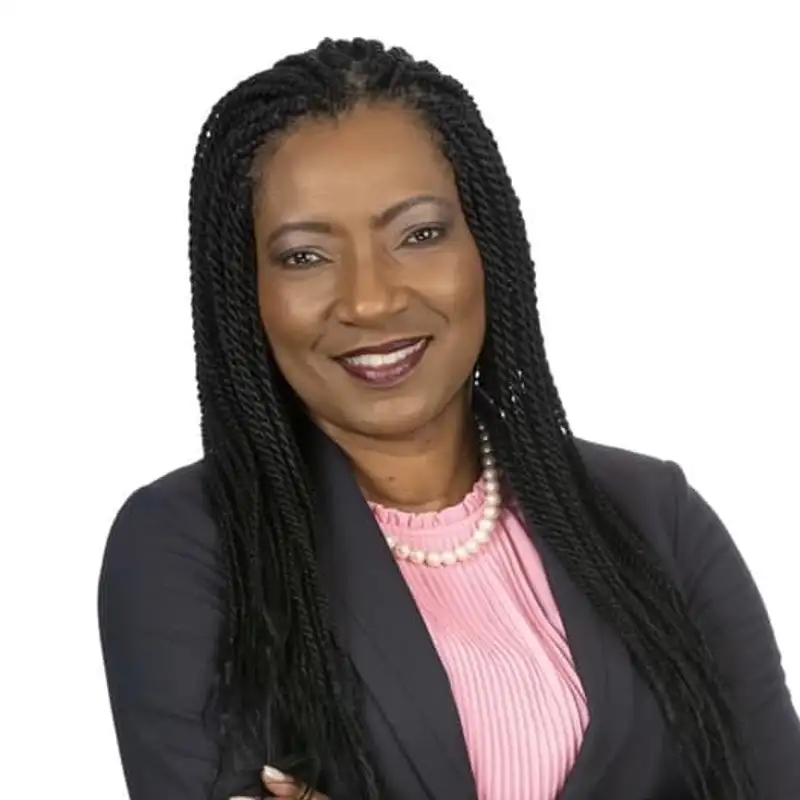
Tanya Flanagan Talks Healthcare Policy, Smoking Prevention, and Specialist Access With Nevada Assembly Member and Former Doctor David Orentlicher
Announcer 0:00
This is a KU NV Studios original program.
Wesley Knight 0:04
The content of this program does not reflect the views or opinions of 91.5 Jazz and Moore, the University of Nevada Las Vegas, or the Board of Regents of the Nevada System of Higher Education.
Tanya Flanagan 0:19
Good morning, and thank you for joining me for the scoop with Tanya Flanagan. I'm so happy you decided to wake up and start your day with me here on the scoop, where we talk about life, joy, funny moments, trending topics, and so much more. We promise to keep you in the know and find out what you know. So, let's get started, you Good morning, Las Vegas, and welcome to another edition of The Scoop with me, Tanya Flanagan, right here on KU NV 91.5 Jazz and Moore, as always, I want to thank you for tuning in and listening to the show. I try to bring you interesting people, people that you may have encountered, some you probably haven't, people who are interesting and worth getting to know, or at least knowing more about. We are in the election cycle. We are in early voting. Early voting opened on may 23 and it will end on june 5. So we are in the middle right now of the two week period, where you guys can go anywhere and cast your ballots, it's so important to participate in the electoral process, especially at the local level. These are what we call midterm elections. And this morning, I have the pleasure of talking with Assembly Member David, Dr. David Ortlickr, who represents District 20. Welcome to the show.
David Orentlicher 1:41
It's great to be here.
Tanya Flanagan 1:43
Well, thank you for taking some time to talk with me. I've always wanted to have an opportunity to get to know you better. We've spent some time together as legislators, but I know I'm a quiet person, but I do talk a lot. But you are quiet as well, and so I think it will be really fun to peer into your life a little bit, you wear a number of different hats, so I would like for you to share some of your accolades with our listening audience this morning.
David Orentlicher 2:10
Sure, so I started my professional career as a doctor, primary care internal medicine was my field, and as I was taking care of patients, I saw two things that made it difficult to give them the care they needed. One was we have a health care system that doesn't cover people who need care, and even people who are insured may not be able to afford the co payments, deductibles, what we call the uninsurance problem. I had a patient once who had lost her insurance. She had lost her job, that's another part. If you have insurance tied to your job, so if you lose your job, you lose your insurance. And this had happened to one of my patients, and she was coming to me, and she was having a problem that I thought after a few visits she needed to see a neurologist, so I gave her a referral, and when she came back a few weeks later, I asked her, "Well, how did it go with the neurologist? and she said, "I can't afford a neurologist, it's $100 just to walk in the door and I don't have $100 and so I kept working with her as best I could, and another problem I saw that what we call the social determinants of health, healthcare is very important, but your housing is important too, your income, the food you can afford, and so I, if I had a patient who had lung problems, and maybe it was being caused by mold in their apartment, and I could treat the, give them medicines, but if they were going back to that same apartment, they weren't going to get well, and so these kinds of problems got me interested in working in health care policy, so I went back to Harvard for law degree, and since then have been working in the health policy arena, sometimes as a legislator, also as a professor. I teach at UNLV, mostly at the law school, where I teach health care law and constitutional law, and I also do some teaching of medical students, teaching them about health law and medical ethics.
Tanya Flanagan 4:25
That was very interesting. I don't think I ever realized how extensive your background was, and how varied it is in terms of health care. It's an area that we both share great interest in, me, because I have my cancer history, and I have carried, you know, some legislation that affects the accessibility that families have to healthcare, specifically breast and ovarian cancer patients to access IVF, but the points you made are so valid and so, so indicative of what happens to people where. They don't get the care we always talk about, not having doctors. It's not just having access and having enough doctors, it's the social issues that affect how people are treated. So, do you find that in looking at the correlation between inadequate housing causing health problems, or inadequate access to healthy food causing health problems or inadequate access to good insurance coverage, meaning we talked about specialists and people getting referred, and I hear those stories all the time, and it infuriates me, and I try to work, you know, on those types of issues whenever I can, but the biggest problem is how our systems are set up the referrals to specialists, and then people wait weeks, if not months, to try and see a specialist, and it just prolongs and exacerbates their circumstances, because when they could have been treated more expeditiously, the time it takes to get into the doctor or the specialist that they need is just exponentially worse. Do you work, so you, you teach the policy to students, law students, and medical students. Has that been the focal point of your time when you, you're on, you're serving the Nevada state legislature, and this will be your fourth term if you're reelected? So, has that been the focus of your work when you've gone to Carson City?
David Orentlicher 6:20
Yeah, so there are three ways in which I've tried to bring what we know about effective health policy to our to Carson City. One is, as we say, an ounce of prevention is worth a pound of cure, so the more we can do to keep people healthy and so they don't get sick and need health care, and the biggest cause of preventable disease in this country is smoking. Almost half a million people die every year. It could be cancer, it could be heart disease that was caused by their smoking. Smoking levels have come down a lot in the past 30 or 40 years, but we still have pretty high rates here in Nevada, so that's when one area to see if we can reduce smoking more, and when I say it's the biggest cause of preventable disease, if you add up things that you might think of that cause more deaths, like HIV or opioid overdoses or automobile crashes or guns, you add all those up, that's less than half of the deaths from smoking every
David Orentlicher 7:33
now,
David Orentlicher 7:34
so it's, it's really an important area to
Tanya Flanagan 7:37
it, isn't it's really interesting, I've gone to, in the last couple of years, they've had a tobacco matters campaign. This, the Southern Nevada Health District has been really big on the Tobacco Matters campaign, especially in the African American community. I think with the menthol cigarettes, and then the cessation, you know, for the cessation awareness campaign, but I don't. When we're moving from day to day, we don't always think about the numbers and the totals, and I think that you bringing that up makes it even more personal and a way to look at it in a very personal sense, because we probably all either know someone who smokes or has smoked, whether they're immediate family members or friends within our friends and influencer circle, but we know someone, and it's interesting to have a conversation and look at the numbers and how it compares to you think about car accidents, or you think about alcohol, substance abuse, in that sense, or car accidents, or anything else that can happen to people to think that smoking can be at the root of so many things, whether it's causing cancer, or lung disease, or COPD, or all these different things. Have you done legislation that's been specific to cessation?
David Orentlicher 9:10
Yeah, so, and one other thing I want to tie into something you said, black Americans actually don't smoke any more than white Americans, but they suffer the harms of cigarette smoking. It's, it has a greater impact, and it exacerbates the health disparities that are in this country's, and so that's an important reason why we need to bring smoking rates down. Is
Tanya Flanagan 9:41
it a genetic thing, or like, is it a geographical predisposition to having a greater harmful reaction?
David Orentlicher 9:50
Good question, because
Tanya Flanagan 9:52
it's kind of the same thing when I get into conversations about cancer, even though others are diagnosed more frequently after. Can American women die more frequently from breast cancer diagnosis? Right.
David Orentlicher 10:04
Yeah, I suspect a lot has to do with poverty, income. The better income you have, the better housing you can have, die, and all these things come together. I used to say, if you remember, during the when Andrew Yang ran for president, and remember he wanted to have a guaranteed income, and I would say that's the best health care policy out there, because if every, if you give people a decent income, then they can afford the housing they need, and the food that they need and other things that affect their health, so I think that's a big part of it. Just when you don't, when your income is low and you can't afford the goods and services that help keep you healthy, then when you smoke it's going to make it worse. Yeah,
Tanya Flanagan 11:00
affordability is a huge buzzword right now in our community around housing, around health care, around everyday survival. So I 100% can see the effect of what you're talking about, and how the affordability, or the lack thereof, adds to health care disparities,
David Orentlicher 11:22
but getting back to cessation, it's so what makes it so difficult is cigarettes are so nicotine is so addictive, it's one of the most addictive substances out there. People, even they really want to stop, it's very hard. So there are two ways to address this one is to try to keep people from starting to smoke. Most people start when they're adolescents, when they're, you know, before their age 21 As my wife likes to say, when they have hormonal poisoning, teenagers make a lot of bad decisions. Get them past those years, and if they don't start smoking, they never enter years. Yeah, so that's one thing to do, you know. Make sure we have good educational campaigns, and and then for the people who are addicted, a lot of it is to help them, you know, grad if they can stop cold turkey, great, but for those who can't, make sure they have transitional, you know, nicotine patches, vaping while it's has its arms. It's, I'd rather have people smoke rather vape than smoke cigarettes. Burning tobacco is one of the worst things you can do, inhale the smoke from burning tobacco, so if you can get things that don't burn tobacco, so that's a lot what I'm working on, and then you know hopefully we can bring our cigarette smoking down, and then another thing is, as you said, even if you have a doctor and you have insurance, getting in to see a specialist can be crazy. I remember when I moved, was looking at moving here, and I was talking to the faculty at UNLV, and about living in Las Vegas, and they told me the joke, which is, when you need health care, where do you go, McCarran, and now I guess we'd say Reed, right, but you, and I've met so many people who go to Los Angeles for health care, or maybe Utah, or Mayo Clinic in Minnesota, and we, we should be able to stay here. So, one of the bills that I worked on that we passed and went into law was to make it easier for well-trained doctors from other countries to be able to be licensed here. It used to be they'd have to do another residency, even though they went to medical school, did their residency training, were well qualified and experienced, and we could use them here. We, if they had to do another residency, that's another three years. It's not realistic, so we've lifted for doctors who come with really good training. We're making it easier for them to come here, so they don't have to take three years. We've already done that with Canada for a long time, which makes sense. Canada has a very good health care system. It's next door, but Canada is not the only country that has a good system for training,
Tanya Flanagan 14:23
well, that well, first, congratulations to you on having the vision to bring that legislation forward, because when you, you mentioned your commitment to health care policy, because when you're serving as a legislator, you're right, you're elected to represent an area, but the work that is done is never just for the area, and especially when you're doing health care policy type of work, it's really the exponential reach across the state, because it's going to impact and benefit everyone. So, kudos to you for championing that particular causes in that space. Nice, and congrats on the work to bring more doctors here, because I have, having gone through a lot in the medical system, been fortunate to be treated by doctors here, but there were times when I wanted second or third opinions, and I sought those second and third opinions here and outside of the state, in Los Angeles and in Arizona, so I do you know recognize people often travel or feel they need to travel, or there may be a specialization, and as much as we'd like to see them treated here, we just don't have doctors working in our community and those areas of specialization, so District 20. I want to make sure people are familiar. We've talked about that. You are the assembly member who represents that area of the state here in Southern Nevada, but I want to make sure people get a picture of where District 20 is. So, want to share a little bit about the boundaries? Sure. So, the
David Orentlicher 16:00
easiest thing, if you're a boulevard mall or the UNLV campus, and you walk east, you're in Assembly District 20, and it goes all the way to the 95 in the northeast, crosses Nellis Boulevard, and then desert into Hacienda, and the north to south. I'm fortunate because I teach at UNLV, and my district's right next door to UNLV, so I'm very lucky. I'm also lucky all our districts are the same size population wise, but District 20 is one of the most compact. It's the third smallest, only about 10 square miles, so makes it easier for me to get to know my constituents and get them have a chance to meet me.
Tanya Flanagan 16:45
Did you decide to go into it because you wanted to do healthcare advocacy in a space where you could affect law to make the changes to try and fill the voids where you saw people suffering? Is that what made you shifted into a space of being an elected,
David Orentlicher 17:04
yeah. When you're as a practicing physician, you can do a lot for your patients, and it, but it's one at a time, and then if they don't have insurance, though, and they can't afford the care that you know they need, or they again go back to their home, where it's causing their disease. So, I felt by getting to health policy I could have a bigger impact on addressing these problems. One of them is the affordability, right? And one of the things I've learned as a professor in doing my research is the biggest contributor to high health care costs, is hospital costs, and the reason why hospitals have a lot of market power, they're not complete full monopolies, but they're pretty close, they have a lot of monopoly power, and they're not shy about using it, and it's gotten worse because of all the mergers, most of our hospitals are owned by large national companies that might be in Nashville, Tennessee, or other states, and their goal is to maximize profits, and they overcharge, and it's kind of like the utility we, if we let Envy Energy or Southwest Gas set their prices, it would be a lot worse. It's bad enough as it is. Can imagine how bad it would be if we let them set their own prices, like hospitals. So, what I've been trying to do, and it's.. I'm going to bring back another bill, trying to make sure we get it right, is to say to the hospitals, you know, we want you to cover your costs, we want you to earn a reasonable profit, but a lot of them are earning exorbitant profits, and, and we just need to, Oregon's taken steps to do that, Maryland, and they've developed good models for us to try to make sure our hospitals don't overcharge.
Tanya Flanagan 19:04
That'll be an interesting conversation to have, and in bringing that up, it reminds me of a conversation that I was in with one of the hospitals here, and my question to them was about cost, because I had traveled to South America at one point, and I suffered an injury while I was there, and I had to be hospitalized and have surgery and stay for a few days, and my I broke my leg, and my entire stay, three days, nurses, kinesiologist, medication, meals, everything, private room was less than 6000 US dollars, and I was in Chile, Santiago, and was less than 6000 US dollars. I came back, and I had an outpatient procedure to follow up to remove screws that they were, they left in my ankle to. Get it to reconnect, or whatever, and that was $6,000 for the outpatient procedure with no stay, none of that, and I remember asking one of the hospital representatives why we are unable to figure out how to have more affordable health care here, when people come in for something as simple as what I had done there, and he said to me, having the specialist available for the variety of cases that could at any moment appear before a hospital is what drives part of what drives cost at local hospitals in what's considered forward developed US United States cities is having those specialists available, and you have that unique situation that presents
David Orentlicher 20:56
well, that is part of it, and in general labor costs are higher here than other countries, but if you compare us with countries in Europe, Japan, that have similar labor costs and similar staffing levels, they're still much cheaper, and the big difference is in all of those countries the government negotiates with the hospitals to set prices, and while health insurers here have are big and powerful, not compared to hospitals, hospitals just have a lot more leverage, and they use it against the insurers, but when you're in any other country, and the hospitals have to negotiate with the government rather than individual insurance companies. Then the government has comparable leverage, and they're able to negotiate similar prices. So, yeah, you can get an MRI in Japan for one or 100 or maybe 200 now, and here same MRI, same quality will cost you $1,000 and what we see, it's not because people in other countries in Europe and Japan go to the doctor more often, or go to the hospital more often, or spend more time in the hospital, actually we spend less time in the hospital, we're less likely to go to the hospital, but when we go, our hospitals are able to use their market power to charge, you know, 234, times what other countries.
Tanya Flanagan 22:33
As a legislator, do you think we'll ever get to universal, truly get to universal health care? Was that something you would like to see?
David Orentlicher 22:43
We definitely should have it. It's very hard to do at a state by state level. It'd be great if we could do it in Nevada, but would you see it's hard. The one state that did it, and many years ago, was Hawaii, and Hawaii could do it because it's an island, and so you don't have to worry about they had an employer mandate. If you operate a business, you have to provide insurance to your employees, so they didn't face the problem of employers saying, well, we'll just move our business because you're Hawaii, and they also didn't have the problem of people who are uninsured, say, well, I'll just move to Hawaii, so that's it. Makes it hard for an individual state have to do it at national level, but you know, we took big steps with the Affordable Care Act, and if every other developed country, economically developed country, can do it, we can do it. I
Tanya Flanagan 23:40
think that's the concern. It's the, we see it in other places that are, and when I was in South America, it was actually considered a third world country, but it had, and I'm not saying that everything about the health care system was ideal. It had a system where, if you, it was a public system, anyone could go, the private, like a public hospital that anyone could go to, because they presented me with my options for treatment once I, when I hurt myself. It was either public, everyone goes, or private. If you can pay, you could be seen, and I said, well, I'll go pay, because I'm in a foreign country, and I didn't even know what pain was going to look like, it just happened to be that economical, and I was like, this is crazy, I cannot believe that I had an MRI and everything you needed in a private room, and the nurses, the food, the care, the kinesiologists, the medication for less than 6000 US dollars, it was the most economical procedure I've ever had in my life, but we'll get back to it, but I want to take a quick second to make sure, as people are listening, we're talking with Assembly Member David Orentlicher, who represents District 20 here in Southern Nevada, in our Nevada state legislature, when we do have our sessions every on the odd years. Every other year, so we'll be looking at the 84th legislative session when it convenes next year, but we, I have him here in the studio, and I'm delighted to have him, but I want to make sure, in case people want to learn more about you or follow more what you're doing in the healthcare space, health care policy, which is a really big heavy lift and of great interest to many people that they know where to find you on social media platforms, so if you want to share how people can find you, I like to do that before the show winds down too far.
David Orentlicher 25:29
Sure, thank you. So, my website is David O, the letter O for spell out F O R nevada.com David O for nevada.com and you know you'll find all kinds of information
Tanya Flanagan 25:46
handles and social media. We are so social media savvy these days.
David Orentlicher 25:52
Yeah, so my handles, David O for Nevada,
Tanya Flanagan 25:55
cool that way people can just kind of get to know you better and track the work that you're doing again, because we're in the middle of midterm elections, we're in the middle of early voting here in Clark County, and folks can go out and cast their ballots until june 5, and then if you don't have your ballot and your choices in by june 5, when the early voting locations all over the valley close, you will have an opportunity on primary voting day, which is june 9, Tuesday, june 9. I can't believe we are so close to it. Feels like when you see people filing in March and it's winding down, you're getting to this point of March, April, May, and you get to June. It just feels like there's all this time, and then you look up, and the time just ticks. Is it? Does it feel the same or different than being in a legislative session for you when we have 120 days, and I know for me day one ticked out, and I was like, oh my gosh, there's 119 days left, and you feel the pressure of the time.
David Orentlicher 27:00
Yeah, it is. You know, I - I'm envious of if you're a county commissioner or city councilor, it's year-round. You're in Congress, it's year-round. You, you can introduce a bill anytime, and we have this short window, and what happens when something develops after the deadline of when we're not in session, so it is really limiting. That said, it does have advantages when you have deadlines, you, you have to get things done. Some people need that also. One of the.. it's nice that you know, I live, love being a legislator, and I love being teaching at UNLV, so that I get to do both. I don't have to pick between one and the other. So that is one of the nice things about a part-time legislature.
Tanya Flanagan 27:54
That's nice, folks. It's been a pleasure to have you tune in. I hope you've enjoyed this conversation with Assembly Member David Orin Lucker, who represents District 20. Again, I mentioned we've shared website information, and that we're in the middle of early voting, so you talked about the time ticking in. I would love to talk about a year-round legislature. We don't have time this time, because we're at the end of the show, but there's just so much more to discover and to explore and see what your thought process is on it. I want to say, thank you for joining me today.
David Orentlicher 28:28
My pleasure. Thank you,
Tanya Flanagan 28:29
thank you. It's been a pleasure to those who have tuned in. We will be here next week, same time, same location, 91.5k U N V Jazz and Moore, right here on the beautiful campus of the University of Nevada, Las Vegas. Stay safe, have a great week, and cast your ballots. I want to thank you for tuning into the scoop with me, Tonya Flanagan. And I want to invite you to get social with me. I'm on Facebook and Twitter, my name is my handle, T A N Y A F L A N A G A N. You can also find me on Instagram at Tonya Almond eyes Flanagan, and if you have a thought, an opinion, or a suggestion, don't hesitate to shoot me an email to tonya.flanagan@unlv.edu Thanks again for joining in. Stay safe, and have a great week.
Unknown Speaker 29:15
Bye.
Transcribed by https://otter.ai