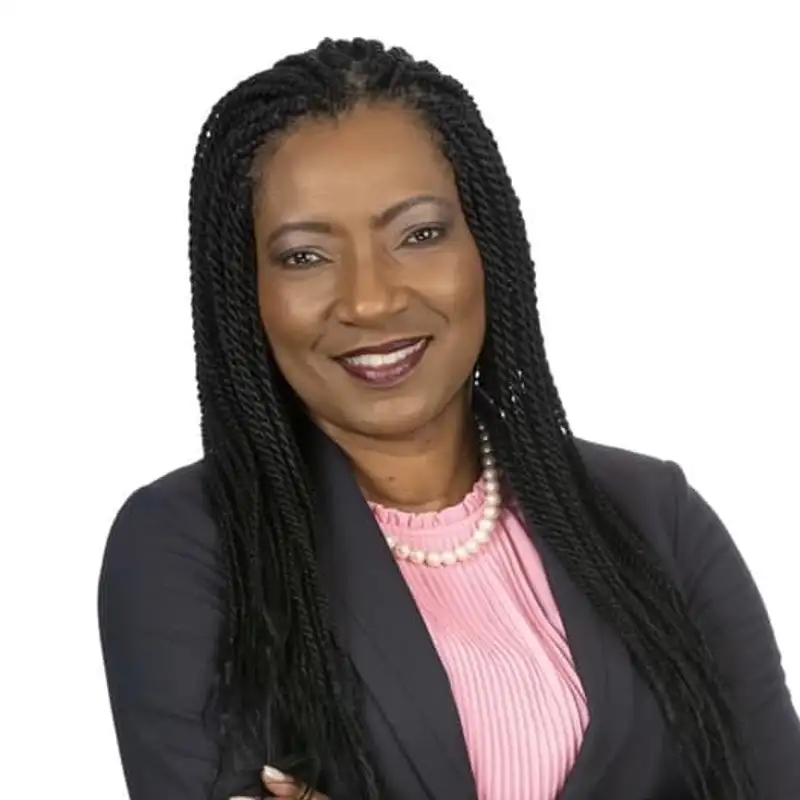
Tanya Flanagan Talks Public Health with Alisa Howard and Jackie Brown, Covering Maternal Health, Food Insecurity, and Nevada's Fight for Community Wellness
Announcer 0:00
This is a KU NV Studios original program.
Wesley Knight 0:04
The content of this program does not reflect the views or opinions of 91.5 Jazz and Moore, the University of Nevada Las Vegas, or the Board of Regents of the Nevada System of Higher Education. Good
Tanya Flanagan 0:20
morning, and thank you for joining me for the scoop with Tanya Flanagan. I'm so happy you decided to wake up and start your day with me here on the scoop, where we talk about life, joy, funny moments, trending topics, and so much more. We promise to keep you in the know and find out what you know. So, let's get started, you Good morning, Las Vegas. Good morning, Nevada. Good morning, world. I know some folks around the world listen to the show from time to time, so I'm grateful for that support and participation. Welcome. You're probably saying, oh my gosh, she has so much energy, especially the morning after Fourth of July, with all the excitements, the red, white, and blue, the boom, boom, boom. I don't, I'm dragging, but it's okay. It's great to be here. It's a wonderful morning. It's good to be in the studio, and to have an opportunity to have yet another conversation. Today, we're going to talk about public health. I had wanted to invite my guest back to the show. I've wanted to do that for some time, so I'm delighted to have the privilege. I'm looking forward to the introduction, and I got a bonus guest as well this morning, so it's going to be what I expect to be a really good conversation. I hope you think all of them are. You don't have to agree with me, but I do thank you for tuning in and being open-minded this morning. I am delighted to welcome to my show a dear friend. Sometimes people say we're twins, every so often we get mistaken for one another. Alisa Howard, who is the founder of Minority Health Consultants here in Las Vegas. Good morning.
Alisa Howard 1:57
Good morning, and thank you for having me. Thanks
Tanya Flanagan 1:59
for coming back. I appreciate it. I had been thinking about you for some time, going.. I really need to talk to her. You all know I'm a huge public health advocate in the space of cancer, cancer research, access to good health care. So, we're going to talk about a number of different things going on, and I'd like to also welcome to the show a friend that Elisa introduced me to, and so I'm having the pleasure of getting to know this beautiful young lady, Miss Jackie Brown, who is a public health consultant.
Speaker 2 2:27
Thank you for having me. Good morning, everyone.
Tanya Flanagan 2:29
Thank you for being here. I look forward to kind of digging into your background. So, before we go too far into the show, I want to give you all a chance to share a little bit of your resume, so people have some context of the work that you've done over the years, so Jackie, we'll start with you.
Speaker 2 2:43
Okay, so my background is in public health, as you all may already know. I used to work for the United States Department of Agriculture, doing their food policy programming support for their national school lunch, school breakfast program. I was a Peace Corps volunteer in South Africa, I did HIV TB education. I was a health planner in Berkeley. I've done some public housing recertification, and I don't know, just I'm all I'm all over the place, really. Right now, I'm focusing on fitness, so my background, or my passion, is in personal training, yoga, and mobility,
Tanya Flanagan 3:22
that's awesome. I look forward to peeling back the layers of the onion and just hearing a little bit more about the work that you've done and how it coincides or supports the work that Elisa does. So,
Alisa Howard 3:33
you know me, I like to drag people along with me, shenanigans. So,
Tanya Flanagan 3:38
for our listeners, please reintroduce yourself and catch me up to speed on what you've been doing, because it's been a while.
Alisa Howard 3:43
It has been a while. So you know me, I've been working in this field for 13 years. I've been in HIV, tuberculosis, all infectious diseases, COVID, SARS, influenza, and then the chronic diseases, hypertension, diabetes, all of it focused around health equity. All of it focused around working with vulnerable populations in these areas. So, whether that's doing community engagement, whether that's working with the actual stakeholders and helping them build these programs for these vulnerable communities, how they should be more equitable, how they can help these individuals access health care for these particular chronic diseases or infectious diseases. Now, recently, over the last two years, I've been pulled into maternal health and the maternal health crisis, and so I've been working with Tierra Flynn, a phenomenal mama, in Comagine Health, where they have a five year HRSA grant, and this HRSA grant is an integrated maternal health systems project, we're working with UNLV. Actually, I looked over there, I'm like, I'm at UNLV. Yes, so we're working with UNLV School of Medicine, and we're working with several behavioral health doctors that work for the school as well, and we're looking at the systems of maternal health. What do people need? What aren't they. Getting here in Nevada, in general, Southern Nevada in particular, and how can we stop the morbidity and mortality of mainly black and brown women and their babies that are dying, and how can we make it a better system? So, we've been granted a five year Co-Imagine was granted a five year grant, and I've been on that for about this is the third year, so we're going into our fourth year.
Tanya Flanagan 5:21
Okay, when you were talking, you hit right on the point that I wanted to touch on. What we're seeing in the black and brown communities, in the minority health community spaces, maternal health has become a really focused on conversation increasingly in the last few years. I think a couple of years ago I hosted a conversation over at Doolittle thought the audience should be a little bit different because it was a little mature for the conversation that day, and I thought it should have been younger because the audience was past really past childbearing years. Yes, but in the sense of being the mothers of the community who can help the younger moms understand how to navigate, because I think we, we've lost sight of some of that,
Alisa Howard 6:04
yeah, the village,
Tanya Flanagan 6:04
the village helping you to navigate pregnancy,
Alisa Howard 6:08
absolutely,
Tanya Flanagan 6:08
parenting, childbearing, and that supports our thought, and that, since the audience was not bad,
Alisa Howard 6:14
absolutely, and we've lost sight of just that village and what it should conceive of, right, like doulas and midwives, babies weren't dying as often when we had those integrated into our systems, and now that they've been pushed away for the last what, 1020, years, probably longer than that, actually, now we're seeing this mortality, right, and so we have to get back to a community mindset, so another thing that I do is I teach community health workers at College of Southern Nevada, and that's the one thing that is the staple of teaching them basically what I do in public health is be that community representative, show it for them, and show it for their resources that they may need, and so teaching them all the intricate pieces of public health and where they fit in, so they can hear what's happening and say, do you have a midwife, do you have a doula? Do you have an OB-GYN that's listening to you? Like, those type of things are really important in those community advocacy
Tanya Flanagan 7:08
for your health is one of the most crucial components that people miss, right? Because there's an assumption that when you walk into a doctor's office, there's this person who automatically cares about you, and they're going to do everything and check all the boxes sometimes. Yes, we have a lot of really good doctors in our community, but not always, because the case load is high. There aren't enough physicians. We always talk about this physician shortage. I want to bring into the conversation as we talk about all things in Jackie, jump in at any time, environmental challenges, right? Because you mentioned how we've gotten away from the village in terms of maternal health, so clearly this conversation is going down the pathway of maternal health. We know where we're going to go, folks, but this is where we're going for a little while. Anyway, you talked about the absence of doulas, midwives, etc. We are in a different time, especially as communities of color, environmental challenges, economic challenges, access to health care challenges, right, pollutants, food pollution, food insecurity, the
Alisa Howard 8:10
heat index,
Tanya Flanagan 8:10
heat index, healthiness, exercise. How are these factors that used to not be part of the conversation at all? Yes, we live in the desert, and it's always been hot, but I am the first to say, as a person who went from one desert to another desert, this is a different kind of hot.
Alisa Howard 8:26
This is different.
Tanya Flanagan 8:27
It's just a different kind of hot. Your winters don't even cool down. It used to be I actually needed to put on a coat in the desert, but now it's like
Alisa Howard 8:35
I just told somebody that was so upset I did not have to wear my pea coat. It's a
Tanya Flanagan 8:39
thing right now, and I remember my dad saying to me one day, how many coats you gonna buy, Daddy, stop it if there's another color, but that was when I thought I needed them, right? Like, because I did. I remember my mother needing a coat in the winter around Christmas. We're in a completely different place. So, how is the environment, the pollutions, what we're doing, the foods, the additives, the changes. We talked a little bit. You mentioned other crisis and health space affecting whether we're talking maternal health or we expand this conversation to just health in general.
Alisa Howard 9:14
Yeah, people always think that, and I'll let Jackie jump in here, but people always think that there's these different sectors of public health, but they all intervene with one another. They all collide at some point, and so maternal health, if the heat index is different in Las Vegas now, your potential dehydration rate is exasperated, right? Your potential for getting your nutrients to your baby, all of those factors are considered, even when we think about the food we're hearing now that the food crisis is real, and it's here in America. It's not just over in Sudan, it's not just over in these places that we hear about, and we think it's so far away. It's here because farms are closing down, they're not getting the money in the subsidies and the stipends they used to get from the government, and so if you're not eating. Eating healthy, and you're hot, over overly heated, right? All of those things exasperate any other conditions that you may have. And so I'll let Jackie jump in.
Speaker 2 10:09
I think this is on point with, like, the clients that I have for personal training. I have two clients who are trying to conceive, and I'm trying to figure out how to best tell them about their nutrition. So one client is looking deeper into, like, the Mediterranean diet. We talk about post, like, post postnatal care, but we don't really talk about prenatal and what the nutrients you need to even rev up your body to give birth or even to conceive. When you talk about environment, living in cities. Both of my clients live in cities. They have access to, like, farmers markets and things like that, but they also live in areas where the food is highly processed, so they don't necessarily get the access to, let's say, the fresh fruits, the fresh vegetables, etc. And some of the ingredients that we're putting into our food now is like causing cancer, causing a lot of hormone disruption, and we're trying to figure out how we can healthily cut some of those things back realistically due to like lifestyle changes. You work nine to five, you don't always have the time to prep for, prepare for the next day, you just want something that's quick, easy, so you can go to bed and then get up and do the same thing over again. So, in like the personal training space, we see a lot of people that come in with comorbidities are coming to kind of cut down on, let's say, like lifestyle changes, increase movement, and everything else. But in Las Vegas, when you are living at 100 plus degrees, you can't really get your steps in, you can't necessarily walk, but then you talk about again pregnancy, so taking it back full circle. How do you tell someone who a doesn't have access to, like, let's say a space that's clean, clear to walk, b may not have access to some of the fresher fruits in Nevada alone, so fun fact, it's considered a food desert, like the entire state. So, second highest place to purchase groceries in the country, outside of California, and of course, Alaska. And I wouldn't have known this without working for the USDA. Like, there's a lot of stuff that happens here that we don't necessarily realize, because we have our own little bubbles, and maybe we're not ourselves facing food insecurity, but all kind of like trickles down to what we see as far as like health issues in Las Vegas.
Tanya Flanagan 12:32
Wow, I knew it affects you every time you go to the grocery store, you see how the food crisis is affecting us here in Nevada, so in the last legislative session I actually ran a bill, AB 405 which was partly to address food insecurity. The gist of the bill was to establish a study, if you will, of the state in its entirety to identify where urban farms and community gardens could be erected, especially to address food insecurity in neighborhoods where people don't have access. Multiple purposes to give people somewhere to commune in a healthy environment, to beautify neighborhoods, to give you access to fresh food when you don't have it, because you're in a community to instill community pride, but to hear you with your expertise say food is Nevada has the second highest cost for food, and it just confirms I can't be crazy, because you go to the grocery store, right? Whether you're looking for something processed or fresh, and really fresh, there was a time when buying fruits and vegetables was the cheap thing you bought on your grocery bill, yes. Meat was the expensive thing that you had to incur cost for, right? And everything else was kind of like, do you need this? Do you not need it? Is it good for your kids in the first place? No, we don't need, but I don't know, ding dongs, right, or Twinkies. So now buying fruit is like just astronomical. It's just as much as buying meat in the summertime, it's so hot to me that I find myself, and I want to get into the conversation about mindset, thinking, what will I cook, and I'm like, I'm just hot, let me just buy some fruit, and I'll be fine, like I go in the store, and it's like a blank slate, I have zero ideas on what I want to prepare, because it's 100 million degrees outside and I can't even imagine eating, so I literally just buy more fruit, but when I'm doing it for a single household right now, in theory, I feel a lot of concern for families of four, I was thinking or more the other day, because if I feel this and I'm only trying to feed myself most of the time, granted I can pick and choose whatever I want because of that, right, but God forbid I needed to stretch it further for more.
Alisa Howard 14:54
I literally texted my mom the other day, and I was at a grocery store, and I was like cans of. Soup, and you're $5 that
Tanya Flanagan 15:01
was my first thoughts. People
Alisa Howard 15:04
gonna do, I mean, that's my first thought. I only time have
Tanya Flanagan 15:06
the same thought, and soups don't get me wrong, it's bad for me, because I love the sound factor, but it's the rush moment, right? It's the late at night, and you got home, and you just want something a little light, yes, you can dilute it a little bit, and it's quick, but I'm thinking if these counts $12 and I'm really, I'm reluctant to spend it right, and I kind of have it, yeah. What are families doing about everything exactly? So it also made me want to have introduced the mindfulness, because you talked about accessibility to walk, to be healthy, to get outside, to get your steps right. The commitment to, okay, maybe it's not clean, but all neighborhoods still have some type of park most of the time. Right, in the desert, we know if you want to do it, you need to be up at five or 6o'clock in the morning. Not saying that work schedules will always allow it, but whatever days of the week do allow it. Pushing yourself to do that now. Certain neighborhoods will allow you to do it at 10 o'clock at night, but not all neighborhoods will allow you to feel like you can be outside late, right? And take a walk,
Alisa Howard 16:10
right? There is a safety factor,
Tanya Flanagan 16:11
because there's a safety factor, but I think it's that commitment to ourselves to say I'm worth it on the days that I can. But everybody's scenario wasn't the perfect scenario, you know. You have small children, you have all kinds, you have ailing parents, you have.. it's like the mindfulness to say, how do we do whatever is necessary to get what we need? Like, it's just not.. and these are
Alisa Howard 16:34
what we call social determinants of health. These are things that we in public health have to think about all the time. I can go walk because I'm in a safe neighborhood, but what about the person, maybe you know, five blocks away, five miles away, that's not in a safe neighborhood. How do we get them to be in a, in a healthy space? Right, nutritious foods, being able to walk in their neighborhoods, and healthcare companies and MCOs, managed care organizations, are trying to help in these areas where they're like Silver Summit gives you a free what is that membership to one of the gyms, YMCA things of that nature, so there's little things that we've seen over time that have been, you know, implemented by MCOs or large healthcare companies that say, okay, we see these things, we know these social determinants of health. How can we address them? But now we have a situation in our, in our government that those things are being taken away as well. So now we're right back to the same health disparities that we've worked so hard to get away from, and to fix, and to try to help, right? So it's just one of those things where we're always constantly battling in public health, and people say public health is not political, and it absolutely is.
Tanya Flanagan 17:49
What would you say is the call to action for people who are affected by these circumstances? Either one of you, like, what's the call to action for the for the everyday person with all of the challenges, because I am an anomaly in a conversation like this, to a certain degree, it's me. I don't.. I'm at an age of my life where, if I had kids, they wouldn't be small. I'm blessed not to be in the sandwich space, where I'm taking care of my children's children, like those things are units that are self-contained. My children are still calling me, bless me, but they broke me down this week. Can I have this? Can I have that? But I love them, and I'm grateful I was able to do it. But what do you say is the public call to action like, what can they do to participate in this process and be heard?
Speaker 2 18:39
I mean, I think the easiest thing that we can do that's free is mindfulness, being mindful, like if I have a client and we're talking about nutrition, because we're going back to like grocery stores and things like that, having them write down what they're eating. Okay, so we want to, let's say, our goal is to lose some body fat, let's just write down what you're eating, so you can be mindful of, oh, I'm eating a lot of junk food, then we can at least pinpoint, okay, I'm eating a lot of junk food because I choose this, or I'm eating a lot of junk food because I'm kind of forced to because of my finances, okay. So, if that's the case, what can we do in the meantime? Can we access a food pantry? Do we have access to maybe a community garden? Can we start growing things in the meantime, while we kind of wait to see how we can increase our access to healthier foods. Are we choosing sugary drinks, like I don't know, I don't want to say a brand, but like soda, or are we choosing water? So can we like switch up our water or our drinking habits in that way? What are we choosing to do when we're stressed out? Are we choosing food as a resource? Are we choosing to like ruminate? We could also choose a breed, we can like go for a walk around the neighborhood if we have access to that. So I would just say mindfulness in general, and then going out to..
Tanya Flanagan 19:54
so for the average person who doesn't know what ruminate
Speaker 2 19:58
is, oh to. Replay a scenario, so let's say your boss has yelled at you for some reason, or you had a terrible customer at your job, you're just like replaying the scenario over and over again, maybe thinking about how you could have said this, how you should have said something instead of just letting it go and then moving on with your day,
Tanya Flanagan 20:16
so processing mindfulness in the sense of processing what's happened to you and finding healthier coping mechanisms, as opposed to this is bad, it's torn down my spirit.
Speaker 2 20:28
Yeah,
Tanya Flanagan 20:29
I'm just gonna get a bowl ice cream,
Alisa Howard 20:31
right?
Tanya Flanagan 20:32
Like we see in the movies, but of course the person in the movie having a bowl ice cream really ran five miles because they're an actress and they want to look through it, right? So, like in real life you just had a bowl of ice cream, and it's not going to add any value, right? Yeah, so
Alisa Howard 20:45
I would definitely say mindfulness is important. A lot of people don't understand how do we do it by
Tanya Flanagan 20:50
age, though, right? Because, because let's think about it, if you have young people, and the world is a different place for young people now, when we talk about public health, right, but we're trying to leave things behind for the next generation, but when you're young, you don't think anything's wing. If you're invincible, you can go to McDonald's, and there's no pun. Sorry, but well, it's just where we are when we're teens, right? You can do the things you love, Taco Bell, McDonald's, whatever, but as we get older, you just can't do those things. And so, how do you from an age standpoint? Because this age can do one thing, but then the next group can't, and then as you get older, life changes, and so they introduce, oh, bad cholesterol, or they introduce hypertension, and they introduce gout, and all these things come into play, arthritis, and just,
Alisa Howard 21:33
and that's why there's public health programming for all age groups. There's people in public health working with kids. I've worked with tons of youth programs on sexual health, but also nutrition. There's tons of people like us. I've heard yesterday it was very funny to me, actually. Someone said, you know, it was a nurse, and I was just like, what? She said, you know, someone needs to bridge that gap between healthcare and public health, because we don't know what you all do, and I was like, that is so interesting, because we just went through a pandemic, right, and I thought everyone got introduced to public health at that point, but to your point, because
Tanya Flanagan 22:09
it's the educational piece,
Alisa Howard 22:10
it's the educational piece. Where do
Tanya Flanagan 22:11
people find information they can use? Where do people find access, programming, directional help that they can use? The city of
Alisa Howard 22:20
Las Vegas, Southern Nevada Health District. They can literally Google and put in youth nutrition facts, and then the CDC website will come up, NIH National, what is it called, or NHI? Sorry, what is it, National Health Institute? Yes, NHI, that will come up, but different entities will come up, and I would say, and this is what I tell my community health workers as well, when I'm teaching them how to find resources. Always make sure it has a edu or a.gov instead of a dot, you know, com or something like that. Make sure that it's reputable websites. A lot of things that are happening right now, also that I was posting a lot about during the pandemic, is misinformation. Social media is full and full of misinformation. Find the people who have credentials, look their credentials up. Everyone is on here just putting on, I can go find a nursing, you know, get up and get on there and say that I'm a nurse and have no nursing credentials. And so I think that's really important, is to make sure that the information that you are seeking is reputable information, and then just to go back to your question from earlier, what can people do? I would say that people can get involved. I think it's absolutely necessary. I think mindfulness is one thing, but I think people also have to use mindfulness to be involved in their health. People can get involved, that's what we're seeing a lot. We're not seeing a lot of right now is everyone's kind of like, I want to get involved, but I don't know what that looks like, right? And because your health is personal, you should personally get involved, right?
Tanya Flanagan 23:49
I had that conversation recently with someone, they were asking me about something else, and it was politically charged, and it had to do with energy and cost, but he was like, How do people find out more, and I said the information is there. Information is always available. I said the trigger point is when it affects you,
Speaker 2 24:07
right?
Tanya Flanagan 24:08
Then you become concerned about where to find the information, meaning when you get diagnosed with gout, then you want to know everything about gout, right? Congestive heart failure is your diagnosis, you want to know everything about that, or whatever it is. So it's information is all around us. Good information is important, but it's all around us. We're getting into the last five minutes of the show, and I like to make sure that when people, when I introduce people, the audience has a way to follow you, learn more, be engaged. So I want to give each of you an opportunity, if you want to share social media handles or information on where people can get more, please. Jackie, we'll start with you.
Speaker 2 24:43
So, my social media media handle is Om underscore Jackie Om, and I go over more mindful stretching, yoga, personal training, so how you can get healthy from your own space with what you have.
Tanya Flanagan 24:58
I love that,
Alisa Howard 24:59
and. And currently I am on LinkedIn as Elisa Howard, a l i s a Howard, and I'm also on Instagram sharing this information all the time, as well as one, the number one Alisa Howard, and they can follow Minority Health Consultants also on LinkedIn and Instagram and Facebook.
Tanya Flanagan 25:16
Okay, folks, so that way, just I love to make sure people get information. I hate daven rush through it, so I like to do it. Before we get to the end of the show, we have a few more minutes left. What would you say? And I loved what you introduced, Jackie, that things you can do at home in your own space. Let's share some stuff that people can do when they don't have the freedom to do a walk by. Yes, there's a whole entire trail system. Let me, let me say that. So, I won't say that, because Clark County and the city collaborated in Bureau of Land Management and Beyond the Neon. There's a whole entire trail system that connects the valley, but it is still 100 and, you know, 106 this week, whatever. But things people can do in their own space, too. You mentioned journaling, looking at what you eat, maybe doing yoga, using your, you know, your social devices, your smartphone devices, to just kind of even put an exercise routine on, and just kind of follow that. Start journaling.
Speaker 2 26:16
Yeah, I would say stretching. Most people, they get used to being in pain, and all they need to do is just open up their shoulders, open up their hips, it'll solve a lot of, at least that energetic point, it'll solve a lot of that, really some of that stress.
Alisa Howard 26:29
Yeah, and journaling is a mindfulness thing, it's a mindfulness technique, but it's also, it's been contributed to behavioral health, mental health, to really kind of dissolve some of those things, that anxiety that we're going through, if you're confused about something, writing in general has now a science backing to it, that it's super helpful. So that's one thing I could say. And you don't have to have a fancy journal or diary, you can literally just have a piece of paper, write your thoughts out. If you, you know, feel comfortable, you know, leaving it around, so you can go back and look at it and see how far you've come, that's great. And if you don't feel comfortable, write it out, you know, stretch it out, you know, feel it, and then destroy it. And that can also be energetically just releasing for you. So
Tanya Flanagan 27:11
those type of things, when you're in tough situations, I know there have been moments when I've been at work and someone will hit you with something and you just want to fire back. Write the email in your personal email.
Alisa Howard 27:22
Yes, yes.
Tanya Flanagan 27:23
And then never hits in, never
Alisa Howard 27:24
hits in,
Tanya Flanagan 27:25
and just delete it.
Alisa Howard 27:26
Yeah,
Tanya Flanagan 27:26
you know, and turn the computer off and go do something else.
Alisa Howard 27:29
Yeah,
Tanya Flanagan 27:30
because it does help you to process.
Alisa Howard 27:32
Absolutely,
Tanya Flanagan 27:32
journaling helps you to release stretching. Absolutely. As we, as I get older, because I'm just gonna say, as I get older, I find that your body changes, and when you're a kid, you're always at play, you're at motion, and you're pulling, and you don't even realize how much. And when you're young, you're dancing, they're just things that we did as we were movement, you went bike riding, you were running, you were skating, you were just doing things right. We don't do as much of that as we get older, and I think the key to good health is movement and mobility. Absolutely, thank you for sharing that. As we get into the end, I just want to thank both of you for coming on the show. It has been a pleasure to have you, our folks. I hope you've enjoyed this conversation. We didn't know where it was going, but I think it's been delightful. I'd love to welcome you back again at some point, so thank you for tuning in to 91.5k U N V Jazz, and more. Until next week, stay healthy, stay hydrated, get some stretching, be mindful, and just be the best that you can be in whatever it takes for you to do that. Thank you again for tuning into the scoop. I'll see you next week. I want to thank you for tuning into the scoop with me, Tonya Flanagan, and I want to invite you to get social with me. I'm on Facebook and Twitter, my name is my handle, T A N Y A F L A N A G A N. You can also find me on Instagram at Tonya Almond Ice Flanagan. And if you have a thought, an opinion, or a suggestion, don't hesitate to shoot me an email to tonya.flanagan@unlv.edu Thanks again for joining in. Stay safe, and have a great week,
Unknown Speaker 29:06
you.
Transcribed by https://otter.ai