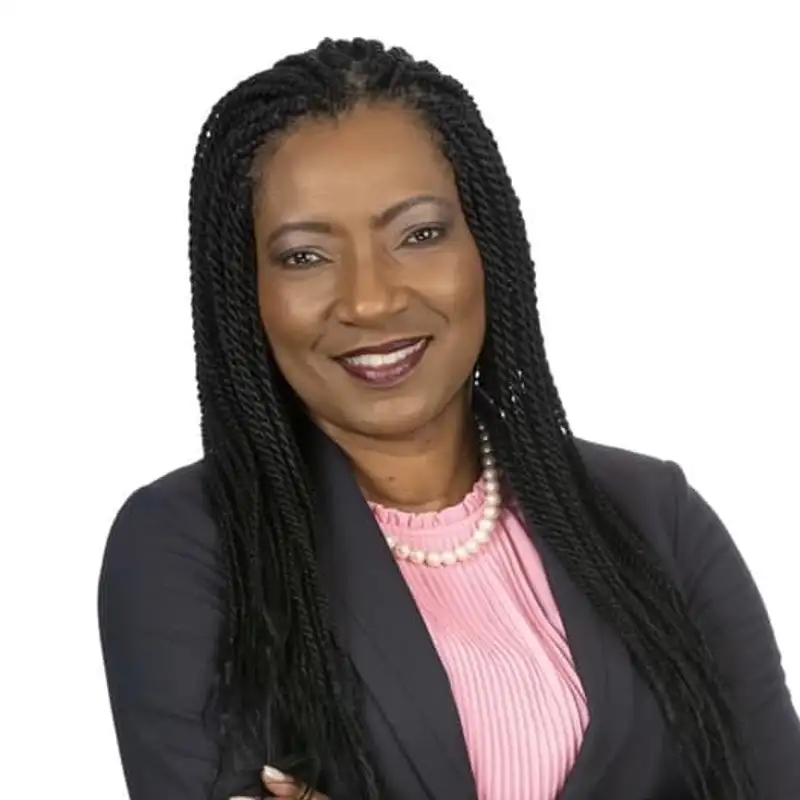
Dr. Maia Carter Discusses Her Career, Leadership Journey, and Book "The Leadership Prescription" on The Scoop, Highlighting Las Vegas's Healthcare Gaps
Announcer 0:00
This is a KUNV Studios original program. The
Wesley Knight 0:05
content of this program does not reflect the views or opinions of 91.5 Jazz and more, the University of Nevada, Las Vegas, or the Board of Regents of the Nevada System of Higher Education. Good
Tanya Flanagan 0:20
morning, and thank you for joining me for the Scoop with Tanya Flanagan. I'm so happy you decided to wake up and start your day with me. Here on the Scoop, where we talk about life, joy, funny moments, trending topics, and so much more. We promise to keep you in the know and find out what you know. So let's get started. Good morning, Las Vegas, and welcome to the show. Thank you for waking up early on this Sunday morning to tune in to KUNV 91.5 Jazz and More, where we give you great music and awesome conversationally. So I think it's awesome. Some wonderful people come into our studios to share their information and their vision, what they're doing with their lives. Today is no different than any other. So, without further ado, I'd like to introduce to you Dr. Maya Carter.
Dr. Maia Carter 1:13
Hello, Tanya. I'm so happy to be here.
Tanya Flanagan 1:16
Well, good morning. Thank you for joining me this morning. I'm delighted to have you. I mentioned Doctor Maya Carter, so I want to make sure folks know what kind of doctor you are. What do you special? Yes,
Dr. Maia Carter 1:26
absolutely. So I am a medical doctor. I am board certified in internal medicine, and I've been practicing outpatient primary care for 18 years. Wow.
Tanya Flanagan 1:36
I was at a conversation earlier this week about healthcare, elder care, and just all those things. And so we were talking about the need to have even more doctors in our community. And you mentioned practicing for 18 years. We're going to talk a little bit about today your career path, some other exciting things that you've done. It's a pleasure for me to get to know you and what you're doing to help other doctors become settled and successful in in the field in terms of leadership, and really how you took your leadership model and it is working to help people from all walks of life and various career paths to be more successful leaders. And I think this is a pivotal time for that in our country, as we look at the direction that it's taking to be able to find resources and support in many different spaces. Before we get too deep, I'd like to make sure just get connected. So, are you from here, or where do you hail from?
Dr. Maia Carter 2:37
Yeah, I am from Ann Arbor, Michigan. Born and raised in Ann Arbor, Michigan, so I am all about the Midwest. I did my undergraduate degree at Michigan State University, so a little bit further away from home, and had the pleasure of doing medical school and graduate school in George at George Washington University. So I have always had an interest in the psychosocial environmental factors of health. So I enjoy direct patient care, but I also understand the public health impact of community on one's health. And so I decided to achieve a medical degree along with a master's degree. So instead of doing my master's degree in two years, I did it in four years along with my medical degree, and then after that, I went to California and went to the Bay Area and trained. Did my training in internal medicine at the county hospital in Oakland at Alameda County Medical Center, and I resided there for about seven years, and so I was excited about that. Spent a little time in Kansas City, Missouri, in doing a preventive cardiology fellowship. Again, still interested in prevention, wellness, cardiovascular disease has always been a special interest of mine. And then, you know, went back to California and spent some time. Got married, had my children. End up getting divorced and moving to Las Vegas in 2012, and that's where my family retired and resided. And I've been here in Las Vegas ever since. So it's been it's been a blessing to be able to live different places, nurture my education, meet great people, and really be able to kind of pursue health, wellness, medicine, and now leadership.
Tanya Flanagan 4:25
As you, that is quite the resume and quite the life path that's led you to where you are. As you have had the privilege of traveling and working in different spaces, and then observing it through the lens of a healthcare provider, how do you assess our community compared to others, like what is it in terms? Are we healthy? Do we have enough access? Are we not seeing enough doctors? Do we need more specialized areas of care? Like what are the you know this every city is unique, right? We are a tourism based town. We have gambling at the forefront. It's always kind of a. Your face-it's just-it's-it's sometimes described as a mini California, right? A mini Hollywood because of the glamor that's also mixed in with the balance of everyday life. As a practitioner, where do you see people facing, and how do you respond?
Dr. Maia Carter 5:18
Wow, that's a great question. I think here in Las Vegas, care can be a little disconnected, right? I feel like it's sometimes it's challenging to get the care we need in a timely manner. We don't have enough doctors here in Las Vegas, and that's why I'm really excited about the efforts for graduate medical education and creating more training programs for physicians, because research shows that we end up staying where we get trained, and so really being able to produce more trained physicians here, more specialists here, it takes a long time. Myself included, going through my own health challenges, helping my parents navigate their health challenges, and finding the right specialist, and then when you find the right specialist, okay, we've got to look at the schedule. Are we able to get in in a timely manner? And many times we weren't able to. So what do we do, right? Do we wait? Do we try for you know someone else to get in? And so I find that we need lots of different things in place. I feel like we need to start at the elementary school level, talking to children about healthcare, health careers, and healthcare. Not only as physicians, but so many other ways they can contribute to health and wellness as a profession, and then with high school and programs in the summertime, and then again, just making sure that we're able to articulate why people should get their training here in Las Vegas. You know, we have lots of different choices when we come out of medical school, and we need to be able to figure out how we can highlight Las Vegas as a place to raise children as a place to have entertainment, do things that we enjoy doing, and be able to create the let's see the medical infrastructure, the attendings, the teachers, the professors who really embrace the profession of helping the next generation be great and be well, and so when we find as as a physician, I feel like I'm always a physician in training because I'm always going to be learning and growing. I'm always studying, but you know when we find really great preceptors and really great teachers and role models and mentors and coaches, we want to stay with them, and if we can create that infrastructure, I think that would be wonderful.
Tanya Flanagan 7:45
I like all of that because it's like a global, comprehensive approach to how we attack this need that we have in our community, especially as our population continues to grow. So many people are choosing to make Las Vegas home and happen for a very long time, and for a while, this conversation around the access to care has always centered on a lack of. I think we've come to the point, the fork in the road, where everybody realizes it, and so I think we're finally on a community-wide collaborative agenda to address the need. You know, there's the new campus over in the medical district, and so we're seeing the change. We're seeing legislation come through the Nevada State Legislature to talk about ways to attract people to the state and to retain doctors, even to do partnerships with doctors in other countries to invite them to come here, especially if they manage specializations in care, and to attract them to come here to work and to stay. So I do think think we're seeing a great deal of progress in a comprehensive community wide conversation. You practiced, you said for 18 years, but in recent months you've decided to do. Or recent years maybe is more accurate to say because someone does it in months, but in recent years you've decided to kind of do some different things, not just in the form of being of direct doctor to patient care.
Dr. Maia Carter 9:09
Yeah,
Tanya Flanagan 9:09
add a little bit about that. I
Dr. Maia Carter 9:10
would love to share that with you. Yeah, so I had finished my training program in 2008, and again, always had a wide view of how I wanted to contribute to health and wellness. I believe health starts at home, and so really understanding again, leveraging my public health degree, understanding how all the psychosocial and environmental factors, and family, and how everything affects one's health and wellness. I currently am a national director in the federal sector, so I'm here not representing not representing the Veterans Health Administration, but I work for the Veterans Health Administration, and I'm in charge of integrating and expanding virtual tools. So I've been doing that for the past six years, and then prior to that, for six years. I was in charge of all of our outpatient VA clinics here in Las Vegas as chief of primary care. So in 2015 is when I first stepped into leadership, and I realized that in addition to loving that direct patient care, seeing that patient in front of me, and really, really partnering with them with their healing, really understanding how the delivery of care works, how can we make the delivery of care better, how can we really help people on a wider scale was very attractive to me. And so stepping into leadership and having to navigate that was very very challenging. We are trained as physicians how to take care of that patient in front of us, and when we get tapped for leadership, it's a whole new territory in terms of how do we have conversations with people who are non-clinicians and articulate our ideas that we have and our experiences on the front line, seeing patients, seeing the patient flow, articulate those in terms of the bottom line throughput and risk and cost analysis, so that we can get our ideas heard as decision makers, and so that was something what was challenging. But I end up creating a framework for myself to be successful for so many years now, over 11 years in various leadership roles, and over the time, over time, I found that I was attracting quite a few mentees. People were coming to me asking me questions. Hey, hey, Dr. Maya, how do you how did you get to this role, or what do you can you do a mock interview with me, or I've got some questions on how I can succeed in this role, I'm stuck. How can you help me? Or other people were referring people to me, and finally, I said, "Well, I just, you know, I love helping people. I like to give people things that I wish I would have had, you know. And that was a
Tanya Flanagan 11:54
wonderful model. Yeah,
Dr. Maia Carter 11:56
let me just show you. Let me just help you. We all don't need to make the same mistakes. And so, long story short, in 2025, I formalized mentorship into coaching, got a certified certification in coaching, and created my business, Dr. Maya Enterprises LLC, where now I my mission is to help other physicians, healthcare professionals, and really now across industries, aspiring leaders and helping them to succeed in leadership and be effective and influential.
Tanya Flanagan 12:30
Do you think that in the space that you're working in now, and this just came to me while we were sitting here talking, there's opportunity to cultivate spaces within healthcare? So say we're having this big conversation in the community now about home healthcare workers, right? And I'm not saying they aren't organized, but because I believe that they are. But the additional bandwidth to help people cultivate workforce, right, in a successful manner that shortages are addressed, because we're teaching people the leadership skills that they need, so we have a greater advantage of plugging the the gaps and filling the voids where we have these deficits in terms of accessibility to providers, to practitioners. I feel like somewhere in your role is also this piece that you may already be doing, but definitely is this an additional layer of the onion that I'm like, oh, people who are looking to start, say, I want to start a home healthcare business, but I'm not sure where to start. In addition to teaching the person that's already been in healthcare for a while how to not just provide direct service to a patient, but how to lead and obviously lead the team? Do you think that people who want to branch out and start something on their own, in the spirit in the vein, would also be someone that you could tap and make a tap into you?
Dr. Maia Carter 13:57
I'm so glad you mentioned that. So I have folks in the community who have approached me and said, "You know what? I want to do something new and different. I want to do something that maybe hasn't been done before. I see a gap in the community, whether it be with healthcare, whether it be with another industry where they want to do their own business, want to do their own thing, and don't know where to start. And so I've been able to use some of the principles in my book, and just from my own lived experience, to be able to ask the right thought-provoking questions, and that's what we do in coaching, is to really be able to tap into the person who I'm speaking with, understand what their gifts and their talents are, and how do they leverage those to really bring to life what they want to see. I'm really big on visionaries and being able to envision what you want. So be able to ask that question. But you did also speak to something that's very important with leadership. From my own experience, just leading teams, you know, recruitment and retention. Right, and really being able to understand what our mission, vision, and values are for the organization or for our own business, and be able to hire, write, orient, and coach. Right, so who are we hiring into the organization? Of course, fair ethical principles when we hire, but making sure that people already have a clear understanding of where we want to go in the organization, and they have a clear ethical being about them when we bring them in. I'm big on when I was hiring doctors. It was about really tapping into who this person is, what motivates them, why would they choose to work here, and what are their special gifts and talents? And really being able to once we understand what motivates someone, we can keep them going, checking in. One of my favorite questions was always, you know, what do you need? I would make walking rounds, and I would ask people, what do you need? You know, how can I support you? And creating that psychological safety, so people want to stay in the organization. They want to grow, and we're optimizing their talents. Some people are really interested in electronic health record. Some people are really interested in being a part of the recruitment team. Some folks are really great at writing. I mean, there's so many different talents. But when we allow people to kind of nurture their gifts and spread their gifts, then we're more likely to retain them, so we can do the work that we need to be done. That needs to be done here in the community, and hopefully we can start narrowing some of these disparities. We teach people emotional intelligence, so we understand our own emotional regulation, and we can help others to tap into theirs. and And when we're dealing with the public, consumers, patients, coaches, mentees, we're able to connect with them. So when we talk about access to healthcare, you know, we can get to the doctor, we can get patients to the doctor's office. But even when we're right there in front of the healthcare team, are they still accessing care? Are they still being heard? Are they being understood? What's said and what's not said? What else do we need to know? Who else needs to be in the room watching the body language? All those different things as part of the wellness and healing process, and those are the leadership principles that I think are really important for helping to narrow some of our gaps that we're seeing.
Tanya Flanagan 17:30
I really like, really appreciate all that. And one thing you said about, and we're going to get because she dropped a very important word in what you when you were talking, and so I'm going to return to that, and she said the word book, and we haven't left that out yet since we started having this conversation. But you kind of mentioned it, so we're going to segue into it in just a second. But I love the point you made about when you find out what motivates the person, you can you know tap into what you know drives them, and you can retain their interest. And then I also really appreciated the comprehensive analysis of healthcare and how, as individuals, we're really involved in the process. If you think about it, and whenever I go out and do a talk about my own healthcare journey, because we each have our own healthcare journey. If you don't have a healthcare journey, other than being healthy and never having a challenge-that is awesome. I tip my hat to you. But the older you get, you find, and sometimes when you're young, you find that there just are challenges. But those challenges become testimonials, right? And they help you to help others understand the need to advocate for oneself, and especially in the medical space because doctors are busy. You know, in some cases, they're trying to see so many patients. Your case may seem simple, but sometimes it's the connecting of the tissue, the dots, and the tissue that everything is tied together. And if I let you look at one aspect of my healthcare, but we don't talk about another aspect of what I'm feeling, we may miss something. And so it is that Universal observation of what's happening with a patient, whether it's depression or mental space or stressors at work, or you know that may be adding to why your blood pressure is high, but may also be adding to why you know you're gaining weight. But like all of these things play together, and then the next thing you know, there's a cancer diagnosis or there's some other risk that you're trying to deal with. So I just love that you kind of talked about looking at all aspects and angles of care to make sure people are being well treated. But in the space of that, you talked a lot about coaching, mentoring, opportunities, and leadership. And you mentioned the word, the four little word, book, and that's because you have written the book that talks about all of these great qualities and strengths that you bring, as Dr. Maya Carter, and it's called the Leadership Prescription: How High-Performing Clinicians Become Visionary Leaders. Let's talk about how you practice for 18 years, go into management. Begin to write out a roadmap for yourself. You mentioned, and then find yourself putting, you know, pen to paper and creating your roadmap. But then saying, "I want to share it with other people. And then the fact that it it talks about clinicians becoming visionary leaders. But I believe, from hearing you talk here today that anyone who's interested in honing leadership school skills and becoming more valuable to their community could benefit from reading your
Tanya Flanagan 20:30
book.
Dr. Maia Carter 20:30
Absolutely, thank you so much. Yes, this book I wrote, "The Leadership Prescription: How High Performing Clinicians Become Visionary Leaders, I really wanted to share my own personal journey about what it was like, and I had to slow myself down. And I think probably through my own my own self being mentored and coached and gone through some therapy, I was able to write the book and really go back to the place 11 years ago when I first stepped into my first management role, and and all of the emotions, feeling like wow, I'm this exceptional physician. You know, folks were respecting me, and I've had all these great accolades, and I really enjoy that patient dynamic. And then getting into those leadership rooms, into the boardroom, and feeling completely lost and overwhelmed, and feeling like, oh my goodness, do I belong in here? Ah, this is unfamiliar. I'm not understanding the language, the conversation, the vocabulary. What are they talking about? What does that mean? But having this charge in front of me to lead these clinics, to be responsible for access to care, be responsible for healthcare preventive measures, being responsible for interacting with all these other disciplines, and saying, "Here you go, take it. And I remember the naysayers saying, "How long is she going to last? She'll probably last six months, maybe two years. She's got those two toddlers at home. I don't think she's going to be able to last. No one's ever lasted more than two years in this role. So I'm hearing all of this, right? And it was a sink or swim environment. And I decided to swim. And when by swimming, I said, "I'm going to figure this out. I'm going to figure what I needed to do. I joined the American College of Healthcare Executives that same day. I got hired for the job only because I saw on my nurse executive's desk a journal that had leading people, leading chains, cultivating teams, and I said, "Oh, whatever that is, I need that. I need that right there, and signed up that day. So, and now at 2024, I was Nevada chapter president for the organization, so I wanted to write a book where I wasn't. I was afraid to be. I was not afraid to be transparent, so people can see that it's okay to feel this way. Let me give you a pathway to succeed and do well because we need more clinicians in leadership roles, we need we know what hospitals perform better when we are in these positions of decision making, and I want us all to tap into our superpower of understanding that patient lens as well as leading. We have already cultivated quite a few leadership skills, and I think most clinicians we don't necessarily see ourselves as leaders, but we really are. We have critical thinking skills. We've learned how to have great conversations. We know we know how to think under pressure, those types of things. And in my book, I lay out the framework that worked for me, and then I still use to this day, which is called Thrive. And so, thrive is an acronym, and T stands for trusting your leadership identity. So you understand that you have you are a leader before anyone else ever sees it. Some people may not see it or believe it, but you have to believe it and own it. Let's see, H is for harnessing your strengths. So I'm really big on what are your strengths, and making sure you move in those directions of your strengths. Like many of us seek opportunities and jobs that aren't really in line with what we're good at, and we need to really do an analysis and think about that. R is for rebounding from setbacks. So I'm really big on. We're all going to make mistakes, but we have to focus on our get up. We're not going to focus on the fall, but we focus on how quickly we are able to get up and rebound, and creating an ecosystem that we can do that quickly. I is for impacting economics. So where are we at financially? You know, we spend a lot of money with our education, our certifications. We need to get to a point where we seek opportunities that are going to help us improve ourselves financially.
Dr. Maia Carter 24:46
The better financially sound we are, the more capacity we have for leadership, the more we can be able to share with others. V is for valuing your success circle. That's my favorite one, and being able to understand who's. Proximity to us, we want to make sure we surround ourselves with people who affirm us, who edify us, who challenge our ideas to help us become better. So we're always doing a assessment of who is around us in proximity. And some people might need to be moved closer. Some people might be moved moved a little further away. And then E is for empowering ourselves with resources. So really understanding what are my skills, what am I good at, what am I not so good at, but I'm committed to filling my gap. Right? Am I going to join an organization, listen to podcasts, get a mentor, coach? And so I wanted people to-that's my framework-thrive, and it's been-it's helping us really show up in the fullness of who we are, and knowing that what we have to say is just as important as anyone else in that room, and understanding that you know I'm an introvert. We can be introverts. We can we can have different skills and really contribute. You don't have to be the loudest person in the room, but how we articulate our ideas can have impacted influence. And so I'm excited to be able to share this book and share my own vision and testimony. And it is exciting to hear people talk about it. I had a singer-songwriter purchase my book and tell me how she's gotten things out of it. Folks have used my principles for helping with their families. I've had some attorneys and business folks purchase my book too. So it's been exciting. It's bigger than what I thought the initial intent was, but it's been a blessing. So thank you.
Tanya Flanagan 26:41
Thank you. That's why I wanted to mention it because I just feel like what you've touched upon is helpful to so many people, and I hear some calls to action in there when you're talking, because to do even to use your your thrive platform or mantra, you have to do some personal work in order to be ready. Whenever you hear things like that, it's a call to action for you to stop and do some self-analysis. Be honest with yourself. Applaud yourself because a lot of times we have difficulty praising ourselves for what we are good at, right? Like we don't dim our lights, but we're sort of I guess it's this place of humility that keeps you from just you know being your own best champion, best cheerleader, but I love this because it will make you pause to look at where your strengths are, where your weaknesses may be, what you need to work on or bring to the table, and then you know you put it in place and you work on it. We are getting into the last couple of minutes of the show, and I never want to rush a guest to share information on how people can get to know them better, so I want to invite you at this time to share with our listening audience ways that they can stay connected to you, learn more about you, and even if they want to read the leadership prescription written by you, find out how they can, you know, get the book.
Dr. Maia Carter 27:56
Absolutely. If anyone listening would like to contact me, feel free to go to my website at drmaia.coach. That's drmaia.coach. You can also find me on Facebook, on Instagram, on TikTok, Dr. Maya Leadership Coaching, one word, and LinkedIn as well. I spend a lot of time on LinkedIn, so I can't wait to have a conversation with you, and so hear your story, so we can learn from each other.
Tanya Flanagan 28:28
And I'm pretty sure this book is available anywhere that they like to buy or purchase their book. So if you are a person who likes to look on Amazon or wherever your platform may be for making purchases, you will be sure to find it. Again, it's the leadership prescription. How high-performing clinicians become visionary leaders, by Dr. Maya D. Carter. Absolutely a dynamic young young woman, doing amazing things here in the community. We are blessed and grateful to have you pouring back into the community and taking everything you've garnered from your many travels and the work that you've done, it's been a delight and a pleasure to have you here with me today. So I just want to say thank you again.
Dr. Maia Carter 29:08
Oh, thank you so much for having me here. It's been an honor to be one of your guests here and be able to have the opportunity to share. Thank you.
Tanya Flanagan 29:17
Well, folks, it's still hot outside. We are in the month of August. It's not getting any cooler anytime soon, so stay hydrated and stay safe. And I'll see you next week at the same time. I want to thank you for tuning into the scoop with me, Tonya Flanagan, and I want to invite you to get social with me. I'm on Facebook and Twitter. My name is my handle T A N Y A F L A N A G A N. You can also find me on Instagram at tanya Almanizeflanagan. And if you have a thought, an opinion, or a suggestion, don't hesitate to shoot me an email to tanya.flanigan@unlv.edu. Thanks again for joining in. Stay safe and have a great week.
Transcribed by https://otter.ai