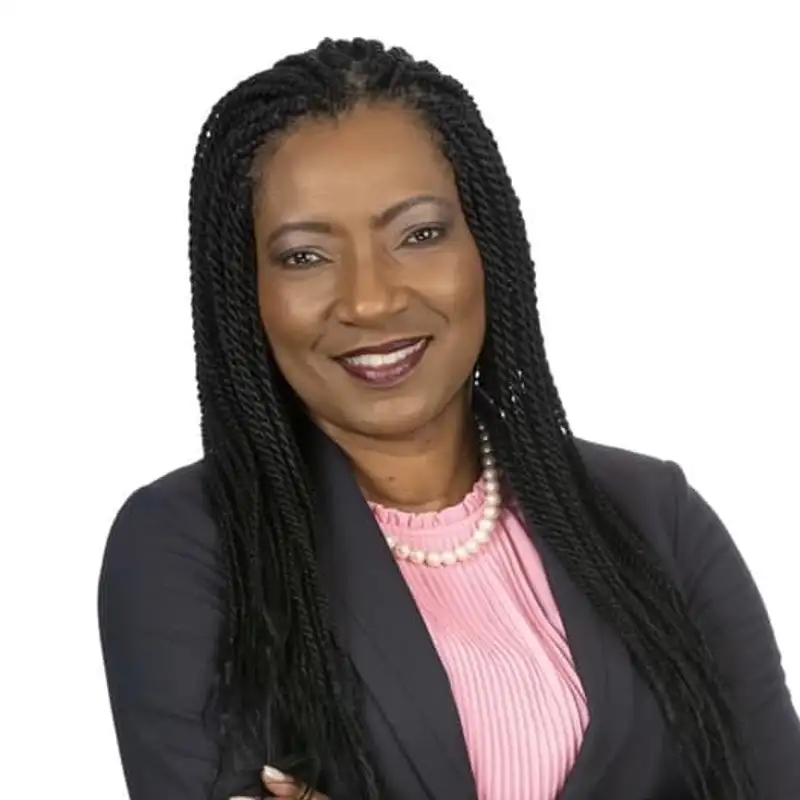
Tanya Flanagan Interviews Shenea Booth: Assembly District 22 Candidate and Cirque du Soleil Champion Discusses Her Path to Politics, Entertainer Advocacy, and Self-Care on the Campaign Trail
Announcer 0:00
This is a KUNV Studios original program.
Wesley Knight 0:04
The content of this program does not reflect the views or opinions of 91.5 Jazz and more, the University of Nevada, Las Vegas, or the Board of Regents of the Nevada System of Higher Education.
Tanya Flanagan 0:19
Good morning, and thank you for joining me for the Scoop with Tanya Flanagan. I'm so happy you decided to wake up and start your day with me here on the Scoop, where we talk about life, joy, funny moments, trending topics, and so much more. We promise to keep you in the know and find out what you know. So let's get started. Good morning, Las Vegas, and welcome to another edition of the Scoop. With me, Tanya Flanagan. Thank you for waking up to join this wonderful conversation. At least I think it's going to be wonderful. It's an opportunity for me to introduce you to another member of our community who you may or may not know, but who you will see on the ballot in November, she has made it through the primary that was held in June, and so it's going to be my pleasure to have a conversation this morning with Shanae Booth, who is the candidate for Assembly District 22. We are not necessarily talking all things politics because we don't really talk all things politics, but it is an opportunity for you just to get to know the woman behind the ballot entry. So thank you again for choosing to spend a little bit of your morning with me right here on 91.5 KUNV jazz and more. And with that, and without further ado, I'd like to say good morning and welcome to you, Missionee.
Shenea Booth 1:40
Good morning, Miss Tanya.
Tanya Flanagan 1:42
It's nice to have you here. Thank you for joining me.
Shenea Booth 1:44
Thank you so much for having me this morning. It's a pleasure.
Tanya Flanagan 1:47
I got a phone call about you the other day, and they said I think an interesting person to talk to could be Shanae. And I said, well, you know what? I'm always open to new conversations. So I thought, you know, I looked up your story and I thought, wow, got an interesting background. So a little gymnast. I had mentioned I used to work in gaming for MGM Resorts International when it was actually MGM Mirage Resorts International and Cirque du Soleil is like the primary entertainment, and they cut this landmark deal where Cirque shows only happened at MGM Properties, and so it's been a landmark relationship here on our famous Las Vegas Strip for a very long time now. But you are part of the Cirque du Soleil team, you're a champion gymnast. I mean, who? I I just want to know a little bit more about you. So, and add to my introduction of how fantastic your life journey has been. The many hats you wear.
Shenea Booth 2:55
Thank you so much, Tanya. I have had a very unique journey getting to the ballot, I think, and I've been you know really grateful. I started out in gymnastics and competing for Team USA and became a two-time world champion, the first in my particular discipline and field of gymnastics, which is also known as acrobatic gymnastics, and that is really what got me recruited by Cirque du Soleil when I was still a teen, still a teenager. I started working for Cirque du Soleil in 2006, and here I am. Ooh, like 20 years later. Isn't it
Tanya Flanagan 3:38
amazing when you stop and you say 2006, and you realize 20 years had passed, right? Yes. And so now you have this interest in taking your gymnast experience, your circ experience, so your work, your work-life balance experience to the legislature because Assembly District 22 is portions of Henderson,
Shenea Booth 4:01
yes, many portions of Henderson. It's a very big district.
Tanya Flanagan 4:05
You have an interest in taking that to Carson City,
Shenea Booth 4:09
yes.
Tanya Flanagan 4:10
Or I've spent some time. Currently, I'm responsible for District Seven. Why?
Shenea Booth 4:16
Well, I think, and I thought, working and advocating on behalf of entertainers and performers for the past six years, working to organize us and get us represented by labor has been a really interesting journey and task. I am a union member. I am a part of SAG-AFTRA as a stunt performer, and I have been for 20 years. I stunt for children, Isults in you know commercials, you know the occasional movie, if that, and that's been a really you know I think valuable experience that I've brought to about 90% of my circus work and. Journey. So during the pandemic, we saw. I think everyone saw across the board because there was not. I think any industry that was not affected by the pandemic. And as someone that you know lived and survived the crash of oh eight, I know and and and saw. Oh my gosh! You know how are we going to make it through this particular time and space where we cannot be on stage and have our careers? We are staying inside, and there are very few benefits for us as gig workers, as independent contractors, and as folks that you know cannot work from home, and that was a really brutal experience. I feel like my experience through 2008 honestly gave me some type of experience to weather 2020. But I thought at this time I was like, what if I don't work for like two or three years straight? Like, what if I can no longer have this career in the capacity that I've had it for over 20 years? And the answer to that for me was labor, being a small business owner, being someone that is in and out of contract, that at that point in time was just coming back into the country because I'd been traveling and working in the Middle East, I'd been working in Asia and in China, and I was actually on my way back and back out onto a contract at that time, and having my life stop and seeing, you know, I, you know, we started contacting offices all over and asking for support. It was challenging to get access to unemployment benefits. It was really scary for so many workers that were losing their health insurance. That thought I'm going to have to use my retirement benefits and whatever I've saved up to survive for the next maybe you know one to two years, if I'm not going to be back on stage, so that is really what informed my decision to run. In seeing that there could be bigger and better safety nets for an industry that most folks think of when they're coming to Vegas, when they think of Nevada when they think of the creative economy. They think of entertainers. They work. They think of hospitality. They think of folks that are working in the casinos and that are providing that source of entertainment that has been here for 3040, years. You know, I know and have lived with generations of entertainers and performers here on the Strip, where it's families that have been here since the '70s that are still here, and that I think are a demographic that is very highly visible, but I think has dealt with a level of invisibility in terms of policy and representation to a certain extent within the legislature and also too within policy,
Tanya Flanagan 8:04
that is a lot of interesting perspective on a very key component in our culture and community when we start to talk about economy here, and probably definitely some validity to the visibility yet the invisibility, because it's the things I guess that we have here that are part of our culture. That I'm not saying we take them for granted, but I think if you're not a part of that segment, and this goes for any segment for that matter, right? So, as issues come before, because when you're in the legislature, the look is at the state in its totality, right? What the bill is that's being brought forward. Sometimes the bill addresses a specific portion of the population. At other times, you have to look at it in its total total effect on everyone, if it has an effect on everyone. So every segment has this component where, when it's what you do, you know what's happening. When it's what you do, you know how you're affected. When it's what you do, you start to see the holes in the space, and when it's not what you do, you don't know, and so you kind of take for granted that the pieces of the puzzle that need to be in place are there, that things are in order. So it's interesting to to hear. And your story isn't the only story. I mean, when we were talking about pandemic, you saw anyone who was, I'm going to say, anyone who was sort of an independent operator.
Shenea Booth 9:41
Yes.
Tanya Flanagan 9:41
Of so, you're a small business because you are an independent operator unto yourself, but you're providing a service and just navigating the space of health benefits, of unemployment benefits, of being of being benefit. By a system that you've worked and paid into, but the way you paid into it maybe I won't say it was taken for granted, but it wasn't really calculated accurately. And then learning that there were steps because I had people have conversations with me who were, for all intents and purposes of a description, independent contractors, right? But they had not taken certain steps. It it made people literally retool their businesses, how they do business, what how they record or register themselves as a business, in order to have the access to unemployment benefits, to fair representation, to employment protections because things just weren't in place, and I think for those who were in regular jobs, maybe a school district job or a hospital or a government position, a different type of corporate structure, it just wasn't something that you thought about.
Shenea Booth 10:58
Yeah, yeah. So yeah, and I think filling in those gaps, and that's what I love about representation and diversification within the legislature, because every single person and representative adds to that perspective by way of their district, and then also by way of their industry, and it's not good or bad. I think it's just where is the relevance there? Where are the blind spots there? When you are immersed, I think in a culture like what you said, and in a lifestyle, it feels very.
Tanya Flanagan 11:30
It's very personal. It's
Shenea Booth 11:30
very personal because it's affecting you. Yeah, exactly. And so it's not like it's a intentional oversight, you know, or a slight, you know, even talking to different offices at the time, you know, they said, "I didn't know that your industry was not represented by labor. I thought you were represented by IATSE. I thought you were represented maybe by culinary. I thought you were maybe fully represented by SAG. Even maybe SAG-AFTRA was, you know, here, and SAG-AFTRA has a very, you know, small chapter, and that's what we were looking to have them expand during conversations around the film bill, for example, because we saw that as an opportunity for SAG-AFTRA to expand beyond film and TV into live entertainment and pick up some more workers and double down on having us get those contracts that would be typically not represented by labor and have some safeties and some you know extended protections, and even going beyond what you even think about in the traditional sense. Because even within this past month, the bill that we were working on a federal level that took us six years to have introduced it happened, and that was looking at legislative language that just had not had not been thought of in that way, and had not been curated in that way, and it was painstaking to have that. You know, we had that ask confirmed about two years ago, but there was a two-year pause on that, and so we we reworked that language and also took away the fiscal note from that bill.
Tanya Flanagan 13:04
So, for people who don't know, it's not their world.
Shenea Booth 13:07
Yes,
Tanya Flanagan 13:07
what was this legislation?
Shenea Booth 13:09
It was a workforce bill. So, is essentially saying that the workforce that you see as entertainers and performers and specialty artists here on the Strip and then also two nationwide are an actual verified workforce, which we have not been up until now, and that
Tanya Flanagan 13:24
is very interesting because it was brought to bring me to another question to you about the live entertainer component that you've referenced numerous times, and that we're basically talking about.
Shenea Booth 13:34
Yes,
Tanya Flanagan 13:34
that you didn't fit into a category, if you will, or you weren't in a bucket,
Shenea Booth 13:40
yes.
Tanya Flanagan 13:41
For consideration of representation and protections,
Shenea Booth 13:45
yes. So
Tanya Flanagan 13:45
live entertainers, strip performers, stage performers were are not typically or had not up to a point where now we're having this conversation, and and yes, the pandemic brought on this awareness, right? So up until this point, you just were not. So you were just independent agents, like a as we would think of any superstar, if you will, any mega Hollywood actor, any performer, contractually coming in to have a conversation about what you need to make this work for you, right? That's how whatever some major performer needs. If Barbra Streisand's coming in to perform, it's whatever she negotiates. If it's whatever Stevie Nicks negotiates before she hits the stage in one of our arenas, and you were kind of in the same, even though they have far more compensation for their hitting the stage, right? But nonetheless, a little bit more, a little bit more, a little bit more, a little bit more, slightly more. You know, and tickets right now astronomical. But that's another conversation. Yeah, but it's kind of a similar situation where you were negotiating. So NPS. In because this is something you want to look at. So say there are a number of people. Let's put on the record what you do in Cirque. Like, what's your title? And as a Cirque du Soleil performer,
Shenea Booth 15:13
I am an acrobat. I am also a circus artist, circus performer, hand balancer, hand to hand artist, and sometimes a banquet artist too.
Tanya Flanagan 15:23
Okay, so that's group acrobats.
Shenea Booth 15:25
Yes, the last one. You have an amazing memory.
Tanya Flanagan 15:27
Thank you. So, let's say you are one of 10. Is there a point where the 10 of you are negotiating a contract so the pay is equal across the 10, or right now is it if you come in, you negotiate your contract, and Helen comes in and negotiates a different contract, and John has something else, and because it's private, it's not public.
Shenea Booth 15:51
Right?
Tanya Flanagan 15:52
There really isn't the automatic disclosure of what one is offered in a contract versus another.
Shenea Booth 15:58
No.
Tanya Flanagan 16:00
So this would be the type of space where, if this grows legs and walks further, it sets some precedents of equity as well.
Shenea Booth 16:12
Yes.
Tanya Flanagan 16:13
So, do you have any people? Is it? This sounds like it's an interesting, an interesting space to unravel and untangle, only because let's say I feel I'm a star and I've been in the business longer than you, and you come in and you have this conversation about contracts, right? And representation gets on the table in this way. You want to make what I make, but I've been doing this longer than you. I'm the star. I am maybe I'm not a household name that somebody's just gonna recognize, like I don't know Michael Bublé or something. But for all intents and purposes in the industry, right? Like I don't follow. I mean, I should maybe, but I don't follow the NBA to the point of I know everything, right? But we all know LeBron. Yeah. So, you come in, and I'm the star. I want. I want X, Y, Z in my contract. But now there's there's a contract. It says here's what people are, here's what they're entitled to. Does that play into it? Will that play into this? Could this? Could that? Could that play into this space?
Shenea Booth 17:19
It does. I mean, it's an interesting thing in thinking about you know we see LeBron and they're like just negotiated a $50 million deal over six years. You're not going to get that in this industry unless you are someone who is in a need to know capacity, right? So there is certain selective gatekeeping. There is something about being the new person on the block, or maybe you are new and you could go above and beyond the person that does have a lot of experience that can outdo you on the stage because you're new and you're flashy. And how could I know? You don't know. Someone has got to provide that level of context for you, and that's where things get murky. That's when you get folks that are being lowballed, for example, that could be blackballed, that don't understand what they're worth, that think, "Oh, this is what everyone else is getting, because you could be told that. You could be told, "Oh no, no, no, everyone's making the exact same thing, and then you could find out a year or two later that
Tanya Flanagan 18:19
was
Shenea Booth 18:20
never the that was never the and that no one has the responsibility to disclose that and then you're told to tell to not say
Tanya Flanagan 18:28
and that's and and it's the nature of private industry right it really is this is an interesting look behind the curtains of what goes on literally oh that was a lovely play on words I wasn't even trying to do that, but anyways, I did. It is an interesting look of what's going on behind the curtains, though. That I don't know that we. I've I've never had this. It's fun too. It's interesting conversation. I'm very intrigued. I'm like, wow, huh?
Shenea Booth 18:57
Thank you. I appreciate that.
Tanya Flanagan 19:00
How has it been, though, the transition? Because people often ask folks what makes you do something, or how do you navigate the space? How has it been for you to go from your entertainment world into a space of public events, meeting lots of people? Sort of, you're not on 24/7, but you are kind of on at least 18 hours of the day.
Shenea Booth 19:27
Yes, and I even when
Tanya Flanagan 19:29
you think you're off, you're still on sometimes.
Shenea Booth 19:31
Yeah, I mean, you know better, better than most, and better than me because the way that you do it, I just have so much respect for you, Tanya, and I commend you. And I think that my background helps quite a bit because sometimes when people do see me on the trail, they are surprised and like, well, that does speak to the stage. When you are sick, when you are injured, when you are exhausted and tired, people are expecting a show. They have paid their money, and they-it's not that they don't care, but that's a different level of professionalism that I think is built into the cake. And I'm really grateful that I had that from when I was really little. Not to say that I don't have my days and that I'm not incredibly human, but I am really grateful that I think that I have that. So you
Tanya Flanagan 20:20
have that strength that you feel your training as a gymnast to push your training as a circ as a strip performer has given you some push that that may be different than the average person might have. I mean, we we are all each our own unique characters, and so people ask me all the time, "How do you do it? Where's the bandwidth come from? I'm just low energizer bunny. I just that's what I do. You're like I just built that way. This is okay. I don't know. Some of us are crazy. So I want to make sure people. We have quite a bit of time. Not quite a bit, but some. But people know where to get more information about you as we sit here and talk about you, Shanae Booth, who's on the ballot coming up some months for semi district 22. But just interest things that you do. If I want to follow you on social media, if I want to say who is she?
Shenea Booth 21:21
Yeah, where can find me at Shanae Booth on pretty much every social media platform, and that is S H E N E A B O O T H. So that is booth, like voting booth. So it's cute. Vote booth in the booth. That's cute. And you can also find me at Shanae Stiletto, which is my stage name. It's also my company name. It's how folks know me in the entertainment and the circus and performing arts and the you know locally and yeah internationally. That is you know super typical. So that's S H E N E A S T I L E T T O. o Shanae stiletto all social media platforms and then also to shinefornevada.com so that's s h e n e a f o r n e b a d a.com and that's where you can discover more about my background who I am and then also to if you would like to join our team, sign up to volunteer, donate if that's what you would like to do, and also to ask for a yard sign. Any of the things that come with, I think, supporting a candidate, you can do right through that portal. It's all automatic and accessible, and find out the important things of why I am doing what I am doing, and then also to contact me and ask me questions because I feel like you deserve the right to speak directly to whoever is on the ballot, and that is why I think it is so important to be accessible. And I find myself, I think, very accessible, and that is a part of why I believe I am a people's candidate. In
Tanya Flanagan 23:09
bringing up the accessibility factor, and thank you for sharing that to for the listening audience, because now anyone who, if you thought, oh, I was curious about her, you'll have an opportunity, and you have more than you know what you need to find more. But you made me curious in your comments as you talked about all of the things and the changes. What has been the most the what's been the hardest thing for you to adjust to, and what's been the most surprising thing, if you can share?
Shenea Booth 23:40
I think the hardest part of campaigning is the fact that you have to be all places at all times in almost all things to all people all at once. You are pulled in such a variety of directions in terms of endorsements, in terms of fundraising, in terms of visibility, in terms of messaging, in terms of time and effort, which again, I'm grateful to be able to be here and do this. I'm grateful that life, you know, I work usually during the night, so folks will see me on the trail sometimes all over at so many different events during the day, and then I usually head into work around eight or nine or 10 o'clock at night.
Tanya Flanagan 24:24
That's a long day.
Shenea Booth 24:25
It's a long day.
Tanya Flanagan 24:26
How do you, in talking about feeling that you're pulled in a lot of different directions, how do you, or what would you say to someone about authenticity and maintaining
Shenea Booth 24:37
that?
Tanya Flanagan 24:38
Because it can be something to describe it as being all things to all people, because no one is ever all things to all people,
Shenea Booth 24:46
right?
Tanya Flanagan 24:47
So, how do you maintain authenticity?
Shenea Booth 24:50
I think it's important to be authentic. I think that's how you maintain authenticity. In this, I have learned that, right? I think you know you can get caught up in messaging. You can get caught up in thinking I need to be this particular person or version of myself in this space. But I think being who you are is what keeps you having a full cup. I think being alter to who you are and maybe losing that and going astray is something that would deplete you much faster. So for me, I think it comes back to performing. Right when you are performing, you have I think a baseline of where you're coming from. You have like your set standard of how much you know you can offer within any in any single space or performance, and I really do look at all of the spaces I'm in, inventing and also to campaigning in that way. But I want to be who I am. I want I want people to remember, you know, the things that I said and how I've made them feel. And sometimes they don't actually remember how what you said, but they do remember how you make them feel. How
Tanya Flanagan 25:59
you make them feel? Yeah, that is that is a very I think a very true saying. Random thought: Have you ever been to Carson City?
Shenea Booth 26:08
Interestingly enough, I have not been to Carson City. I don't know why
Tanya Flanagan 26:14
that came to, but I just was I was like, has ever been to Carson City? No. I mean, some you either love it or you don't. I like Carson City. I think it's charming.
Shenea Booth 26:22
I can tell that you like Carson City. I do.
Tanya Flanagan 26:24
I really can tell Carrie City is very charming. I feel it's
Shenea Booth 26:27
like it's in your bones and it's in your soul. Where I have spent more time is on is on the Hill in Washington D.C. I have spent a decade going to the Hill and advocating there before being a labor advocate as a survivor of UC gymnastics, so I feel that it would be a very similar experience in being in Carson City, but kind of like a hyper.
Tanya Flanagan 26:52
That's a different energy. I mean, I don't. I've gone to the Hill to to lobby on healthcare related issues for oral parity and treatment of of cancer for people across the country, so I've done that on behalf of different organizations, and it's and I've also gone to just talk about equity during my Urban League advocacy days. So yes, it's an interesting space to find yourself in D.C. but it's big, it's huge, it's very broad, and you're part of this. You're a small piece in a very big. It's like a small fish in a big ocean, really. But when you you've gone for 10 years, so that can probably feel very different. Carson City's like this concentration, and it's all about Nevada, and so it's it'll it will feel different. I love that. I wish you the best of success in this particular. No, because you still have to get through to November, so you have a awesome stuff in front of you. So I wish you the best of success in your endeavors and just everything. Thank
Shenea Booth 28:02
you.
Tanya Flanagan 28:02
When you are not, you know, on the trail or working, because it sounds like you have a 24 hour day that takes about 24 hours. I don't even know when you sleep, based on this conversation. But what do you do to wind down, like to reset? Because we don't get a lot of reset time. So you have to find a small thing that allows you to reset.
Shenea Booth 28:22
Well, I enjoy and I practice meditation, and that is one of my wonderful pastimes. I also love to read. I love listening to podcasts. I have a beautiful friendship and family support group that I absolutely love. I love therapy, so I spend quite a bit of time there, and I don't know how you can campaign and not be in therapy.
Tanya Flanagan 28:45
I am not in therapy, Shanae. But okay,
Shenea Booth 28:48
well, that's because you are you, and you're just no different. But I
Tanya Flanagan 28:52
advocate and support therapy. I think that those who choose it, it is courageous, smart, and wise to make it a component of self care if it is a component that works for you.
Shenea Booth 29:03
It does. Well, I want to say
Tanya Flanagan 29:05
thank you for being here. It's been a pleasure to have you.
Shenea Booth 29:08
Thank you so much, Tanya. I appreciate you having me here today and being so thoughtful and being so giving of your time.
Tanya Flanagan 29:16
Absolutely, folks. Thank you for tuning in to another edition of the show right here on 91.5 KUMB Jazz and more. We'll catch you next week, same time, same station. Stay hydrated and enjoy the rest of summer. I want to thank you for tuning into the scoop with me, Tonya Flanagan, and I want to invite you to get social with me. I'm on Facebook and Twitter. My name is my handle T A N Y A F L A N A G A N. You can also find me on Instagram at tanya Almanez Flanagan. And if you have a thought, an opinion, or a suggestion, don't hesitate to shoot me an email to tanya.flanigan@unlv.edu. Thanks again for joining in. Stay safe and have a great week.
Transcribed by https://otter.ai